Could have easily been avoided with a second operator in the driver seat. Slightly different class of auto transport but when I used to haul cars cross country loading and unloading always required a spotter and driver.

Printable View
Could have easily been avoided with a second operator in the driver seat. Slightly different class of auto transport but when I used to haul cars cross country loading and unloading always required a spotter and driver.
Just - PAINFUL to watch
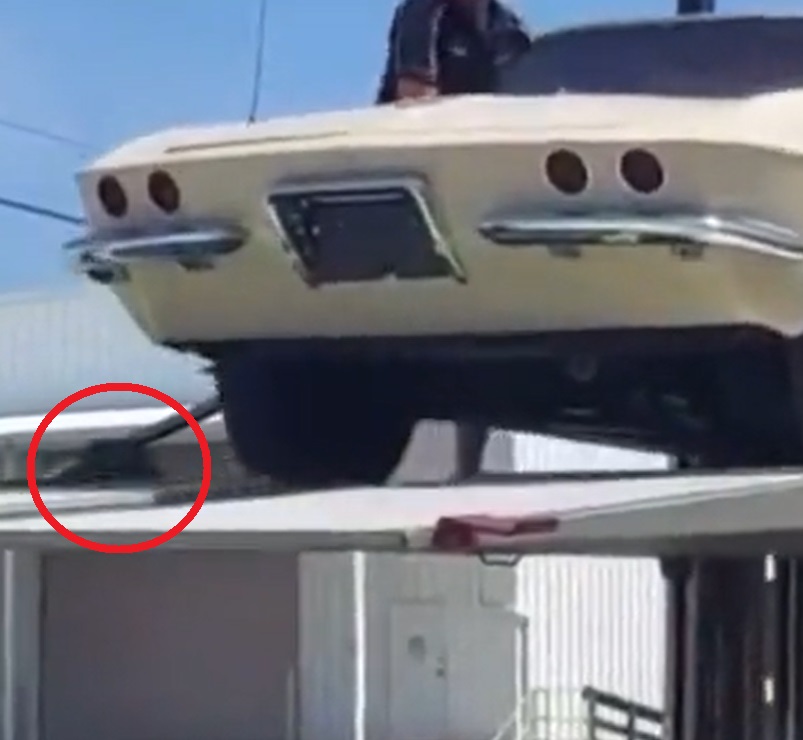
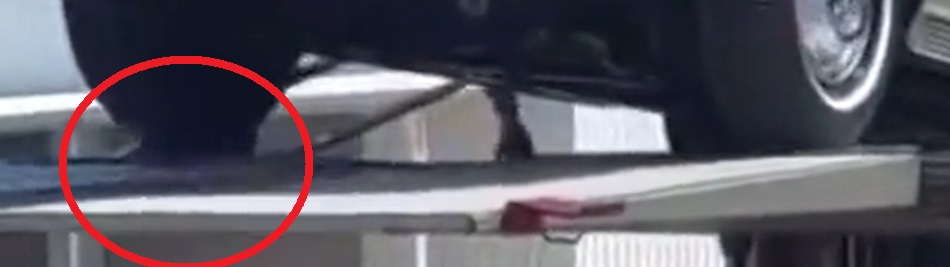
The chock was a small one . . . and only one!
Attachment 45891
Notice how the tire is elevated here (on top of the chock) and the right side is flat on the deck.
Attachment 45892
His problems started when he let that 3000 plus pound puppy get rolling that quickly while on the outside of the car....it's all down hill from there...:DQuote:
Originally Posted by Saltfever
Listen to what the operator says at the twenty second mark "it rolled right over the fu2k!ng chock block!".Quote:
Originally Posted by BuffaloJohn
I understand that the non-block was identified as a chock block, but just because he says it is a chock block, that does not make it a chock block - just saying...Quote:
Originally Posted by bob_3000
I am sure many of you already know all of this, but it has to be said.
There are lots of ways to use equipment improperly. Sometimes, there is more than one way to use equipment correctly.
It is clear, whatever equipment on hand on that day, it was being used incorrectly. Perhaps they had gotten away with being stupid on previous deliveries. On this day, the odds caught up with them.
A rig like SHOULD have a winch in front to pull the car into position. That which SHOULD have been used in reverse to allow the car to back out under total control while still connected to the winch. When the car was in place on the elevator, the chock should have been set it place. Then brake in the car set and the transmission put into park or a low gear. ONLY THEN should the winch cable be disconnected.
Chocks are not meant to stop a rolling vehicle, they are meant to keep one already stopped from rolling away.
Well, it's his chock block because that's what he called it.
That guy is fired AND broke for a long time paying for that mistake. Not to mention the damage to one of the finest cars ever produced! Even if the lift had a built in "chock" I would carry my own just for that reason. It's never a bad idea to have a secondary failsafe.