 LinkBack URL
 About LinkBacks
In 1974, science fiction writer Arthur Clarke predicts that people will each have their own interconnected computer.



In 1974, science fiction writer Arthur Clarke predicts that people will each have their own interconnected computer.
New: BuildThreads.com - 300+ build posts/day (with photos)
nova_robotics (May 15, 2024)




So many things which were once thought as fantasy or science fiction today have become science fact and even a lot of the stuff has become obsolete
Never try to tell me it can't be done
When I have to paint I use KBS products


I remember some years ago one of those scum sucking scammers called the house and said "my computer was sending out error messages" - I asked the scammer to tell me which computer since I had so many. I thought about it later and stopped counting once I passed 25 computers in the house... but that included my work machines, my shed machines, my phones, my tablet, my family members equipment and devices... I suspect that in a normal house of 2 parents, plus 2.2 children over the age of 10 would be in the dozen plus range of computers in the house.

Lol, I got one of those calls on my phone at work...where I'm a sysadmin for a large state university. They told me my "Veendows Computer was infected and they would help me clean it up." I think they were a little confused when I started laughing. My 'Veendows Computer" ran...Mac OS X at the time :-)
But yea toting up all the computers and computer-ish devices I get around 12 at home just off the top of my head.

An amazingly accurate prediction, and long before the internet.

Arthur C. Clarke was amazingly prescient and far ahead of his time. He invented the idea of the geostationary communications satellite. An unbelievable mind.
Stupid is forever, ignorance can be fixed.
Actually no quite that long.. The first computer-computer communication on ARPANET was in 1969; by 1973 there were even nodes overseas in England and Norway. ARPANET was US DOD Defense Advanced Projects Agency initiative Here's 'map' of ARPANET from that time.Originally Posted by albertq

By 1974 Clarke knew full well what was going to happen; the Apple I was only 2 years away at that point, and arguably the first personal computer in existence, The Altair 8080 would be released in 1975 as a kit popularized in Popular Electronics. Don Lancaster had already created the TV Typewriter in 1971, but that was all done with discrete logic; the Altair was the first with a modern microprocessor.
By 1977 the 'Trinity' as Byte Magazine called them: The Commodore PET-20, The Apple II and the Tandy TRS-80 were all released to considerable fanfare.
in 1979 VisiCalc, the first electronic spreadsheet in existence was released for the Apple II, which sold hundreds of thousands of computers. (the very first AppleI I ever laid eyes/hands on was a friends; she got it from an accountant, and the familiar top column numbers and left-hand row numbers were permanently burned into the green phosphor monitor it came with.
The 'modern' Internet didn't start to happen until 1978 when TCP/IP was released. What we know today as 'the internet' finally came about in 1994 when NFSNET passed entirely into private commercial hands. (ARPANET control was passed to the civilian Agency National Science Foundation's NSFNET in the 80's)
An excellent book on the origins of this all is "Where WIzards Stay Up Late: The origins of the Internet"

I believe the S-100 bus with CP/M operating system and Intel 8080 processor might have been just before the Apple with a Fairchild chip. Altair-Lancing was popular but the Godbout S-100 was quite big in the San Francisco Bay Area. I remember when Godbout came out with a 64k RAM board and I thought that was all that would ever be needed! LOL
All microprocessor computers were called personal computers ("PC") at that time. The term was used universally to distinguish the emerging culture from the traditional main-frames (IBM 360, PDP, etc). IBM took a the common, generic term "PC" and used it to label their first iteration. They were late to the game by 8 years and caused a lot of ill will by capitalizing on a common term used by all.

Consider the two examples that Clarke gave of the proposed daily future use of the internet: retrieving "bank statements and theater reservations". He uses examples of responsible financial behavior, and exposure to high culture.
Here's a closer example of daily internet usage reality. Found in the wild, captioned: "Exclusive footage of me trying to learn a TikTok dance.":
bruce.desertrat (May 15, 2024), Floradawg (May 15, 2024)
Nice moves.
Stupid is forever, ignorance can be fixed.
There are currently 1 users browsing this thread. (0 members and 1 guests)
 Posting Permissions



 Reply With Quote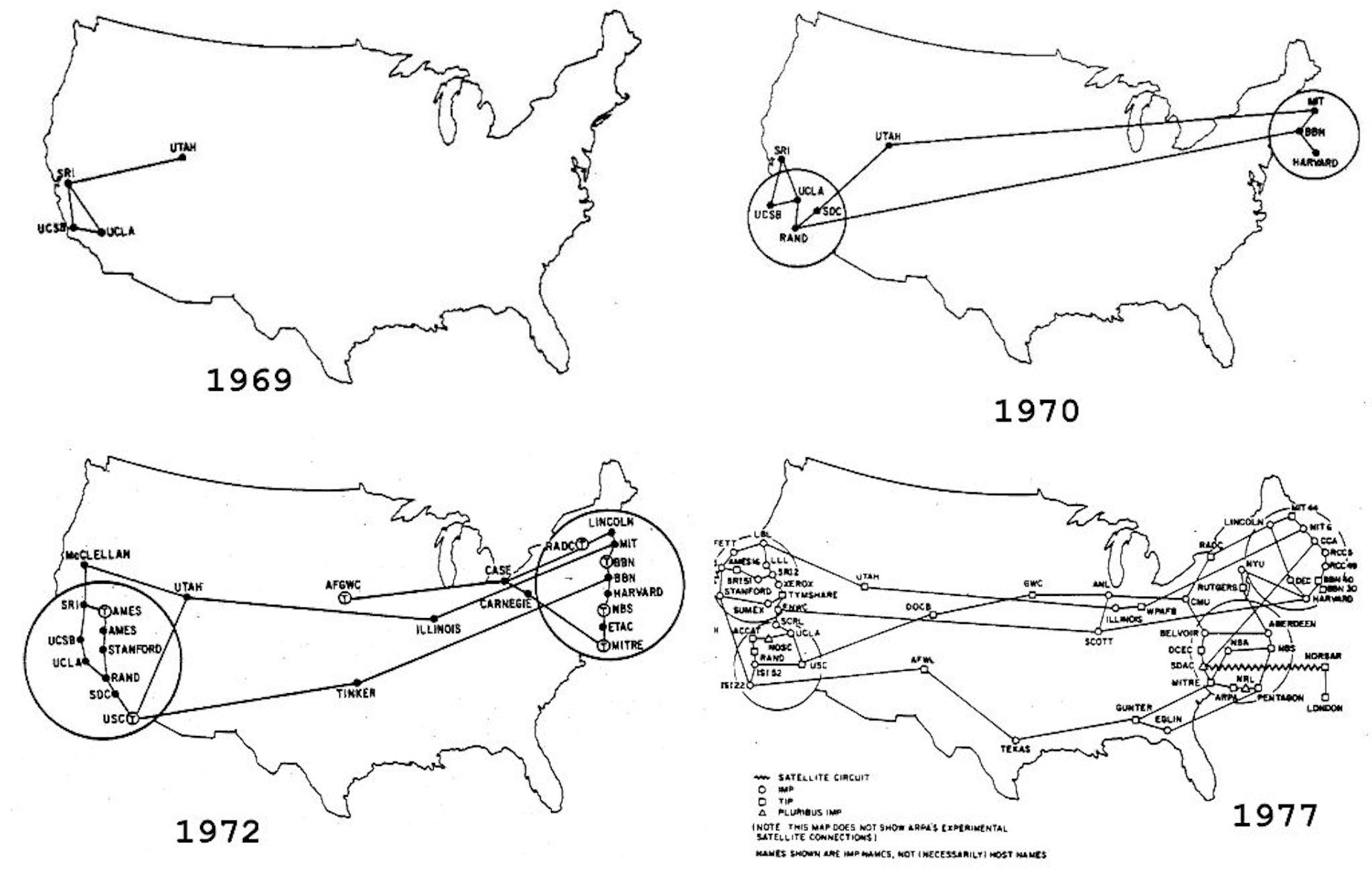
Bookmarks