
 LinkBack URL
 About LinkBacks


The physics of frozen pipes breaking are very miss understood. Try this, get a 2 foot piece of common plumbing pipe, sweat a cap on one end and a female adapter on the other end. Fill it with water and thread a high pressure gauge into the adapter to seal the pipe. This is the dangerous part, drill a 3/4 inch hole in the side of your freezer, then slowly begin to slide the pipe into the freezer, say an inch an hour. Watch the gauge and take note bulge that begins to form on the end outside the freezer before the pipe bursts. (don't tell your wife you got this idea from ME!!!!!)
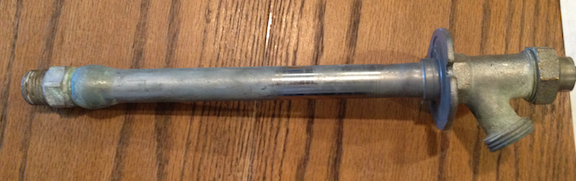
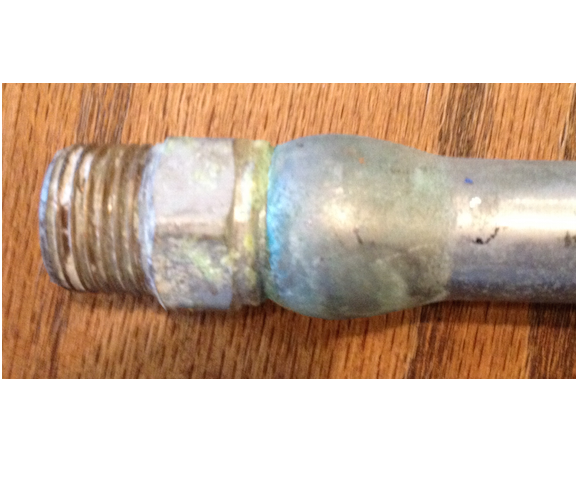
I keep this old frost proof faucet around to show customers how important it is to remove the hose from the outside in the winter time. This shows evidence of the freeze process beginning on the outside end on the facet, as it got colder and colder, the ice formation migrated further inside the house, forcing the pipe to swell as the ice expanded. The whole pipe is tapered slightly, on the outside end the pipe is 0.732 as it nears the bulge it is 0.749 before it jumps up quickly. I discovered this near disaster while doing other work for this home owner. Typically what happens is the pipe breaks and what little water in leaks out after the thaw, no one notices. Then in the spring time, when the water is turned on, the house is flooded.
Often a pipe will begin to freeze, isolating the water source from the rest of the system, then as the freezing continues, a pipe bursts someplace that is isolated from the source, like in the photo that began this thread. Then it is not until the ice damn thaws, that the structure is flooded. This is how the old myth that "pipes don't break when they freeze, they break when then warm back up" comes from. The truth is, they break when they freeze, you just find out about it when they thaw! It is very common with fire protection systems in commercial buildings.
John



 Reply With Quote
. We took all kinds of measurements before, during, and after the freeze was applied to check for pipe deformation. The ice would be so hard and thick that we could hydro test against it up.= "Pin It")


Bookmarks