Free 186 More Best Homemade Tools eBook:  
New: 300+ fresh build posts/day from 275 forums → BuildThreads.com

User Tag List

Page 1 of 2 1 2 LastLast
Results 1 to 10 of 12

Thread: Expanding Mandrel for turning large tubes

Hybrid View

  1. #1
    neilg4dbn's Avatar
    Join Date
    Aug 2021
    Location
    Yorkshire, UK
    Posts
    19
    Thanks
    24
    Thanked 70 Times in 13 Posts

    neilg4dbn's Tools

    Expanding Mandrel for turning large tubes

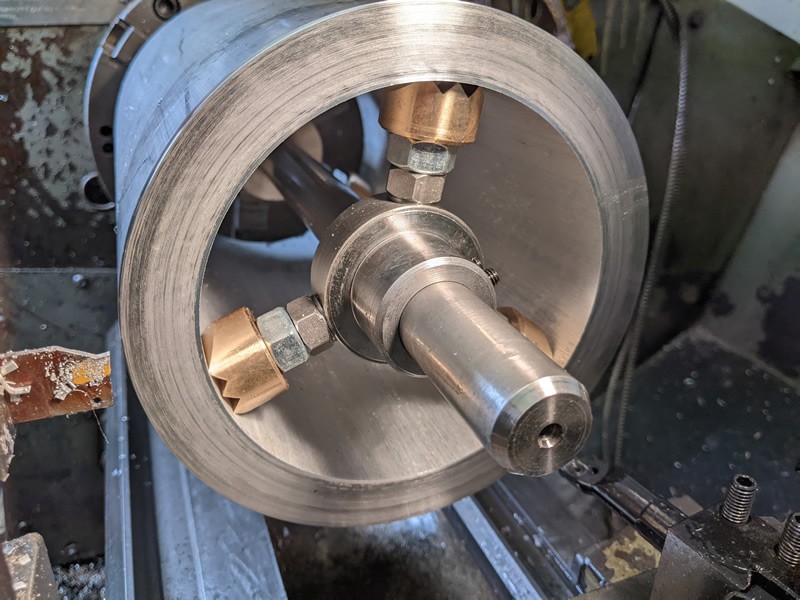
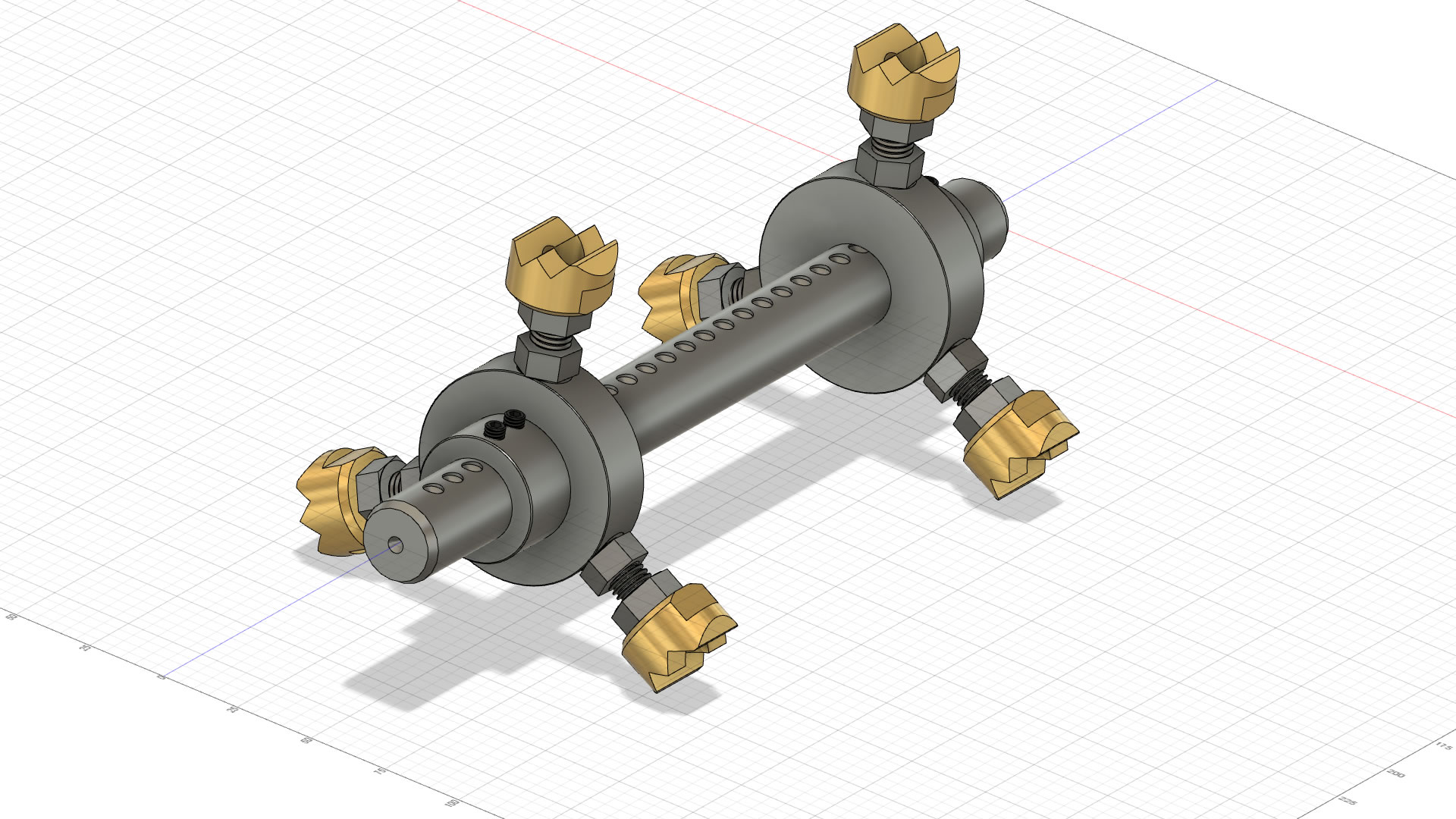
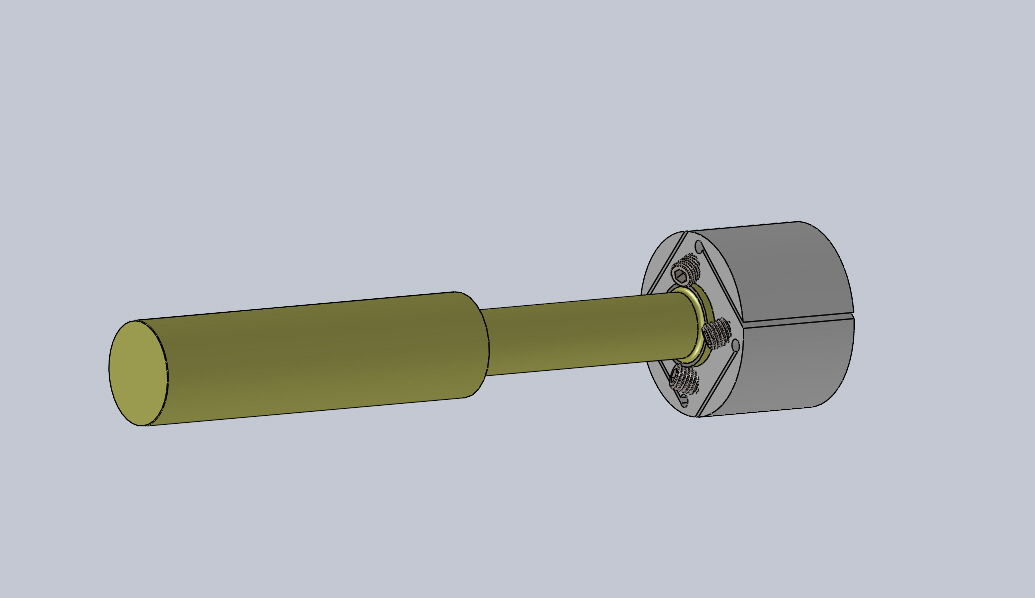
    Cutting a large thick-wall tube to make antenna support rings on my lathe was a big challenge. Southern Comfort and too much coffee resulted in an internal mandrel fixture that works quite well. I can now hold large heavy tube and machine the outside and both ends with ease.
    I can't claim any originality for this fixture. It's probably got a proper name but I don't know what to call it. "Expanding Tube Mandrel" will have to do.
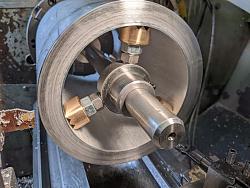
    Expanding Mandrel for turning large tubes-pxl_20211224_221429892-small.jpg Expanding Mandrel for turning large tubes-tube-fixture-v23a.jpg

    I don't have a steady rest, but machining the outside and ends of a tube when using a steady rest means a lot of extra steps, and this thing can stay with the workpiece if I part off a thick ring then want to machine it before cutting another. Once the lathe is clear again, I can just pop the tube back on, complete with the mandrel still inside. Also, finding a big enough steady rest to fit 7+ inch tube on my Colchester 1800 would be amusing.

    This is Part One of the video, second part to follow soon.


    Now I've mentioned steady rests, I want one of those as well. Too many projects, too little time.

    Last edited by Jon; Dec 29, 2021 at 01:26 PM. Reason: Adjusting formatting

  2. The Following 14 Users Say Thank You to neilg4dbn For This Useful Post:

    asterix (Dec 30, 2021), BuffaloJohn (Jan 2, 2022), Dimsa (Jan 6, 2022), DIYSwede (Dec 30, 2021), durrelltn (Dec 30, 2021), Home-PC (Dec 29, 2021), Jon (Dec 30, 2021), mwmkravchenko (Dec 30, 2021), nova_robotics (Dec 29, 2021), Ralphxyz (Dec 31, 2021), RetiredFAE (Dec 30, 2021), reysl1949 (Jan 1, 2022), Skun Knuckles (Dec 30, 2021), Toolmaker51 (Dec 29, 2021)

  3. #2
    Claudio HG's Avatar
    Join Date
    Sep 2019
    Location
    Venetian Alps, EU
    Posts
    110
    Thanks
    29
    Thanked 193 Times in 59 Posts

    Claudio HG's Tools
    This is a pretty good idea.

  4. The Following User Says Thank You to Claudio HG For This Useful Post:

    neilg4dbn (Dec 31, 2021)

  5. #3
    Supporting Member Toolmaker51's Avatar
    Join Date
    Feb 2016
    Location
    Midwest USA
    Posts
    5,355
    Thanks
    7,074
    Thanked 3,572 Times in 2,210 Posts

    Toolmaker51's Tools
    As Frank S will say "That is thinking outside the sphere!". It certainly is. Concept of 'the box' actually has limited coordinates, whereas a sphere contains unlimited points of reference.

    That said, I've run a lot of tube, most often from paper manufacturing and printing industry. It has to be supported at each end, for concentricity, lack of taper, and plain old safety. The go-to holding method(s) securing outboard end, always limited to a] false center, b] steady rest, c] bell center. Job requirements often relied on a tailstock mounted 4 jaw first, getting both ends centered up and turning a band for steady rest bearings to run. An interesting complication; some rollers have rubber bonded outside. Good luck spinning that in a steady rest! (Hint; tooled up clamp-on rings).

    Thinking back how many times your mandrel would have offered a solution OUTSIDE those mentioned, without discounting some of those rollers were 10 and 12 feet long, several hundred pounds, one of a kind - no spares, late at night - no replacement material......or killing whole production line.

    It's tough in job shops, when management can't see value in work-saving projects that can be used over and over.
    But 'We' know it, Shop Truths, Phrases, Tales; and Outright Lies
    Sincerely,
    Toolmaker51
    ...we'll learn more by wandering than searching...

  6. #4
    Supporting Member Toolmaker51's Avatar
    Join Date
    Feb 2016
    Location
    Midwest USA
    Posts
    5,355
    Thanks
    7,074
    Thanked 3,572 Times in 2,210 Posts

    Toolmaker51's Tools
    Ooops. Accidental double post. Hello 'Select All-Delete'!

    As consolation, your fixture has a name; it's called a Spider. Related version commonly used outboard the spindle end, supporting small material.
    Last edited by Toolmaker51; Dec 29, 2021 at 08:52 PM. Reason: Tactical action on duplicate posts.
    Sincerely,
    Toolmaker51
    ...we'll learn more by wandering than searching...

  7. The Following User Says Thank You to Toolmaker51 For This Useful Post:

    neilg4dbn (Dec 31, 2021)

  8. #5
    neilg4dbn's Avatar
    Join Date
    Aug 2021
    Location
    Yorkshire, UK
    Posts
    19
    Thanks
    24
    Thanked 70 Times in 13 Posts

    neilg4dbn's Tools
    That makes sense, it's sort of like an inside-out spider. Thanks very much. I wondered if there was a name similar to Cat's Head.
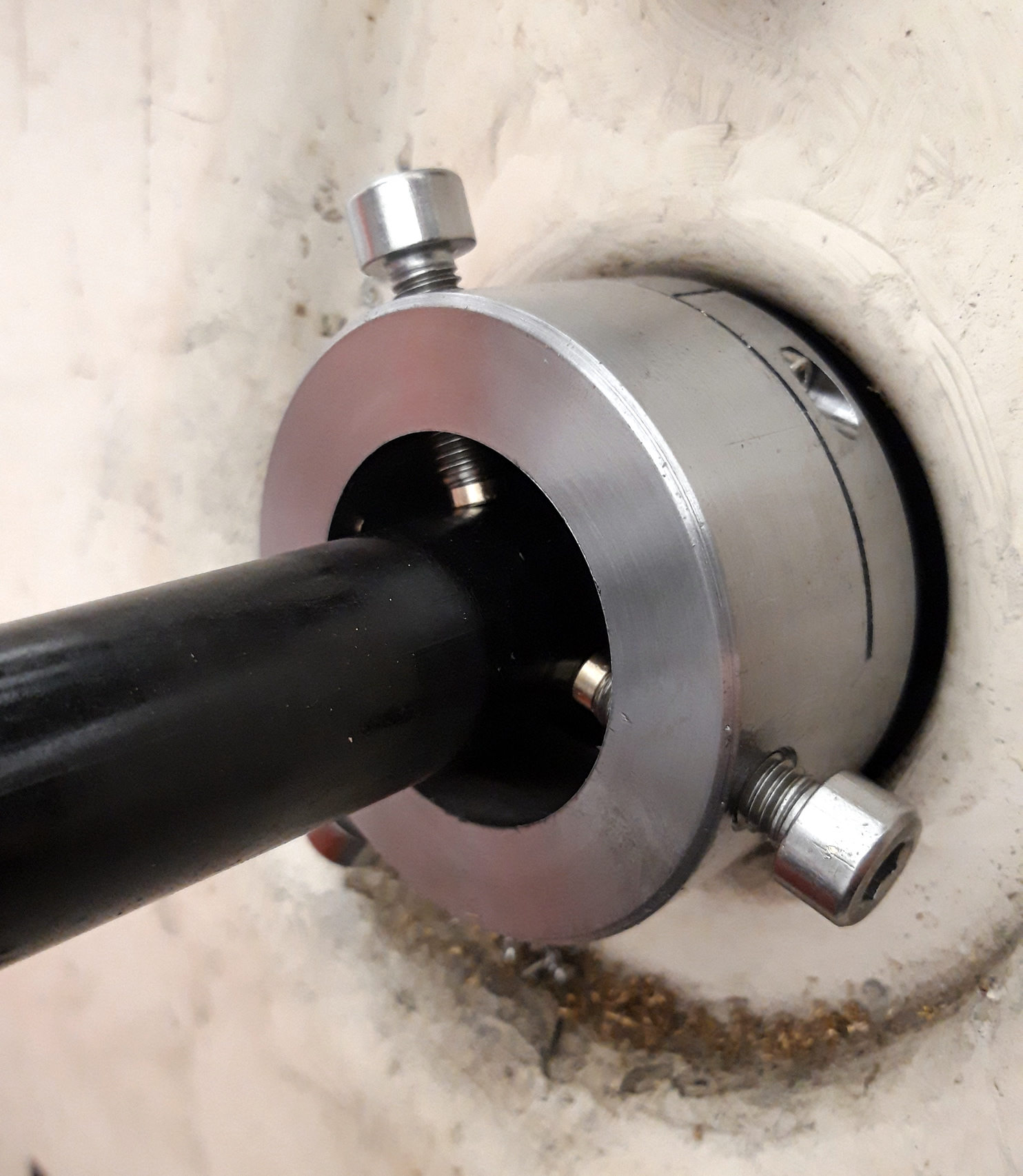
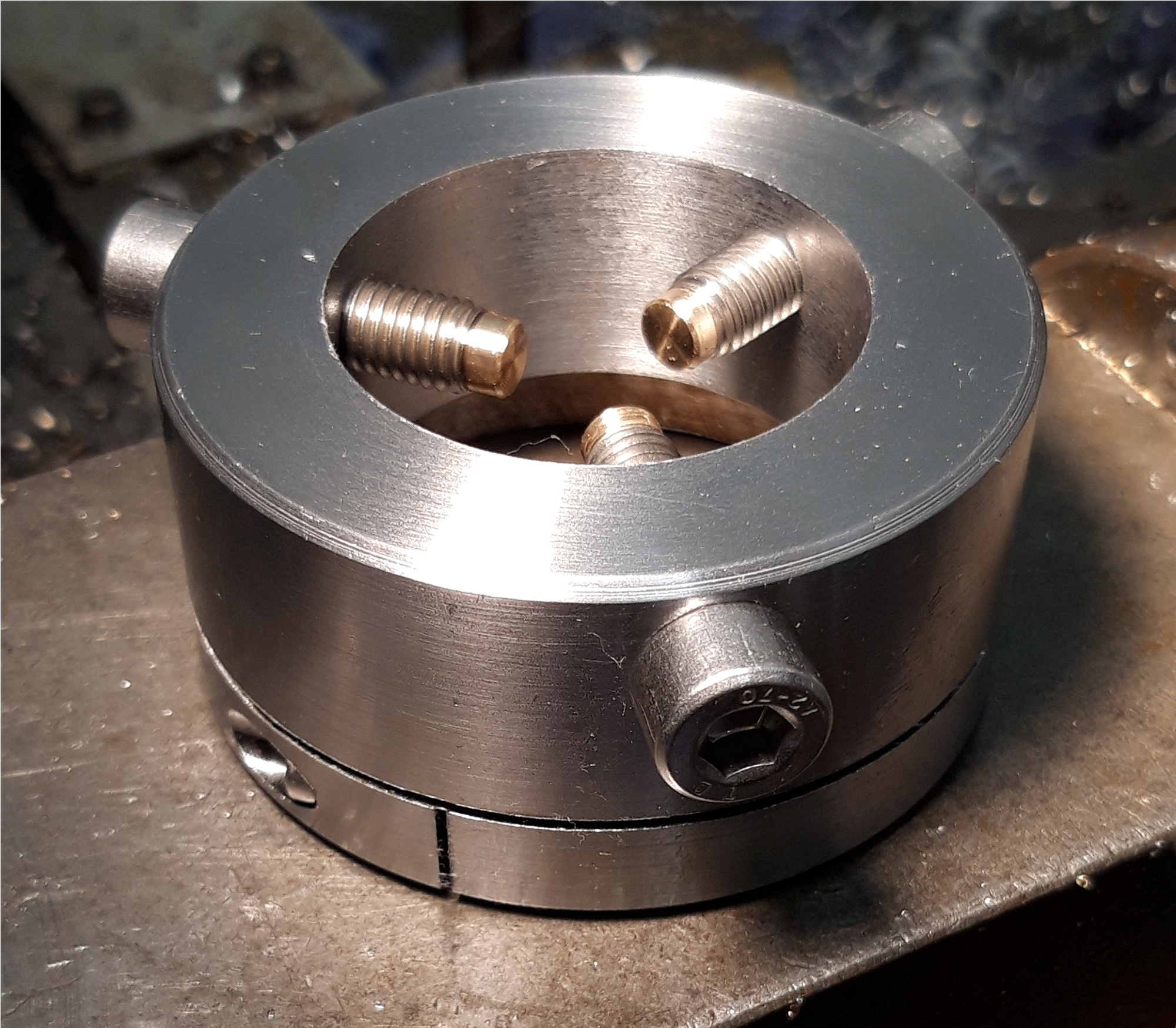
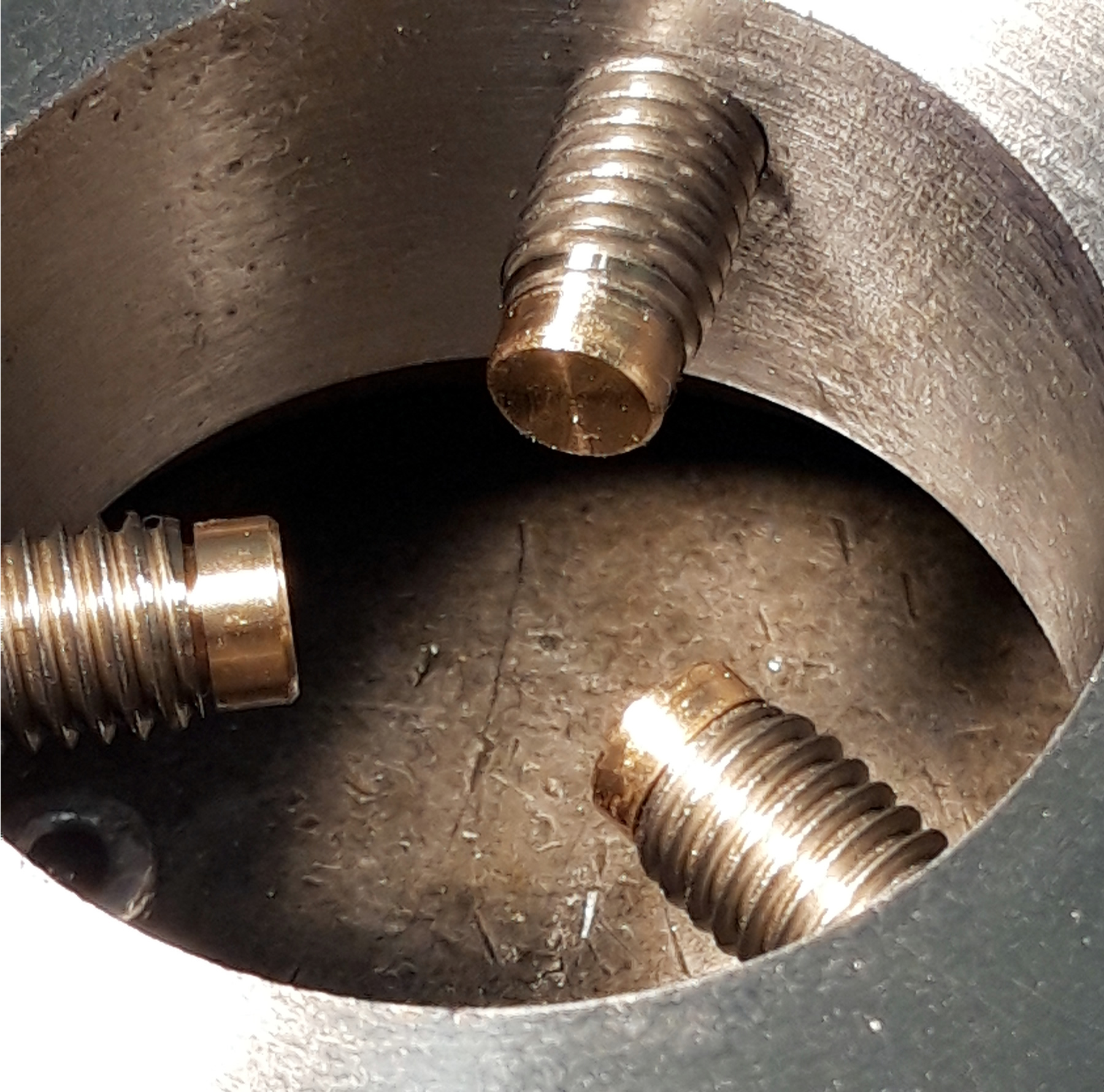
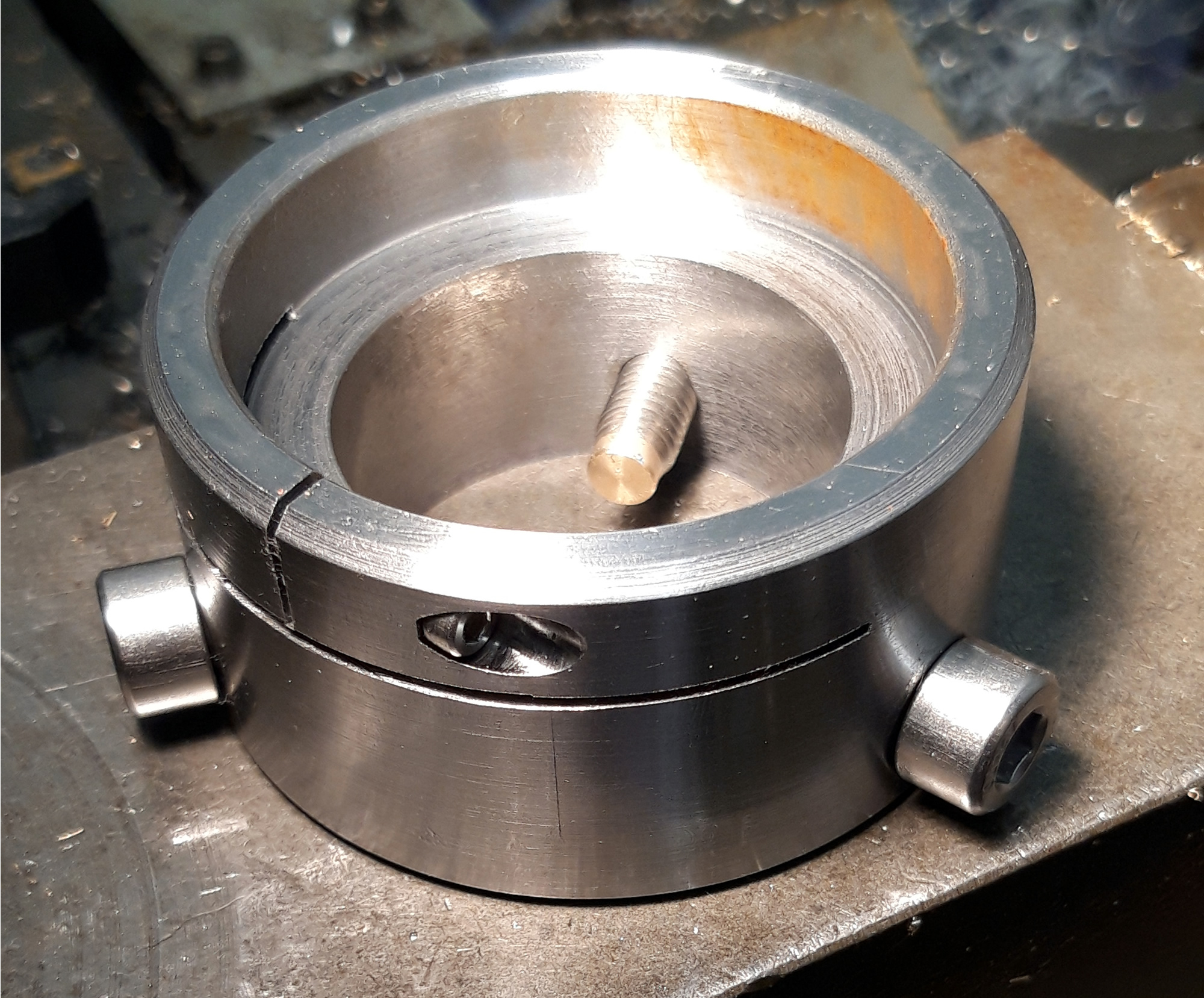
    This is the three-screw spider I made to support mostly long hex bar through the headstock. It's got more holes now, so I can use four screws or three. Much easier to align round or square stock with four screws.

    Expanding Mandrel for turning large tubes-lathe-spider2.jpg Expanding Mandrel for turning large tubes-lathe-spider4.jpg Expanding Mandrel for turning large tubes-lathe-spider6.jpg Expanding Mandrel for turning large tubes-lathe-spider5.jpg

    Now I need to bore a two-inch hole in the outside wall of the shop and fit a bearing and spider to it so I can turn REALLY long workpieces through the headstock without any danger of whip!

  9. The Following 3 Users Say Thank You to neilg4dbn For This Useful Post:

    durrelltn (Jan 1, 2022), Jon (Jan 6, 2022), mwmkravchenko (Dec 31, 2021)

  10. #6
    Supporting Member Frank S's Avatar
    Join Date
    Aug 2015
    Location
    Peacock TX
    Posts
    12,617
    Thanks
    2,677
    Thanked 11,111 Times in 5,391 Posts

    Frank S's Tools
    I Like it. I made a set of internal collets a long time ago to allow me to bore the Id and sometimes thread the ID of long hydraulic cylinder tubing on a relatively short lathe. To do this I used these ranging from 2 1/2" through 5"
    click on picture for clearer view the grub screws allowed for tightening to the ID of the tube while serving as an internal 4 jaw
    Expanding Mandrel for turning large tubes-70mm-tubing-collet.jpg
    Never try to tell me it can't be done
    When I have to paint I use KBS products

  11. The Following 7 Users Say Thank You to Frank S For This Useful Post:

    Christophe Mineau (Jan 1, 2022), DIYSwede (Dec 30, 2021), johncg (Dec 31, 2021), Jon (Dec 30, 2021), neilg4dbn (Dec 31, 2021), suther51 (Dec 30, 2021), Toolmaker51 (Dec 29, 2021)

  12. #7
    neilg4dbn's Avatar
    Join Date
    Aug 2021
    Location
    Yorkshire, UK
    Posts
    19
    Thanks
    24
    Thanked 70 Times in 13 Posts

    neilg4dbn's Tools
    I like that grub screw expansion method, my smaller mandrels use a tapered shaft and nut to open up a sawn cylinder, but the grub screw method is almost like a Taperlok fitting, very neat and easy to adjust from the end.

  13. The Following 2 Users Say Thank You to neilg4dbn For This Useful Post:

    Frank S (Dec 31, 2021), mwmkravchenko (Dec 31, 2021)

  14. #8
    Supporting Member Frank S's Avatar
    Join Date
    Aug 2015
    Location
    Peacock TX
    Posts
    12,617
    Thanks
    2,677
    Thanked 11,111 Times in 5,391 Posts

    Frank S's Tools
    Quote Originally Posted by neilg4dbn View Post
    I like that grub screw expansion method, my smaller mandrels use a tapered shaft and nut to open up a sawn cylinder, but the grub screw method is almost like a Taperlok fitting, very neat and easy to adjust from the end.
    The disadvantage to them were I had to make one for each ID hydraulic cylinder tube I machined. At the same time it proved to be nice to have so many sizes. We purchased our honed tubing from a supplier in Turkey in quantities of batch lots of 10 to 30 6 meter random lengths for each size at a time they provided honing inspection certs. to tolerances of -0/+.05 mm or less. so 1/4 turn of each screw went from slip in to fully locked in place and centered every time we had a dedicated lathe with a collet chuck and left either a 40 or 50 mm collet in it at all times
    Never try to tell me it can't be done
    When I have to paint I use KBS products

  15. The Following User Says Thank You to Frank S For This Useful Post:

    mwmkravchenko (Dec 31, 2021)

  16. #9
    MasterMaker's Avatar
    Join Date
    Aug 2012
    Posts
    23
    Thanks
    7
    Thanked 4 Times in 4 Posts
    Quote Originally Posted by Frank S View Post
    I Like it. I made a set of internal collets a long time ago to allow me to bore the Id and sometimes thread the ID of long hydraulic cylinder tubing on a relatively short lathe. To do this I used these ranging from 2 1/2" through 5"
    click on picture for clearer view the grub screws allowed for tightening to the ID of the tube while serving as an internal 4 jaw
    Click image for larger version. 

Name:	70mm tubing collet.JPG 
Views:	818 
Size:	55.8 KB 
ID:	41451

    With that design I think I would have just used some sink-head screws with part of the countersink bridging the slot and some extra relief under the head in the main body/threaded part so they would push on the tab with the taper when tightened down.

  17. #10
    Supporting Member Toolmaker51's Avatar
    Join Date
    Feb 2016
    Location
    Midwest USA
    Posts
    5,355
    Thanks
    7,074
    Thanked 3,572 Times in 2,210 Posts

    Toolmaker51's Tools
    Quote Originally Posted by MasterMaker View Post
    With that design I think I would have just used some sink-head screws with part of the countersink bridging the slot and some extra relief under the head in the main body/threaded part so they would push on the tab with the taper when tightened down.
    Mechanically speaking, a flathead screw could perform that wedging action, counterbored deep enough to apply that about mid point.
    The drawbacks?
    At least two limitations; no flathead screws are dependably concentric to their threaded body, and a large enough screw thread (and corresponding wrench size) might have too large a conical section to fit between fixture shaft and ID of part.

    That said, an expedient inside grip is achieved on short parts, sawing an arbor into 4 segments after tapping center for a NPT pipe plug. Another way turns OD of socket cap screw head to about 7°-10°. With same setting to compound, bore a recess same angle into the plug. Fine threaded fasteners work best.


    2,500+ Tool Plans
    Sincerely,
    Toolmaker51
    ...we'll learn more by wandering than searching...

Thread Information

Users Browsing this Thread

There are currently 1 users browsing this thread. (0 members and 1 guests)

Tags for this Thread

Bookmarks

Posting Permissions

  • You may not post new threads
  • You may not post replies
  • You may not post attachments
  • You may not edit your posts
  •