 LinkBack URL
 About LinkBacks
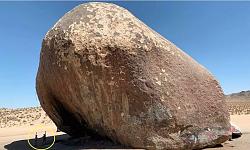
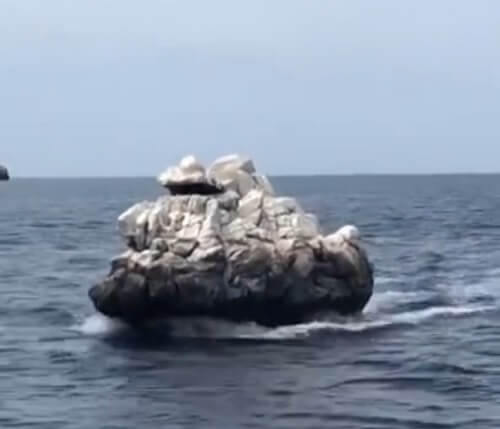
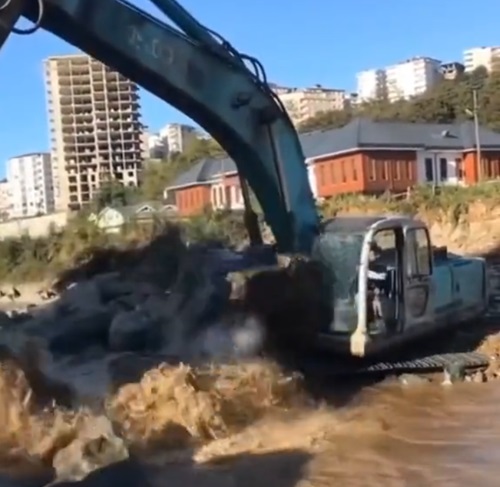
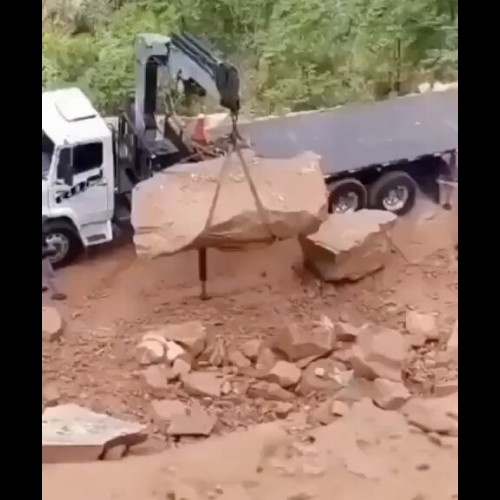
Extracting a huge boulder from the ground.
Previously:



Extracting a huge boulder from the ground.
Previously:
New: BuildThreads.com - 300+ build posts/day (with photos)



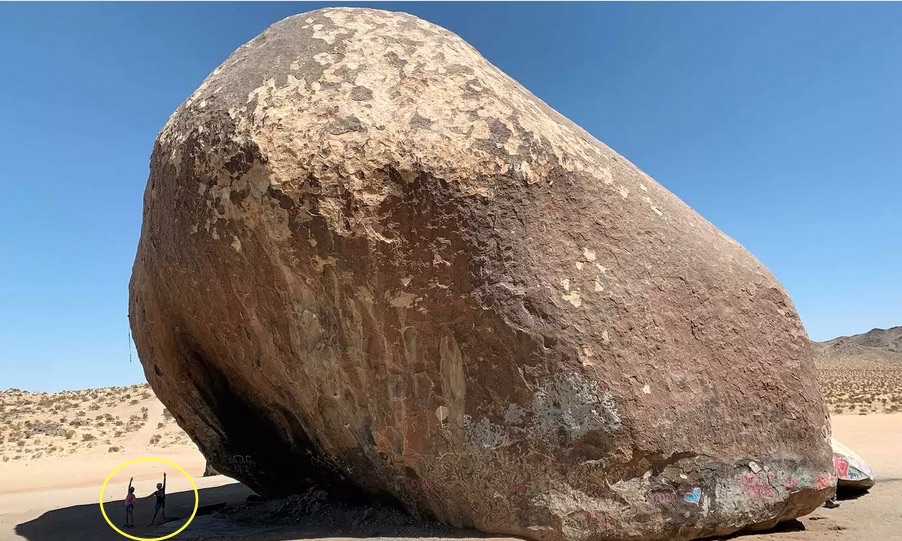
The is a big rock, but certainly NOT a HUGE BOLDER!!
Frank S (May 27, 2026)


Agreed but for some reason somebody decided to classify rocks larger than a 5-gallon bucket as bouldersOriginally Posted by hemmjo

Boulder:
≥ 256 mm in diameter (Udden–Wentworth scale) biologyinsights.com.
Cobble: 64–256 mm.
Pebble: 4–64 mm.
Gravel: 2–4 mm.
Sand: 0.0625–2 mm.
Boulders can be small enough to roll or move manually in some cases, but in common usage, they are considered too large for a person to lift Wikipedia. The classification is based on the intermediate axis length of the rock fragment, not just the largest dimension.
Size range
While the minimum is 256 mm, boulders can be much larger — from a few centimeters up to several meters in diameter. Some classifications subdivide boulders into:
Small boulders (just above 256 mm)
Medium boulders
Large boulders (>1,000 mm)
Very large boulders (>4,096 mm) biologyinsights.com.
Examples and contexts
Glacial erratics: Boulders transported by ice sheets and deposited far from their source rock Wikipedia.
Erosion features: Massive boulders exposed by weathering, such as the Devil’s Marbles in Australia or the Horeke basalts in New Zealand Wikipedia.
Sedimentary rocks: Boulder-sized clasts are found in coarse conglomerates and boulder clay Wikipedia.
In summary: A boulder is officially defined as a rock fragment 256 mm (10.1 inches) or larger in diameter, with no upper size limit, and is the largest category in the Udden–Wentworth sediment classification system Wikipedia+1.
Never try to tell me it can't be done
When I have to paint I use KBS products
hemmjo (May 27, 2026)
I can agree with that but that rock in the video is then a boulder, but certainly not a HUGE one!!!

Frank S (May 27, 2026)
There are currently 1 users browsing this thread. (0 members and 1 guests)
 Posting Permissions



 Reply With Quote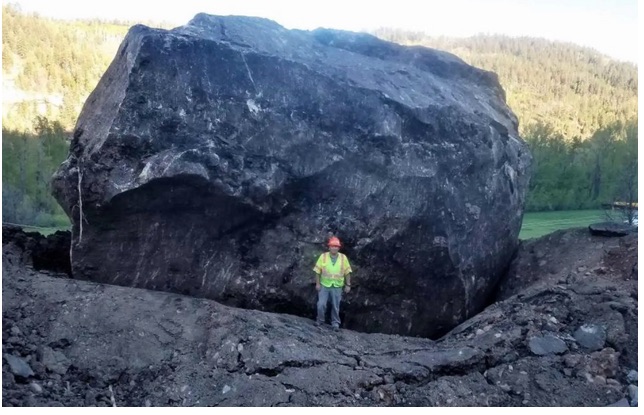
Bookmarks