Like the road runner cutting out a circle he was standing on or from below and its above his head. simply looney toones.

Printable View
Like the road runner cutting out a circle he was standing on or from below and its above his head. simply looney toones.
Ironically enough Frank, I do know someone who has done thatQuote:
Originally Posted by Frank S
Controlled silo demolition in populated area in Aalborg, Denmark.
<video controls autoplay loop>
<source src="https://diqn32j8nouaz.cloudfront.net/aalborg_silo_demolition.mp4" type="video/mp4">
Your browser does not support the video tag.
</video>
33-second video:
https://www.youtube.com/watch?v=HlxEOyaGmBg
Wow the speed of the sequencing was off the charts. Particularly like the openings on the top and large doorway on the bottom for pressure relief...wouldn't have wanted to be standing anywhere near that doorway...had to be a hurricane force wind.
Guy takes down a chimney with a handheld power hammer. Don't worry folks, he's wearing a hardhat. 0:53 video:
https://www.youtube.com/watch?v=t_I9PdgSTds
The video description is a gem:
Quote:
Manual demolition of the chimney. It was impossible to use explosives, the chimney contained arsenic. Czech Rebublic - 2018 - old textile factory Benar.
Info update 26.9.2018: i have new information. Chimney contained arsenic not asbestos! I am sorry. This method used because: Arsenic, low budget (the city council was paying for this 35 000 USD) and very low byrokracy with compared the dynamite blast.
like that hard hat would have done a lot of good
or holding it up with his other hand...at :28
Since he collected most of the 35 grand, maybe all if he salvaged bricks, pretty non-nonchalant step off rubble pile, picked up shovel and exited path of falling tower. He knew what he was doing, visibly selecting areas to penetrate and achieve fall away from structures.
I cannot remember his name, but a very well known British mason did things like this. A working class hero, even had a TV program, blogging if you will, traveling about to document demise of industry and labor in the UK.
Loved how he calmly walked off!!
Ralph
https://en.wikipedia.org/wiki/Fred_DibnahQuote:
Originally Posted by Toolmaker51
https://www.youtube.com/watch?v=ezX_o0H5FuE
Hard hat's definite safety aid.Quote:
Originally Posted by Frank S
To find where chimney pounded him into the ground like a stake. Under the hard hat he wears a knit cap, to cushion the blow.
Then there's this guy.
https://www.youtube.com/watch?v=iUJu4Vsbcc4
Now that is something I would never want to do. No safety tie ins either.Quote:
Originally Posted by Jon
What I wonder is if he will be taking the entire chimney down. Talk about making on job a career.
There are significant safety issues associated with silos. They can be deprived of oxygen leading to deaths.
Quote:
Originally Posted by suther51
yep, wouldn't want to trip up.....
He had a time to pick the shovel..and hammer ...!!
He had a time to pick the hammer and shovel too...someone would trow away everything to save his head...
I think the Dibnah method would have been a lot safer for the person doing the job there, barely more expensive either.
Yes, Fred Dibnah at least used props as he went round. Then he lit a bonfire and burned them out. Even so, he had a narrow escape. Must have taken him a lot longer, especially using a club hammer and chisel!
Cheers Jon
I was going to mention Fred - he is an absolute hero of mine.
https://www.youtube.com/watch?v=4CV2GuK6CmY
If you are interested in Victorian Engineering, he is a man well worth researching, If he wasn't repairing or felling chimneys he was building steam traction engines. he even sunk a brick mine shaft in his garden. He built a steam lift so he could get in and out like those seen in coal mines.
Run Forest Run
Re silos, i grew up on a farm and we were always getting in the silo to get the last of the barley out or clean out any moulded stuff at the bottom. working on the rigs we were made very aware of H2S gas (Hydrogen Sulphide) or rotten egg gas. In its lowest concentration you could smell something like rotten eggs, unfortunately at higher concentrations you would not be able to smell it at all as it would have destroyed your sense of smell - shortly followed by death. water tanks, confined spaces and even rusty steel oil drums can have H2S present. Rusty steel gasses as it decays gents, stale air is where this beast lives. We engineers should all be aware of this silent killer. There was an incident in the UK where a father and two sons died working at sea. The father had entered a confined space and was overcome, his son had not seen him for a while and went looking for him, he climbed into the space to rescue his father and was overcome also. His other son concerned for his father and brother went to find them both, on discovering them he raised the alarm and then climbed into the space to try and rescue them, he later died from the effects of the gas in hospital. There is a very good reason we are scared of dark places as a child. If you enter a space which has not been ventilated for some time or open a container where the air has been left stagnant for some time then please be aware of the risks. If you have ever worked on rusty metal and smelt something that smelt like rotten eggs - that was it, so you know.
FascinatingQuote:
Originally Posted by MeJasonT
One day a dozen ambulances showed up at the scrap yard across from where I used to live some of the guys were cutting up some huge steel tanks when 1 of the workers was overcome, Just by accident the foreman just happened to notice the guy go down for no apparent reason. He started out to the guy and had only made it a few feet before he saw another worker start to slump in his tracks. The foreman radioed the office and an alarm started going off. From my place across the street I cold see through the 60 ft wide open gate that something was going on. The loud alarm and lots of guys running towards the gate. 2 guys bravely drug the 2 fallen men out as they ran by. A few minutes later there were ambulances the Fire department the local police and the Sheriffs department there.Quote:
Originally Posted by MeJasonT
No one died but several were hauled off in the ambulances others were checked out. The health department people came around to my place and the other businesses near by. Turns out they had crushed a large pressurized liquid chlorine tank that no one knew was there.
wow, Chlorine is nasty stuff. To think our local water company puts it in our drinking water. our water has between 1.6 and 2 parts per million which is what the EU deem safe. our water used to be supplied through cast iron pipes, the chlorine was pumped in at a stronger dose as cast iron pipes had a tendency of absorbing it, someone needs to tell the idiots in the water authority they have replaced the old pipes for plastic now - as a result our water is unpalatable.
Its something like, if 1/2 pint was discharged from a tanker it has the potential of killing everyone in a 1/2 mile radius, seeing them things on the motorway gives me the creeps (as do nuclear flasks, just saying).
I watch our local scrap yard drilling holes in calor/propane gas canisters, pure madness, to be fair they are now starting to use a hydraulic spike, but still mental.
An old couple who now 1 of them has passed away and the other in in a nursing home heard somewhere that the way to preserve water for long term storage was to put bleach in it . Probably some misguided survivalist ramblings on the internet was where they found their information. While it is regular practice for water treatment facilities to use various chemicals in the purification of water clorine being 1 of those. These are done supposedly under a controlled environment Just like putting Iodine in water to kill the pathogens. or certain salts to soften the water. you don't just wake up 1 morning and decide to pour a few ounces of Clorox in your coffee pot to make coffee with.Quote:
Originally Posted by MeJasonT
A friend of mine and his wife had the task of cleaning out the old couple's house they found 61 gallons of water in galon milk jugs stored under the bed. He asked me what to do with it.
I thought to my self you had to call me to ask what to do with 61 dusty gallon jugs of water Oh well.
Pour it down the drain I said then recycle the empty jugs.
But the jugs have dates on them and a note that there is half a cup of bleach in them.
So whet. it is only good for flushing to commode.
Then he said his wife wanted him to load it up and bring it to me.
OK fine then I'll pour it out and recycle the jugs.
In the end when he went to pick up the jugs some of them ruptured leaving them with a wet carpet to clean.
What an IDIOT!!!Quote:
Originally Posted by Jon
There is a video of Fred Dibnah bring down a chimney with a fire. A lot of the base removed and shored with wood then a fire built and the wood supports burn away and down she come.
Just when you thought we had reached maximum chimney demolition danger. 1st GIF for context; 2nd GIF for utter disbelief. Click each GIF to play, with sound.
<video controls loop>
<source src="https://diqn32j8nouaz.cloudfront.net/chinese_industrial_silo_chipping_demolition1.mp4" type="video/mp4">
Your browser does not support the video tag.
</video>
<video controls loop>
<source src="https://diqn32j8nouaz.cloudfront.net/chinese_industrial_silo_chipping_demolition2.mp4" type="video/mp4">
Your browser does not support the video tag.
</video>
I will say that I do like the breaking hammer sling/support in the first GIF. As long as you're not supporting it on something you're demo'ing!
This has got to be fake Jon - he's not in flip-flops
yeah right get inside to work those timber will keep it standing.
Ralph
it only takes 1 brick to keep it standing or 1 brick to make it fall the key is knowing how many other bricks are needed to keep that 1 brick in place until you want to remove it.
No flip flops is one clue; but again, notice carefully selected and fully engineered shoring beams. There is an operator INSIDE hammering away, obviously those pilings offer sufficient confidence.Quote:
Originally Posted by MeJasonT
In lieu of mythical skyhooks...
Further proof that explosives are often the right answer. Actually artillery might be even better as you can keep your distance.
That guy's cornbread ain't done in the middle!
He must think he's going to survive, after all, he's wearing a dust mask!
Admittedly, that demolition-from-inside is probably at or near maximum craziness. I don't think we'll be able to beat it. However, maybe we can top it:
<video controls autoplay loop>
<source src="https://diqn32j8nouaz.cloudfront.net/destroying_chimney_from_above.mp4" type="video/mp4">
Your browser does not support the video tag.
</video>
Yep, that tops it! :p
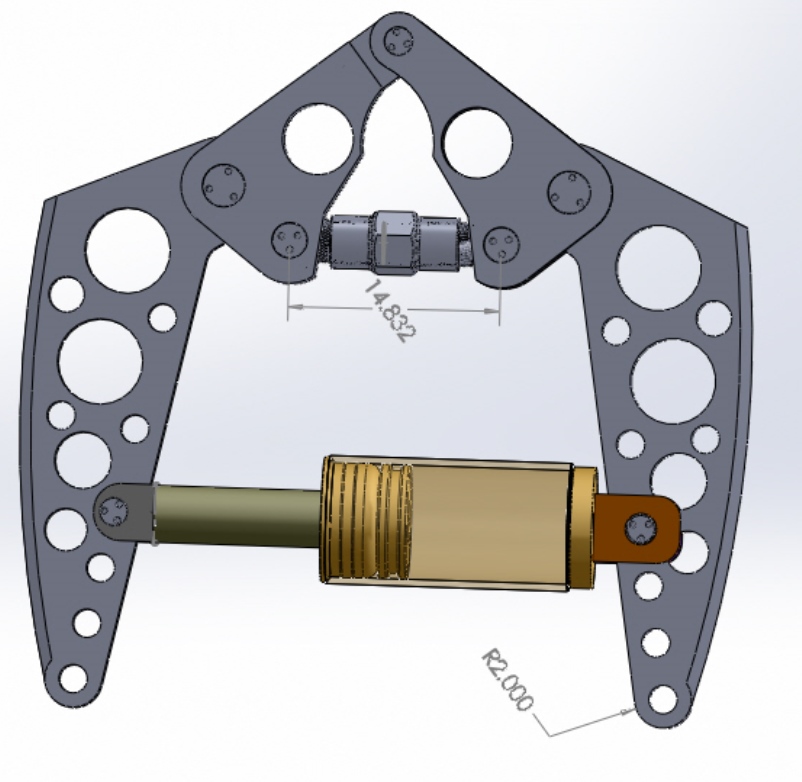
While I don't have any pictures of it in operation in the early 90's I made what I called the arms of destruction for a customer to use in demolishing a reinforced concrete chimney that was inside of a 41 story hotel. The top 30 feet that stuck above the building was brick. That was the easy part just erect a scaffold around it and use electric hammers to break the bricks loose let them fall to the bottom and hauls them away with a skid steer. But from roof level on down it was concrete with a 2 ring re bar reinforcement spaced every 10 inches with vertical bars on 6 inch spacing's.
Prior to his getting the contract 2 other companies had tried the demo of it. they had taken a few months just to remove the brick work down to the roof.
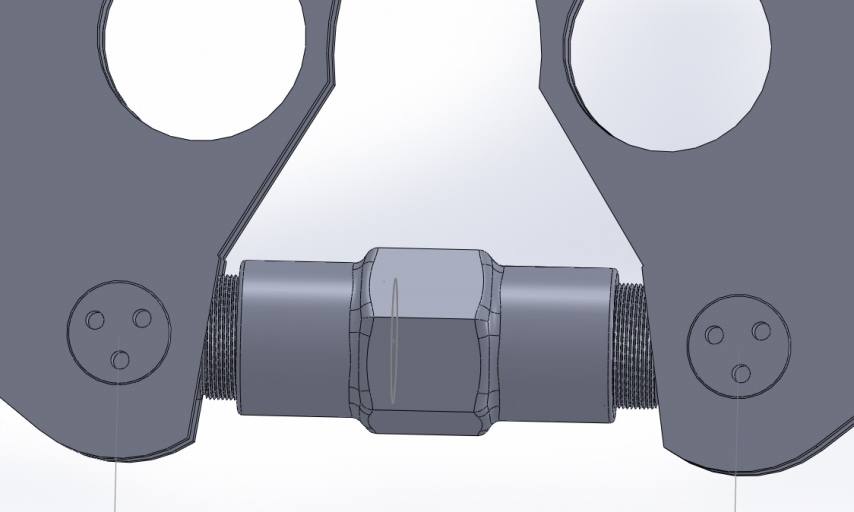
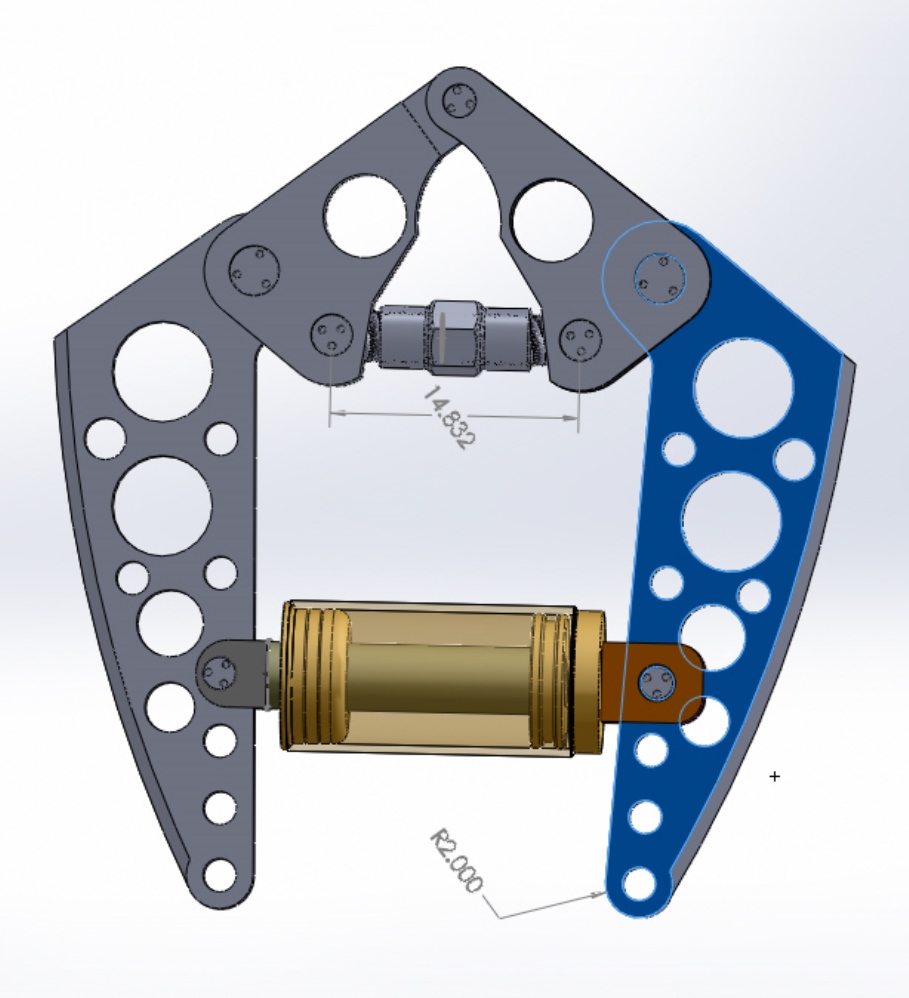
When he got the contract His initial plan was to just cut the concrete into small blocks and remove it that way. but after only 2 days he decided there had to be another way. So he and I sat down and came up with a design for breaking the concrete from inside. this is what we came up with
Attachment 26872
Attachment 26873
Attachment 26874
I made the arms out of 2 inch thick t1 steel . I made the turnbuckle out of 3" hydraulic cylinder rod the nut for the turnbuckle was just a piece of 5" hex I found at the scrap yard the pins were made out of cylinder rods as well.
we powered it with a 16 Hp Honda with a 4 to 1 2 s stage pump. We had to carry it to the roof in pieces since the arms alone weighed 150 Lbs. used a chain hoist to lower it into the chimney. then once adjusted it was simply a matter of open and close then rotate and do it again the foot thick concrete broke up in chunks we used a torch to cut the re bars as the concrete was broken away. in 18 days we had the chimney removed. At times so much concrete was falling out the slanded steel ramp we had made at the bottom that 2 skid steers couldn't keep up with the removal.
Nice design, Very cool Frank. Curious how you fed and released the cylinder...must have been a double acting cylinder and switch/valving? And keeping the lines (400ft) & fittings from harm must have been a bit of a challenge.