As the quote says, it's done so the spindle seats at different rotary orientations each time. The last thing one would want is an increment (such as an integer multiple of 1/40 = 0.025) so the spindle always seats at the same orientation.
Printable View
Got it . . . non-repeating "orientation" is the important ingredient. Thanks :)
I'm always listening, especially here at HMT. In no way could an individual amass a fraction of this spectrum in reasoning, experience, resources, and even failures. The knowledge/ open exchange of plain ideas is beneficial and entertaining. One has no clue timewise when a mere seed becomes a solution.
Physical quality [vice theoretical or administrative manipulation] one my favorite goals. My assemblage of instruments is kind of varied, so I utilize that which suits a task. Virtually, but not all were bought used; micrometers, calipers, gauge blocks, cylinder squares, calibration pyramids, zillions of indicators...each hand selected. Best feature of TAS? Tax deductible! Most are US, remaining 20% or so European & Japanese with full confidence in each one. Not one single item subject to calibration is or will be Chinese. While government sold us out of full manufacturing, they DID NOT buy my ability to produce.
In reference to micrometers, gauge blocks, and spindle orientation; varying that is not only a check of the threads but parallelism of the spindle to anvil. Calibration labs check with optical flats; sized to cause 4 spindle orientations. That can be corrected, done in a little dedicated lap. One setup would remind you of a disc brake lathe, another is a micrometer lapping plate. Either can accomplish flat and parallel less than twenty millionth of an inch (0.000020”) [0.5 micrometers]. Marv's description amplifies that; flat is meaningless without parallel. Also why some calibration standards are flat ended but surfaces measured [workpieces] are most often curved.
Calipers are lapped in the same manner, once the gib has been adjusted per that mentioned earlier. A commercially made tool of different measurement intervals is commonly used to verify calibration of vernier, dial, and digital models for inside and outside jaws. I don't believe depth rods and step features are beyond having a positive zero.
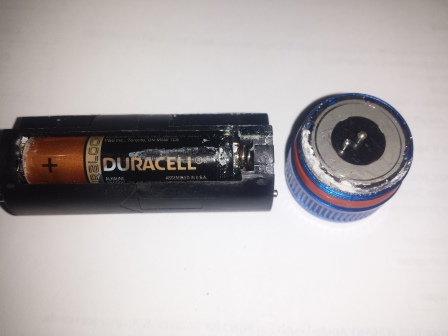
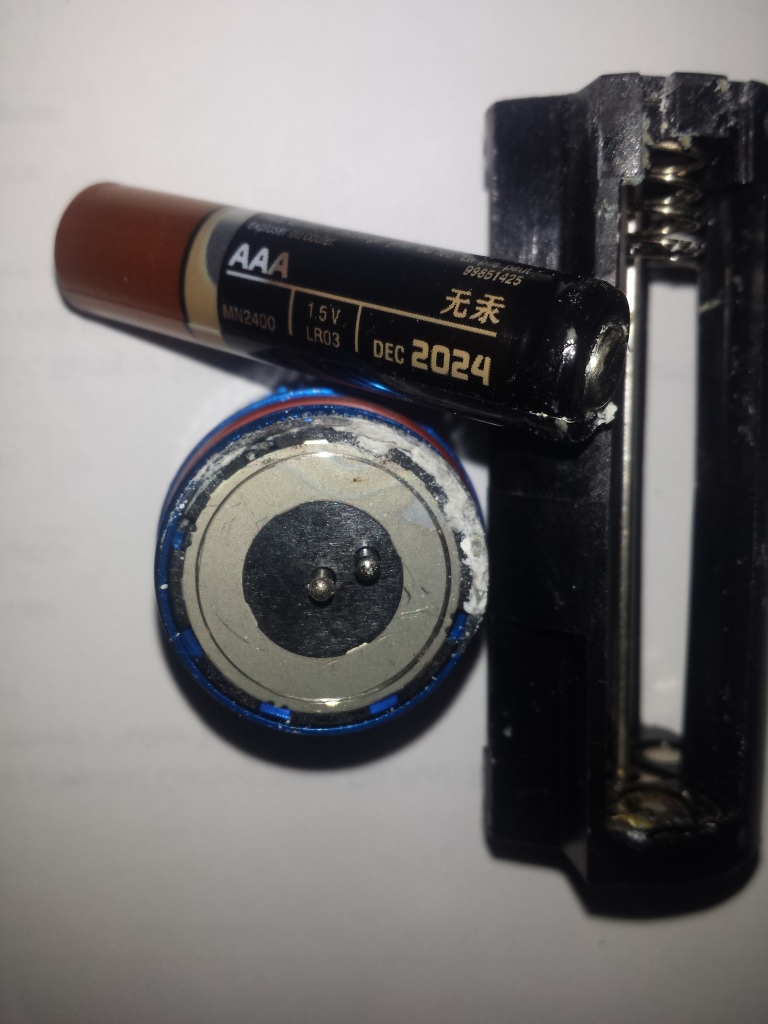
Duracell changed to an off shore manufacturer and the batteries were changed and the change is that the can that the battery is assembled in is reversed. Instead of the negative being the bottom of the can and case of the battery, they have made the positive the bottom of the can and put a seal and negative end cap on the battery. There are several brands that went to this method of manufacturing and it don't work very well at all as most leak, even brand new in the packaging! I have went through everything I have Duracell batteries in and almost all were leaking (I live at 6500 ft above sea level). The AAA and AA seem to be the worst for me but that was the most sizes I use. The date codes make no difference as all Duracell batteries are now made this way and most all will leak, especially if any pressure builds up in the cell due to altitude or anything that causes a pressure to develope in the cell.
There are some great technical articles that can be found by Googling defective leaking batteries or such. Googling leaking Duracell batteries will probably bring up what you are looking for and will explain better what the exact problem is. Hope this helps and hope you don't have any Duracell batteries in any of your expensive equipment. If you do, you better find another brand that has the positive end of the battery sealed rather than the seal on the negative end. I have thrown away several hundred dollars worth of batteries and some equipment that had the electrolyte leaked out and had got under the IC's on the citcuit boards and caused unrepairable damage to the instrument.
Duracell is happy to replace the batteries with the exact same type and some may be leaking when you receive the replacements.
Good luck with getting Duracell to replace any equipment that their leaking batteries have damaged or destroyed.
I purchased a set of Duracell flashlights of the aluminum MAG type that were LED and very bright and had a flashing mode on them to scare someone away supposedly(?). I bought these at one of the large box stores that requires a yearly membership. One used D cells, one used C cells. Of the two sets of these flashlights I purchased, all but one would not work, I opened them up and all had leaking Duracell batteries in them, 1 I couldn't even get working as it had eat all the tracks from the circuit board that had a IC, few other components and the large LED array. The aluminum tubes were etched from the leaking batteries which was sealed to the outside air supposedly as they were supposed to be waterproof. I took back the set that I couldn't even get working and got my money back. They made a remark that they had almost all returned that had been sold.

I have noticed the same thing with Duracell. I have had at least 10 Duracell batteries leak in the last couple of years. I think they have some sort of manufacturing problem. They are either unaware of the problem or will not acknowledge it. I'm starting to move to other batteries. I'm trying the Amazon Basics for now, but in my first test (computer mouse) they don't seem to have the life of the Duracells. More testing needed.
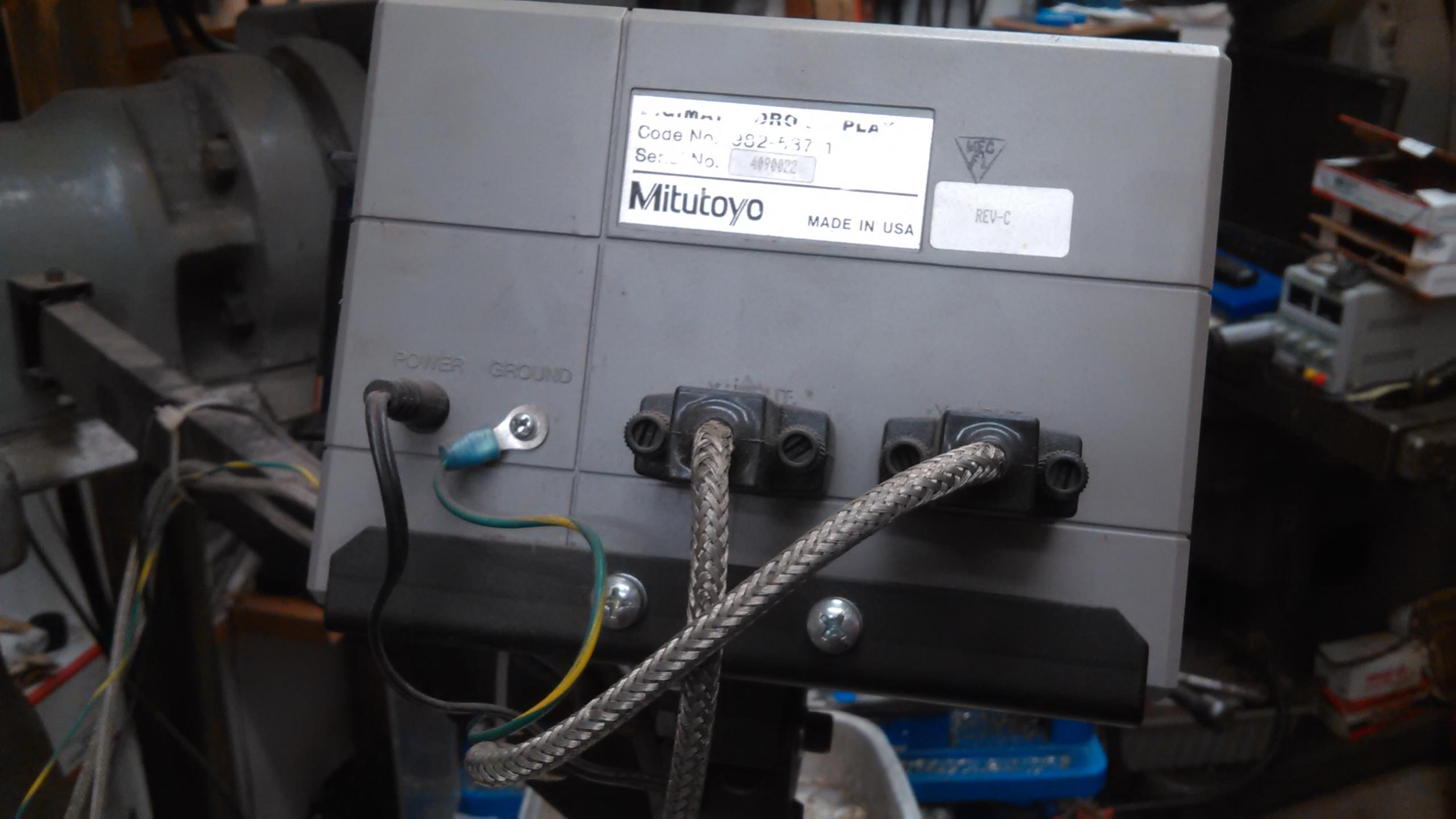
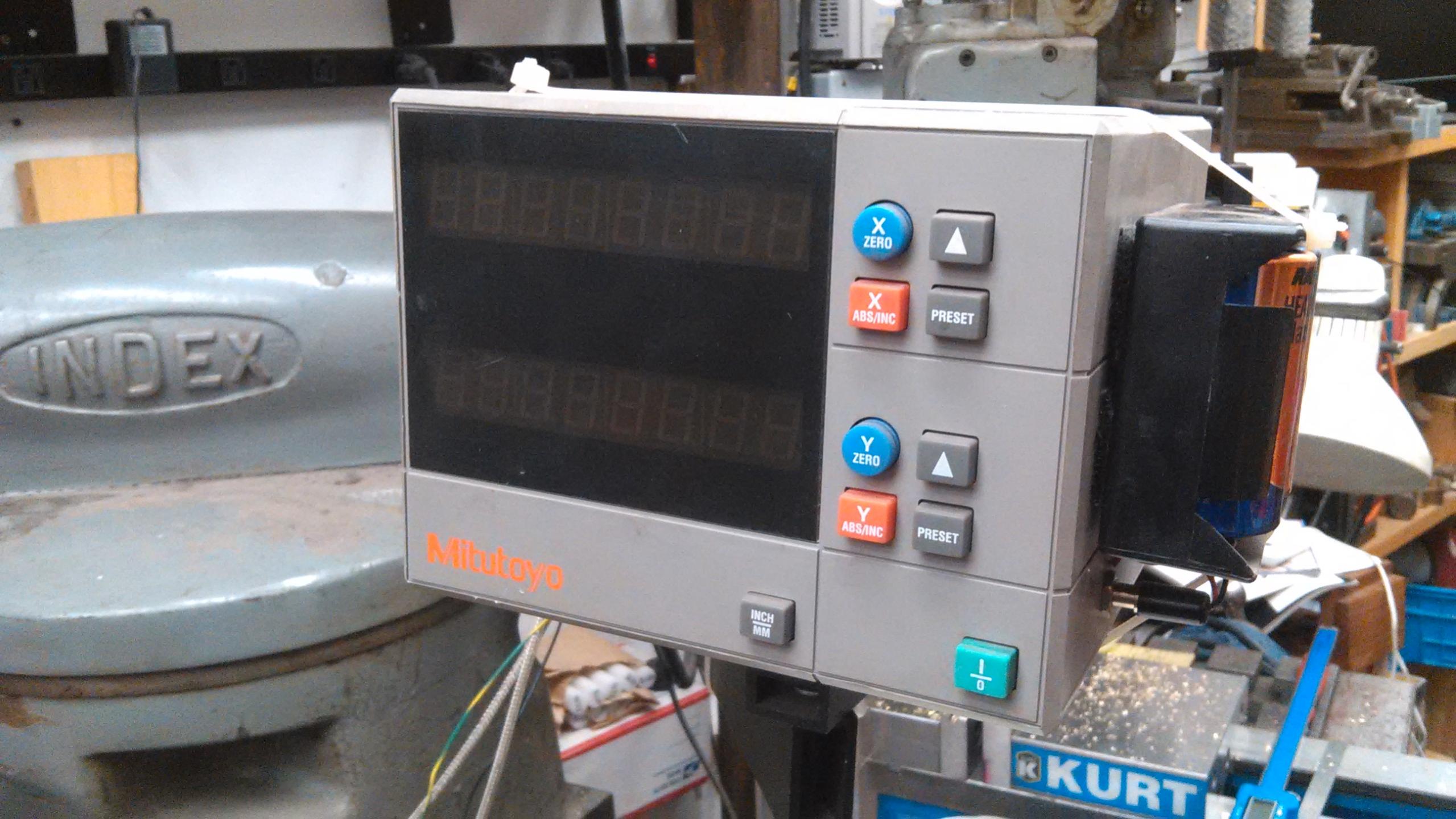
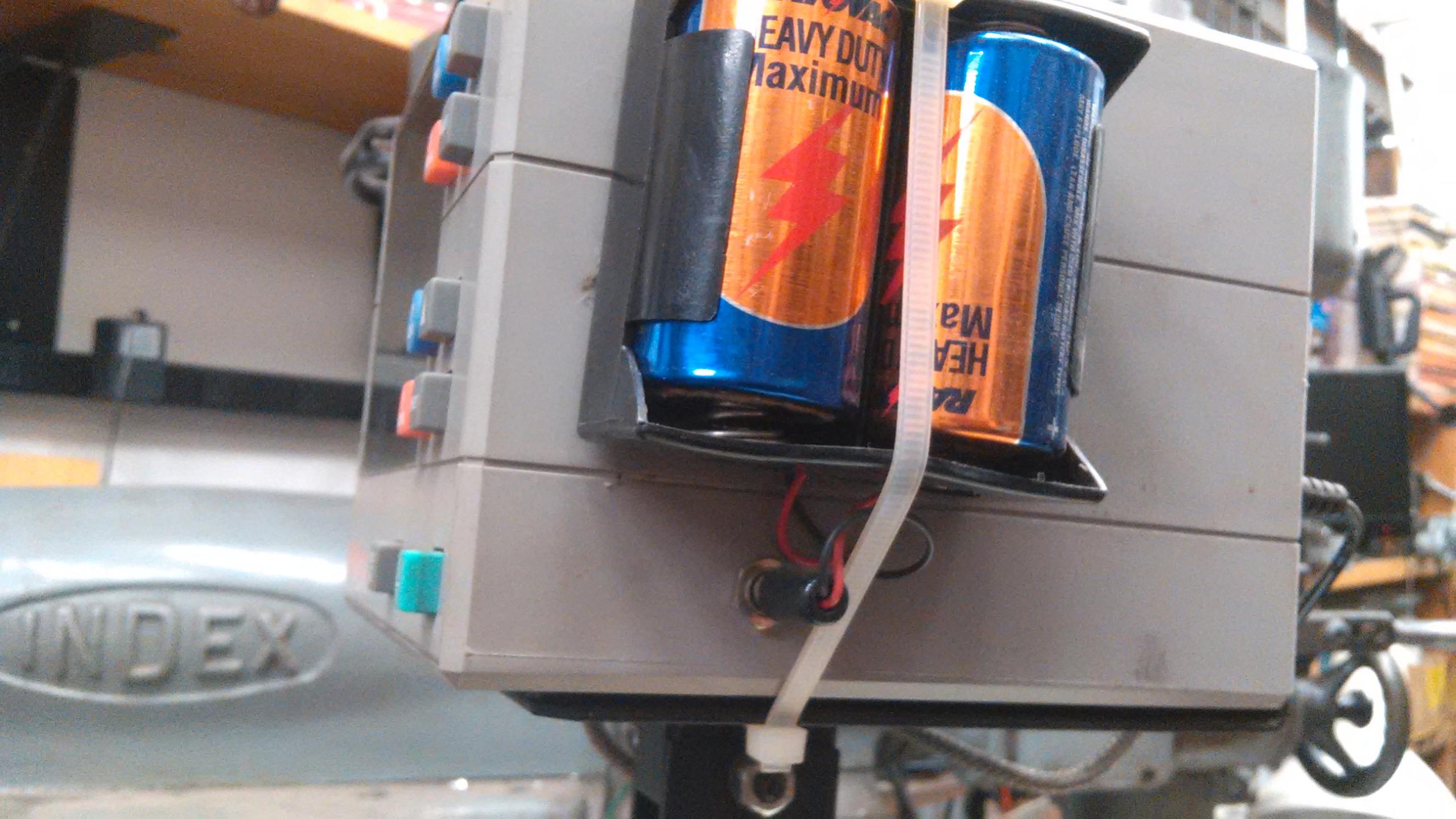
I found a similar problem with a DRO, but compounded was the Mitutoyo was darn hard to change the batteries in, as considerable disassembly was required to access them. So my fix was to install and external battery pack. I just happened to find D size battery holder at a Radio Shack (when they still had electronic components). I installed a power connector on the case of the DRO display and then used a mating connector to inject the external battery power.
Attachment 17309Attachment 17310Attachment 17311
I used double sticky foam tape, but the weight of the batteries resulted in the zip tie fix. The rear view shows 2 screws that have to be removed to take the display head off the mount tray, then I believe the bottom is removed to access the internal batteries. I also found the life of the AA to be short in this unit.
There seems to be more of a reason for the old Batteries not included slogan now than ever.
I was hoping when the old Rayovac batteries disappeared that the leakage issue was put to rest.
.
I didn't realize the Duracell drama waters ran so deep. To be fair, most large companies are tangled in plenty of litigation, but there are two interesting Duracell class actions. One was over misleading statements surrounding superior battery life, and was settled in 2014 for $50 million:
https://topclassactions.com/lawsuit-...on-settlement/Quote:
In Joshua Poertner v. The Gillette Company and The Procter & Gamble Company, plaintiffs alleged that the Defendants participated in misleading and deceptive advertising and marketing of Duracell Ultra Batteries. Plaintiffs further claim that their advertising statements including the statements “Up to 30% Longer in Toys* *vs. Ultra Digital” and “Our Longest Lasting,” mislead consumers into purchasing the Duracell Ultra Batteries.
And another lawsuit, explicitly over the leaking issue, was dismissed in 2016:
Lawsuit over Duracell batteries guarantee is thrown out | ReutersQuote:
A federal judge threw out a lawsuit accusing Procter & Gamble Co (PG.N) of misleading consumers by guaranteeing that Duracell batteries would not fail for 10 years, when in fact the batteries might leak when used or stored normally.
In a decision late Tuesday night, U.S. District Judge Lucy Koh in San Jose, California, rejected claims in the proposed class-action lawsuit that P&G and its Gillette unit defrauded consumers in ads and packaging for Coppertop batteries containing "Duralock Power Preserve" technology.
Koh said reasonable consumers would understand that P&G's representation that the batteries were "guaranteed for 10 years in storage" was a warranty to repair, replace or refund batteries that failed within that timeframe, and not a promise that the batteries "have no potential to leak."
Interestingly, the suit that settled for $50 million was the subject of considerable debate over the disproportionate amount of the settlement given to the attorneys (94%), vs. the amount offered to affected consumers - up to a whopping $12 cash if you kept the proof of purchase for your batteries: Supreme Court petition in Duracell class action spotlights fee abuses | Fortune.com.
Just a heads up for anyone going this route, I didn't realize it at the time but some H.F. calipers only go up to hundredths! The ones pictures are, you guessed it, those kind! They are the ones made of graphite. I got those for ease of drilling. Might as well just tape a yard stick on! :lol: Luckily they were very cheap so not much loss. So if your doing this mod, get the metal ones that measure in thousandths.
Because of this change, I had to modify the way they attach in the pic as trying to drill though those steel calipers is impossible. I think they are made of titanium!?!
Also it seems that the new ones all turn on with any movement which is annoying as you don't always need a DRO. I am going to be adding some micro slide switches to mine to shut them off when not needed.
Several people have mentioned the fact that short battery life is because the calipers and other measuring devices don't turn off when switched off. Yet someone mentioned that their Mitutoyo didn't eat batteries.
There is a fundamental difference in these calipers that explains this.
Absolute measuring tools like the Mitutoyo Digimatic always know where they are, you can replace the battery and it will come back to life with the original measurement. The cheap chinese versions are usually incremental and zero is where you last pressed the zero button. If you remove the battery and replace it you lose the setting and will have to manually reset it. So the only way to retain the settings when you switch it back on is for it to never have been switched off in the first place. So they just dim the screen. This is easily confirmed if you attach a logic analyser to the clock and data pins of the data port. The device will continue to output the measurement data whether you think it is switched on or off. The display actually draws very little extra current so the only point in having an on/off switch is to mislead the user into thinking that he is saving the battery.
So to summarise, absolute calipers switch off when you think they do and so have good battery life, assuming that you switch them off when not in use, although some do that after a time out. Incremental calipers do NOT switch off when you expect and consequently eat batteries.
A fix for short battery life is to bring a couple of wires out from either the battery compartment or the data port and attach them to a triple or double "A" battery riding piggy back on the housing. Not very tidy but functional. If a trailing lead is not a hindrance then a remote battery or 1.5v wall wort ( 3v for some devices) is an option. For example a digital dial gauge on a comparator stand.
I'd say likelihood of Titanium is zero, zilch, nada, no way dude. They are only batch hardened Stainless; sort of non-magnetic, for the grind process and slide with low friction. Surface work hardens farther in reaction to machining with high speed cutters. Like 316, 321 SS etc, but worse.
Thanks Jon for the useful information. Sure wish I had know about the Druracell problem years ago. I imagine it must have taken a very large number of users and considerable damage over time to rise to the level of a class action suit. Unfortunately, I learned the hard way.
Duracell has been having problems with battery copies from China. Supposedly even Lowe's and HomeDepot have been stung by counterfeits. I have gotten a bunch on special at Staples that have leaked while still in the sealed packages with 2-3 years left on their date....stored in an air conditioned shop. Whether they are real or not, I do not know, but I now buy AmazonBasics batteries when possible.
In ALL the expensive flashlights and other AA/AAA devices I've bought in the last few years I've always found Energizer batteries. Since switching over to the pink bunny I've not had a single leaker. They even guarantee leakproof operation...
No Leaks Guarantee | Energizer
I only have one that I use. Pretty good idea.
http://www.homemadetools.net/forum/i...quote_icon.png Originally Posted by Saltfeverhttp://www.homemadetools.net/forum/i...post-right.png. . . . I can’t tell you how many devices have been ruined by Duracell batteries. They are complete crap. It took a while and the loss of some lovely tools but I finally caught on. I will never buy a Duracell anything. The company was purchased a few years ago and downgraded their manufacturing.
I made my original post more than a year ago. You would think I would have learned by now. But as you can see Duracell has ruined another device. (not to mention a $1200 navigation instrument a couple of years ago). I thought I had found everything with batteries but alas, I was wrong.
Attachment 24188Notice the expiration date! Attachment 24189
Almost every Duracell I have had has failed in service. As soon as I realized the issue I removed them but I have so many seldom used devices (some tucked away into rarely visited cubbyholes) it has taken more than a year to remove Duracell completely from my life. Their warantee is useless. It only covers the cost of the battery regardless of how expensive the device is. Tell people you care about too. Remove them now or corrosion will be your next discovery.
I friend brought an OBDII scanner over for me to use on a Ford Expedition I recently bought only to find that his batteries had began to leak I got it cleaned up to work but that got me to thinking about some of my more expensive laser levels and other devices that I hardly ever use So he and I started going through all of my storage areas digging out device after device. checking for batteries. Fortunately I had removed all of the batteries already so none were at risk
Just adding another voice to the "Duracells leak" thread. Cheap Chinese batteries stand up to life better.
Yes, definitely remove the batteries from any seldom-used tool. Also, if you store the batteries with the tool, ensure that they're in a plastic container of some sort; pharmacy pill bottles work well. Just because the batteries are out of the device doesn't mean they'll never leak. If they do they can make a mess of tool boxes.
Inevitably, you'll still need to clean up after a leak. A Dremel or Foredom fitted with this style wire brush...
https://www.amazon.com/Dremel-443-02...mel+wire+brush
can easily get into those deeply buried battery holders. This style brush...
https://www.amazon.com/Dremel-428-02...mel+wire+brush
works well in larger open spaces.
They're alkaline batteries so their deposits will loosen/dissolve in the presence of acidic solvents. I use vinegar on long cotton swabs like these...
https://www.amazon.com/SE-CS100-6-Co...bs+wood+sticks
and a miniature hot air gun on lowest setting to evaporate the last traces of moisture before installing new batteries.
Another argument for storing batteries in plastic containers...
It's almost impossible to accidentally short an AA-style battery. A 9 volt, on the other hand, needs nothing but brief contact with a screwdriver, nail, etc. or the side of the drawer in a metal tool box.
Many spare drill batteries have contacts so oriented that accidental shorting is a possibility. A little plastic goes a long way to preventing fires.
Oh, and one more warning...never carry 9 volt batteries in your change pocket. :-)
"Oh, and one more warning...never carry 9 volt batteries in your change pocket. :-)
I'm not even going to ask how you learned that bit of information.
I'll never forget my very first experience with 9v batteries. my dad had given me a little 2 transistor radio when it came time to replace the battery I somehow managed to pinch the tiny wires of the contact clip between the radio and the battery A few minutes later the radio was getting warm in my pocket by the time I got the battery out it was hot enough to burn my fingers after getting the wires separated and taped the radio was fine but I didn't have any finger prints on my thumb and fore finger for a while. Lesson learned 7 year olds don't always know as much as they think they do.
I was tempted to add the DAMHIKT acronym but, in this case, I was smart enough to know not to do that from an early age.
That's not to say I haven't shorted a few batteries in my lifetime. My first car was a VW bug. The 6 volt battery was under the rear seat so one had to prop the seat up to top up the battery. While doing that I managed to drop a screwdriver, with perfect aim, directly across the electrodes. The resulting cascade of sparks ignited the strands of burlap-like stuff hanging from the bottom of the seat. So here I was, wedged into the back of the tiny car, head under seat and the flames getting dangerously close to my hair. I always had a rag for mopping up spills so I was able to beat out the (actually rather meager) flames. But from then on I used a wooden strip to pry the cell filling caps loose.
suds proof?
Thats cool , clean setup you got there . Now you can work in Sae and metric much easyer. great job