-
Ship handling manned models - photo and video
-
-
You can call them toys, as they do resemble what one might think of as an old six flags amusement ride, but what better way to learn the skills required to be harbor pilots of the huge vessels than in a controlled proportionally miniaturized environment. If everything is true to scale not just vessel and port sizes, but horsepower to weight even scaling the props and thrusters, The trainer would have the trainee call out the commands just as if he were piloting the real vessel.
The facility would be no different than how NASA trains the astronauts for their missions in space
-
Quote:
Originally Posted by
Frank S

You can call them toys, as they do resemble what one might think of as an old six flags amusement ride, but what better way to learn the skills required to be harbor pilots of the huge vessels than in a controlled proportionally miniaturized environment. If everything is true to scale not just vessel and port sizes, but horsepower to weight even scaling the props and thrusters, The trainer would have the trainee call out the commands just as if he were piloting the real vessel.
The facility would be no different than how NASA trains the astronauts for their missions in space
I understand the concept. It is just amusing to watch the big smiles on guys in the tiny boats.
-
I wonder if they have electronic delays built into the model ship controls so that the model reacts as ponderously slowly as the real thing.
-
Quote:
Originally Posted by
mklotz
I wonder if they have electronic delays built into the model ship controls so that the model reacts as ponderously slowly as the real thing.
I was thinking they may be using tiny trolling motors as the bow thrusters and larger ones with rudders mounted behind them for the main drives.
But I get your point even the trolling motors could be overly responsive at times
-
1 Attachment(s)
Regarding the propulsion systems, it would be fairly easy to scale the thrust and responsiveness with motor controls and different types of props or turbines, as well as by changing the mass of the ship model. But from my experience building flying scale models, I wonder how they are dealing with wind and currents, which are much harder to control and vary in a scale manner. I know wind can have a significant effect, and it stands to reason currents in the water would have much more because of the greater density of the fluid.
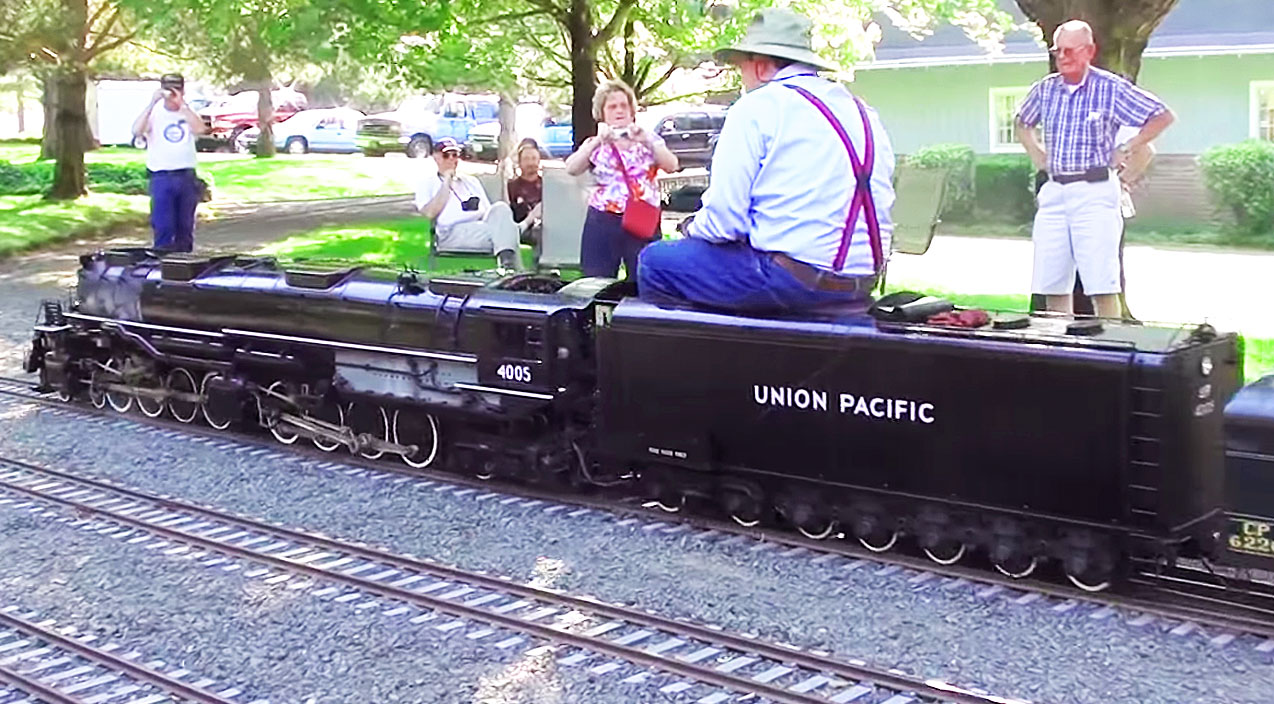
Oh, and I first thought these guys were like the ones who build scale railroads you can ride, like this fellow:
Attachment 42577
-
Seems that lower RPM motors and scale pitch propellers, along with adequate draft and displacement could make these lifelike; real clumsy canoes.