 LinkBack URL
 About LinkBacks
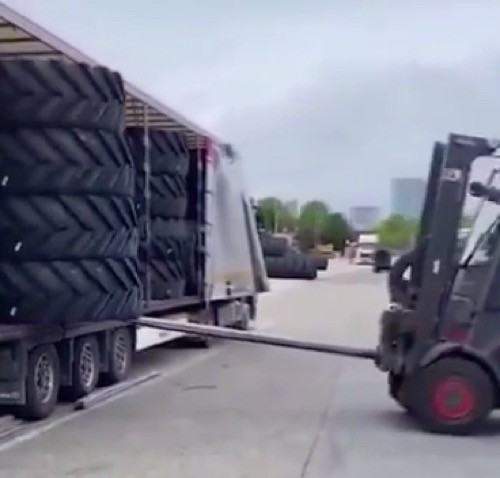
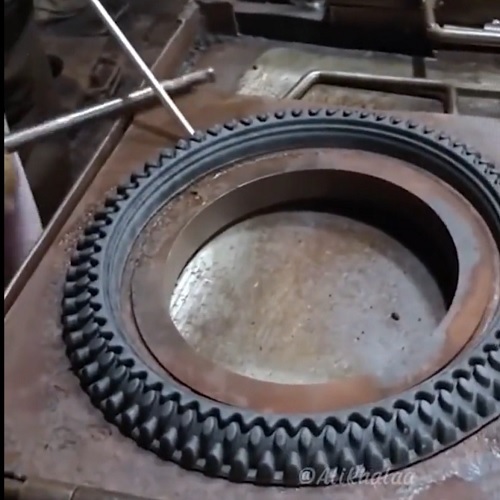
Stacking three tires into one.
Previously:



Stacking three tires into one.
Previously:
New: BuildThreads.com - 300+ build posts/day (with photos)
emu roo (May 26, 2026), Floradawg (May 26, 2026), nova_robotics (May 31, 2026)



Hi Gang: But Why? Carl.

My guess is that the tires either failed quality control or are subject to a recall and are being prepped for disposal. If that is not the case, the person on the receiving end of this isn't going to have a very good day.Originally Posted by carl blum

emu roo (May 26, 2026)

Why? Because likely they have a volume problem and not a weight problem with shipping - they ship empty space with the tire hole...
Same reason why they compress hay bales of grass straw to ship overseas - it is a volume problem, not a weight problem - the shipping container has a fixed volume...
emu roo (May 26, 2026)

That guy is a brute!
They could be being disposed of. I'm sure that wouldn't do the tires any good.
Stupid is forever, ignorance can be fixed.
emu roo (May 26, 2026)

I want to see the video of the guy taking them back out!
"The man who views the world at 50 the same as he did at 20 has wasted 30 years of his life."
- Muhammad Ali
BuffaloJohn (May 28, 2026), Floradawg (May 28, 2026)

That was my first thought too. Holy crap. He twisted those tires up like it was nothing. I'm not even sure I could do it at all. I'd probably get it halfway folded over then I would catch it in the face.

Sure no problem. Here you go:

Too many indicators point to new tires; shop clean, tires clean, stickers on all, good tread,
all the same tread pattern, no road grime on the guys hands.
I searched for "nesting tires for shipping" That led me to you tube with a short version of the
same video with this explanation;
24,923 views Mar 21, 2026
VALUE ADDED: This method shows a simple way to reduce shipping space and
costs by stacking tires efficiently. It helps businesses and workers optimize
storage and transportation without extra equipment.
EDUCATIONAL VALUE: Nesting tires reduces volume by utilizing empty interior
space, a common logistics principle used in warehousing and shipping. This improves
load efficiency and lowers transportation costs.
HOW IT WORKS: The process involves inserting smaller or flexible tires into the hollow
center of a larger tire, creating a compact stack. By aligning the tires carefully and
compressing them slightly, multiple units can occupy the same footprint as a
single tire, maximizing available space during transport.
DESCRIPTION (SEO-Friendly): This video demonstrates an efficient tire nesting technique
used in logistics and shipping. By stacking multiple tires into one, workers can significantly
reduce storage space and improve transport efficiency. This practical method is widely used i
n warehouses, tire distribution centers, and supply chain operations to optimize load capacity.
EDUCATIONAL EXPLANATION: Tires are designed with hollow centers, which makes them ideal
for nesting. By leveraging this design, workers can minimize unused space in shipping containers
or trucks. This approach follows basic logistics optimization strategies, where maximizing volume
utilization leads to better cost efficiency and reduced environmental impact.
SPECIFICATIONS: The technique works best with flexible rubber tires of similar or compatible sizes.
It does not require specialized tools, only manual alignment and moderate pressure. Commonly applied
in bulk tire handling environments such as warehouses and distribution hubs.
Who commented "Because likely they have a volume problem and not a weight problem with shipping" ?
One thing to note, those nested tires are not big tires. How they fold indicates they are thinner, probably not steel belted, etc...

There are currently 1 users browsing this thread. (0 members and 1 guests)
 Posting Permissions




 Reply With Quote
Bookmarks