
 LinkBack URL
 About LinkBacks

Alan,
There are many things that contribute to a good handling bike, so it is very risky to select one item from the whole mix and credit that.
The Earles' have many things in their favour but their main disadvantage is that they have high steered inertia, too much metal away from the steering axis. That slows the steering and I doubt that they are optimum for a trails bike. Another problem for a trails bike is that unless you have a very low pivot the axle path is fairly vertical. This is detrimental to pushing over bumps. The usual comment on this aspect is the "Is it easier to push or pull a wheelbarrel over a step?".
On the other hand the short links on the contemporary Greeves had much lower inertia and the shorter links allowed a rearward motion of the axle without having such a low pivot position to get hooked up on rocks etc..
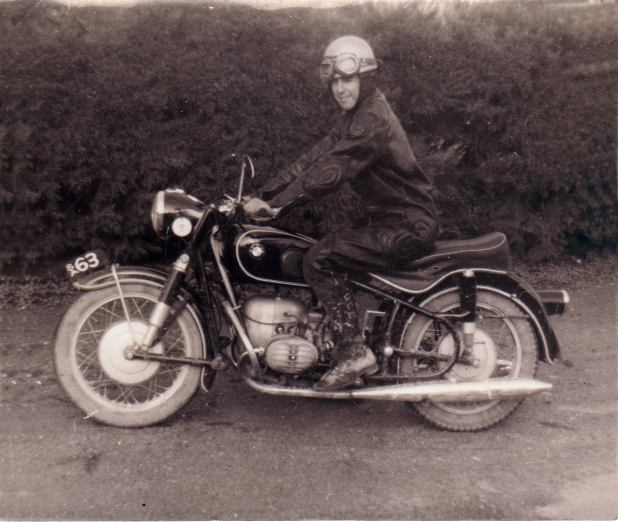
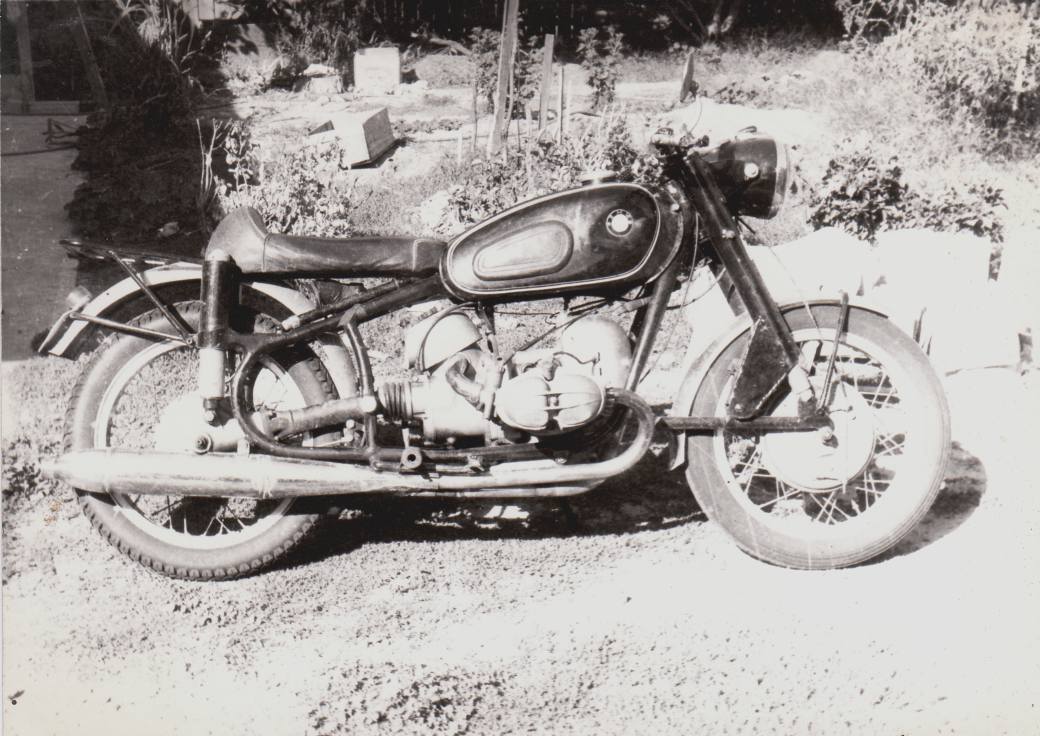
I had 3 different BMWs with the Earles forks and in general they worked OK but there were two problems. The anti-dive was excessive because the brake back plate was fixed to the swing-arm. (I think that I see a parallel brake torque arm on the RHS in your photo, that is an indication that yours has a floating brake plate and the anti-dive will be about right.) As I mentioned the inertia was high which led to predicable wobbles as you slowed down through 40/30 mph. Back in my teens I made a set of short leading link forks to replace the Earles, the difference was chalk and cheese. No more wobbles, and nicer braking.
A youthful TF on the Earles' fork model.
Click for full size.
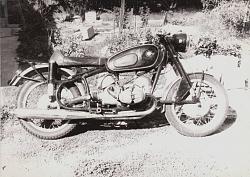
Now with my short link forks.


 Reply With Quote

Bookmarks