
 LinkBack URL
 About LinkBacks


I’m never bashful about admitting when things do not pan out exactly as planned.
The heat recovery unit both worked and didn’t work. In some ways it functioned as expected, since there was a significant amount of heat transferred and with a small fan on the mantle that heat was circulated well. Where I failed was in my not taking into consideration that the plenum effect inside of the unit needed 2 things possibly 3, 1 the exhaust from the stove was the same size as the rest of the chimney had this been smaller it might have created a venturi which may have helped to raise the combustion temperatures but a forced air intake would have been better. Another factor is my chimney is right at the recommended height above the peak of the roof the standard minimum is 2 ft to 4 ft mine being at 4 ft, under normal circumstances should be ideal. However the standard does not take into account for low height roofs and nearby obstructions, the peak of my house is barely 13 ft from the ground. I have 2 50 ft tall fruitless mulberry trees with 40 to 50 ft crowns one on the west/ southwest one on the Southeast, each being about 50 ft away from the chimney. To the North again about 50 ft away, I have my temporary tent shop with a peak of 20 ft also to the north I have a wooded area of several acres these create a disruptive laminar flow to the air currents. So even in winter with no leaves the limbs and branches there is still some disruption. What I really need to do is to add another 4 ft of triple pipe to the top of the chimney.
The heat recovery unit had a thermal mass of 50 lbs had it been 3o lbs the convection would have been faster but for a shorter period of time. Had it weighed 100 lbs the heat would have lasted longer, but required an even hotter fire to reduce the creosote buildup. Oval tubes would have had a lower restrictive flow pattern in turn would have reduced the horizontal surface area.
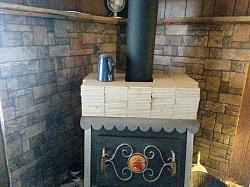
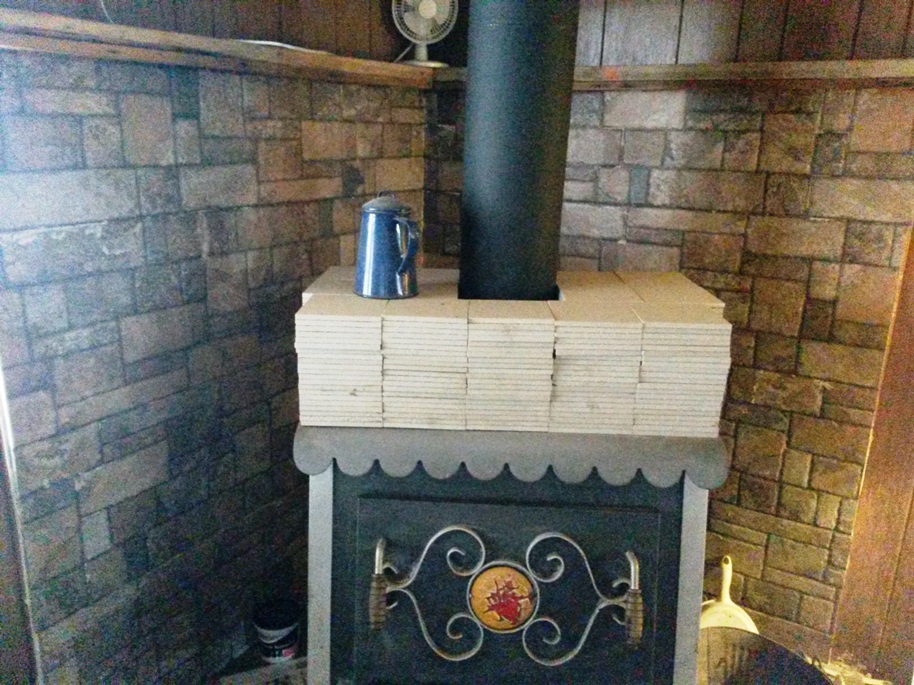
The ceramic tiles offer a couple of advantages that could have helped the recovery unit as well. 1 the 250 lbs. of mass retains heat for longer periods of time offering a stable continuous release the other advantage is being situated right on the top of the stove the combustion heat remains much higher even after the fire has consumed most of the wood. Keeping the damper partially closed slows the consumption even further. The stove is made with a fire brick lining on the bottom and halfway up the sides, a good design but falls short of ideal the ceramic tiles correct this greatly.
I hope this post serves to help others who may be considering doing a similar build in the future.



 Reply With Quote

 Originally Posted by Frank S


Bookmarks