This is
NOT and
never will be a
BRAD POINT bit. It could be facetiously referred to as a 'nail point' bit. These are pretend brad point bits. In some cases as you found the hole edge is really a mess due to the 'scraping' action of the outer cutting edge.
A
TRUE brad point bit has a
very small point, like a
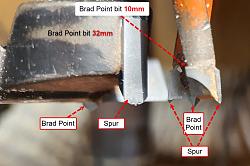
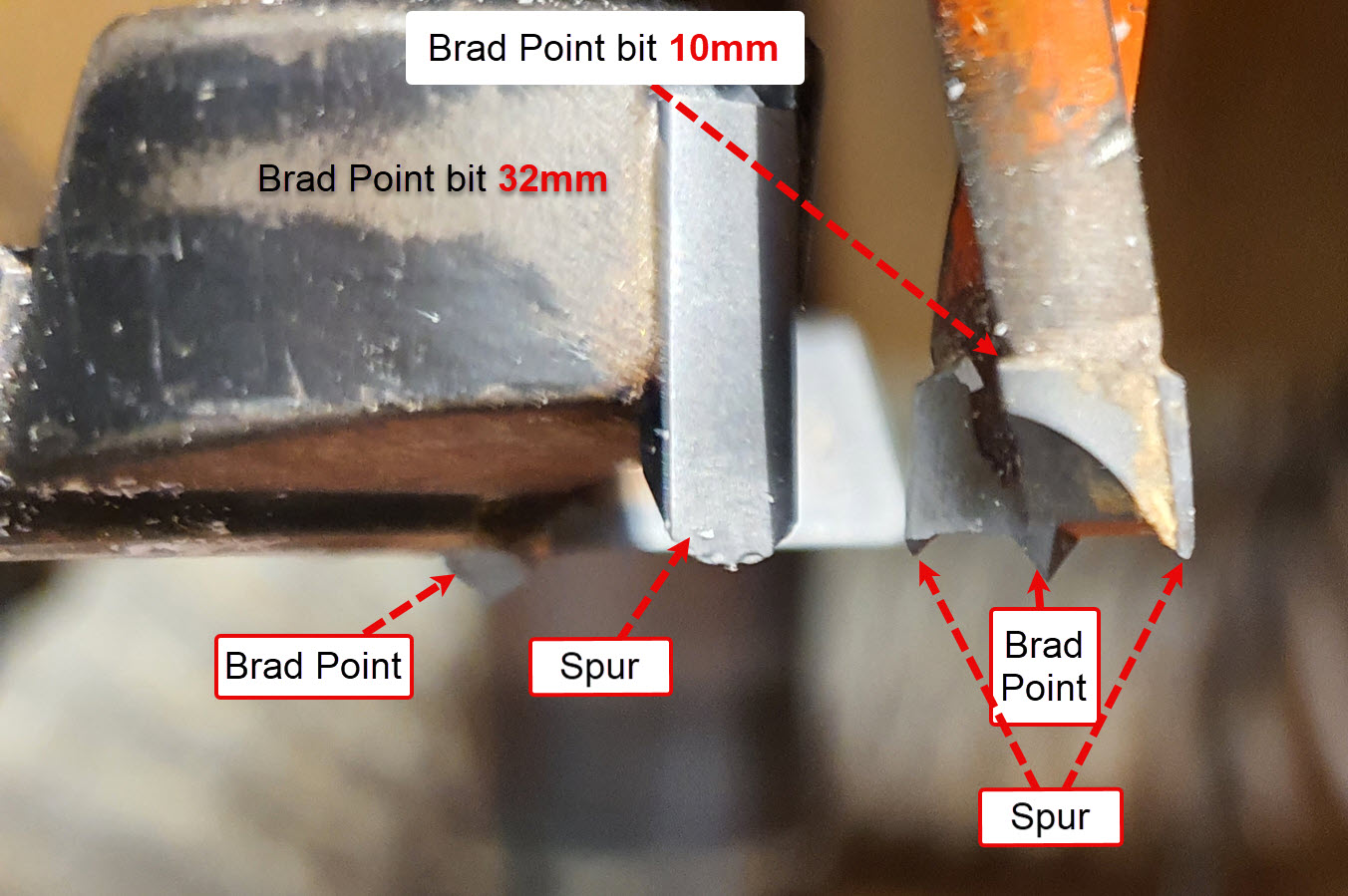
brad! The true brad point bit has cutting 'spurs' at the outer end of its cutting edge. Normally the brad point bit has a flat cutting edge, as the outer perimiter of the hole is already cut by the spur. This results in a flat bottomed hole, very useful in some circumstances.
I had this discussion with the manager of a huge tool store in Perth. He argued with me that the Sutton drills I purchased
WERE brad point bits. He'd been in the business '
for years' and
knew what he was talkng about (
he didn't). I needed to drill some precise CLEAN edge holes and though knowing the drills were NOT brad point bits I took a chance that being brand new the drill would provide a clean edge hole. They didn't.
The manager would not give me a refeund for the drill I used, the drill that
PROVED they did not cut a clean hole. He needed the ok from Sutton
[the Austalian manufacturer of the dril bit] So a quick call to Sutton and advising Sutton they were
NOT real Brad point bits, they
agreed with me and authorised the refund. Hopefully the manager is now wiser about brad point drill bits :-)
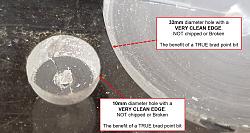
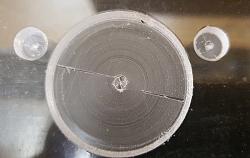
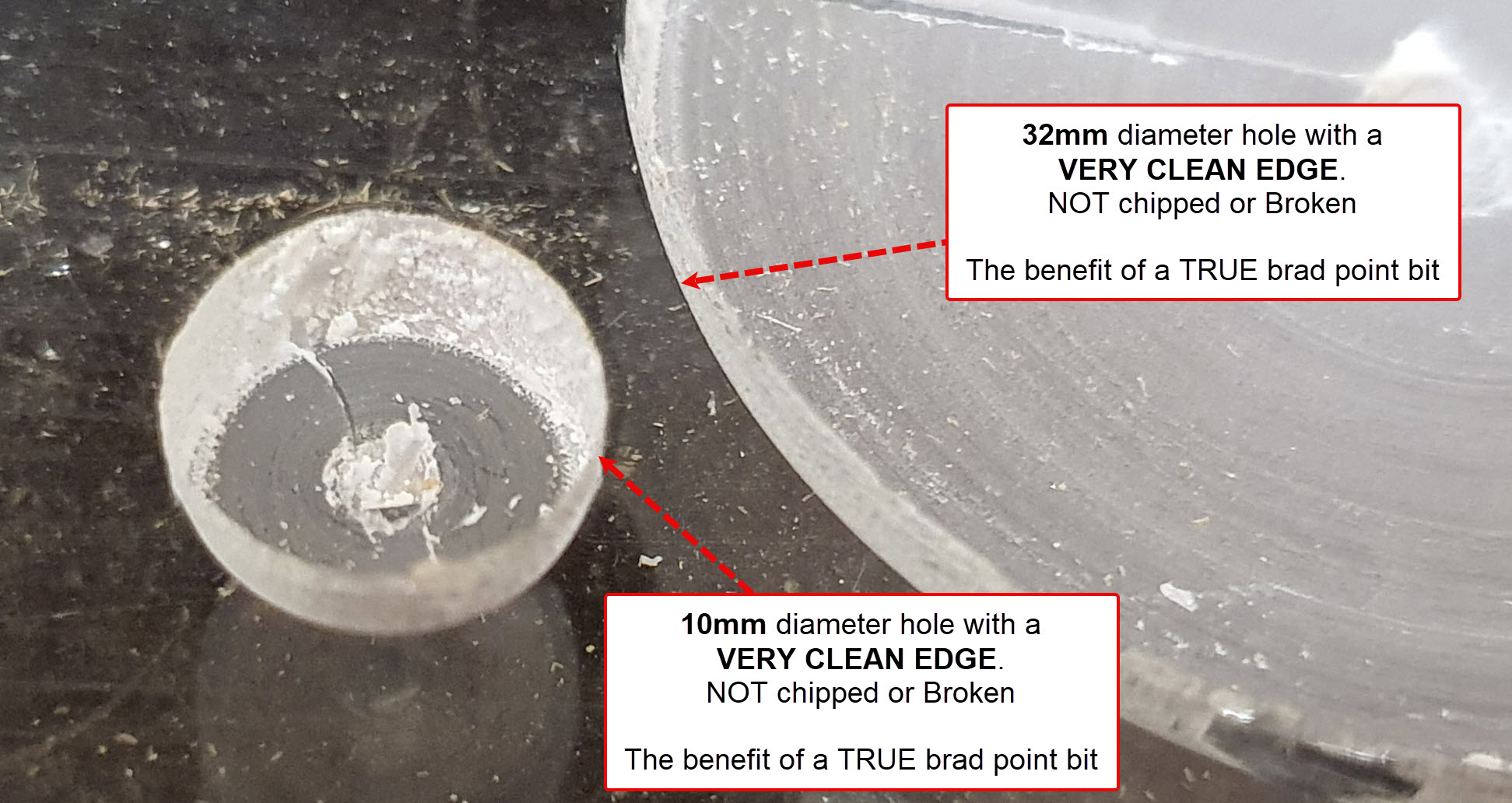
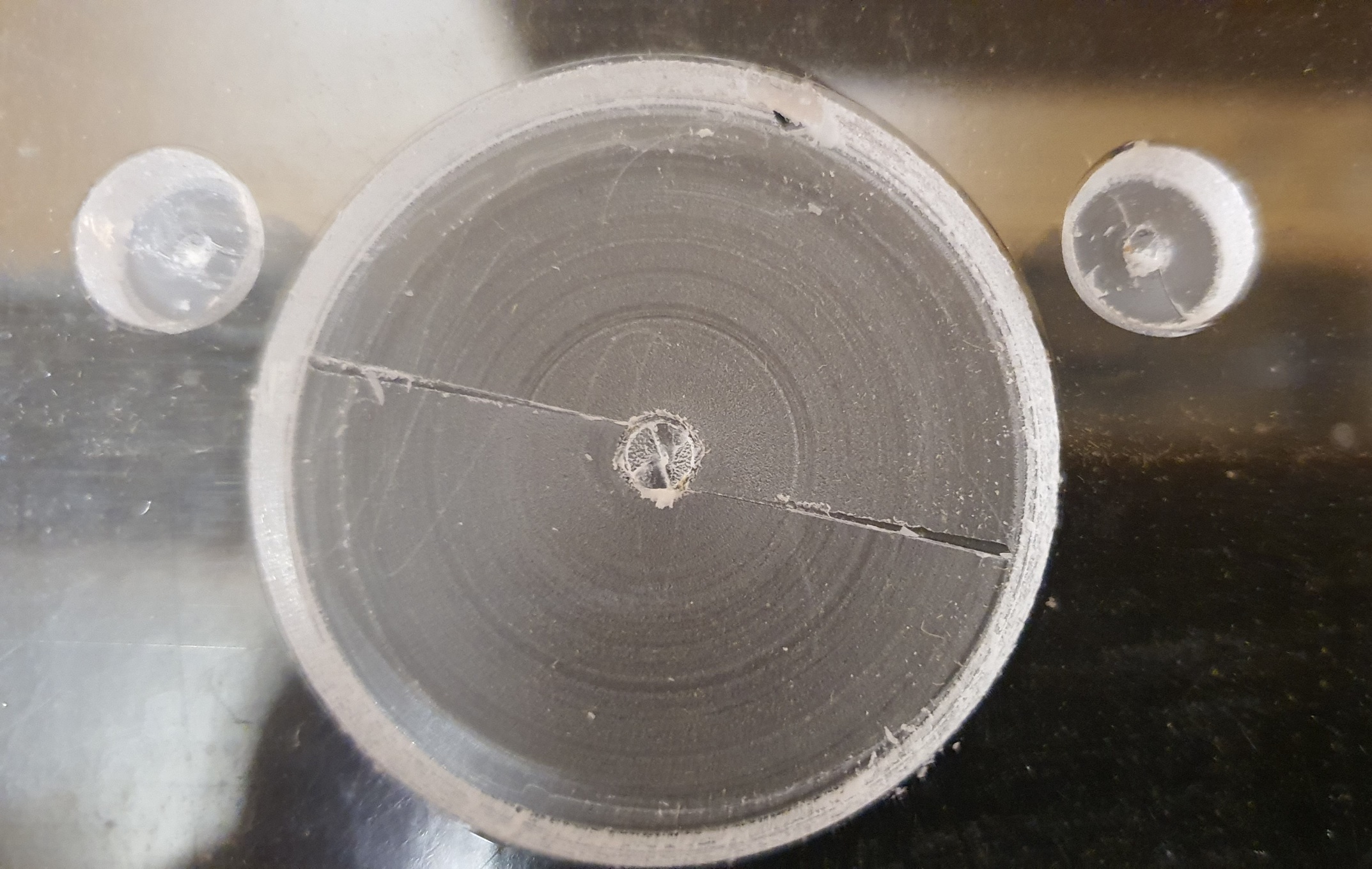
The attached images show proper brad point drilled holes, including a 32mm brad point bit. These holes were drilled with a Blum hinge drilling machine, used to drill the mounting holes for Blum hinges. These hinges require a flat bottom hole to endable correct ftting. The brad point bits do this. The drill bit used for this example have already drilled
hundreds of holes in MDF and STILL produce clean holes in plastic/perspex.
When drilling perspex drill speed and cooling are important as the perspex does melt easily.
The drill bits you have are just ground with an inverted angle, instead of the 118 deg included angle.
You can improve the cutting action for clean edged holes by SLIGHTLY rounding the very outer edge/corner of the cutting edge with a honing/sharpening stone. This will help prevent/reduce material tearout.
Best wishes in your endeavours

 LinkBack URL
 About LinkBacks


Originally Posted by Peter Sanders
 This is NOT and never will be a BRAD POINT bit. It could be facetiously referred to as a 'nail point' bit. These are pretend brad point bits. In some cases as you found the hole edge is really a mess due to the 'scraping' action of the outer cutting edge.

 Reply With Quote


Bookmarks