Free 186 More Best Homemade Tools eBook:  
New: 300+ fresh build posts/day from 275 forums → BuildThreads.com

User Tag List

Results 1 to 3 of 3

Thread: Casting Aluminum Parts

Hybrid View

  1. #1
    Supporting Member hemmjo's Avatar
    Join Date
    Feb 2017
    Posts
    3,301
    Thanks
    410
    Thanked 2,131 Times in 1,230 Posts

    hemmjo's Tools

    Casting Aluminum Parts

    This is the process I used in my foundry to make and pour a batch of small parts.
    The process will vary depending on what is being cast. This uses a multi-piece
    pattern to produce 4 parts per cast.

    I use “greensand” which is graded sand mixed in proper proportions with
    bentonite clay and water. The is a process in itself. Green sand is much
    cleaner, does not smell, and is much less expensive than petro-bond
    which is about $3 pound. I have about 40 pounds with about $10 total invested.
    While greensand does require some care and maintenance, I find it therapeutic.
    I will post making greensand in another thread.

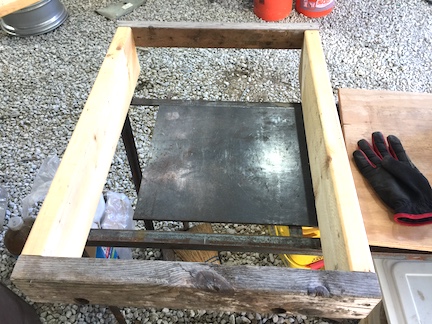
    The set up began with a sturdy wood frame to fit a 26-in L x 20-in W x 6.5-in D
    Plastic Drywall Mud Pan.

    Casting Aluminum Parts-01-frame.jpg

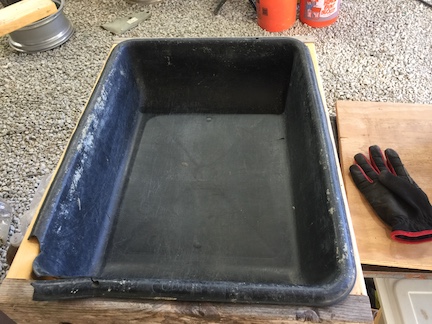
    The support is required during the molding process because the plastic pan itself
    is not sturdy enough to support the mold while compacting the sand.
    Casting Aluminum Parts-02-plastic-tub.jpg

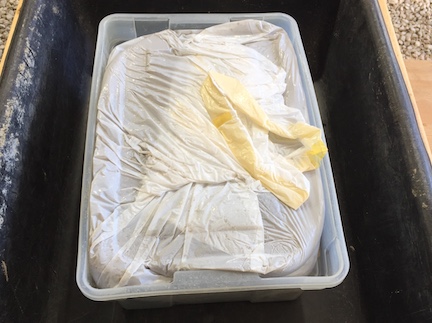
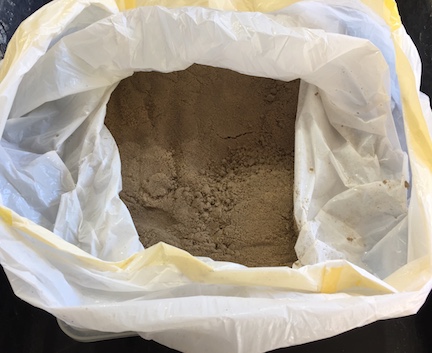
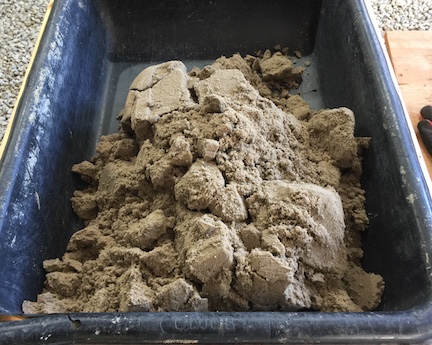
    I keep my sand ready to go in a sealed plastic bag. Moisture content is important.
    Sand can dry out if not stored properly. It is easier to keep moist than to
    re-hydrate if it drys too much
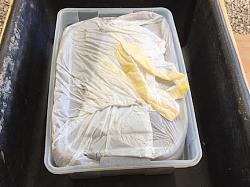
    Casting Aluminum Parts-03-greensand-.jpg Casting Aluminum Parts-04-greensand.jpg

    The sand will be lumpy when it is dumped into the pan but will break up easily
    being mixed with your hands. I do use gloves as the sand is abrasive
    Casting Aluminum Parts-05-greensand.jpg

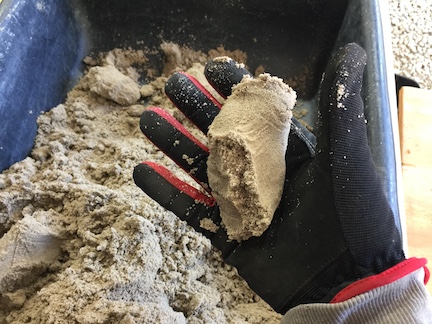
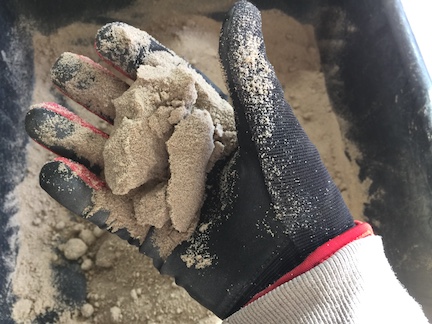
    You can tell the sand is right when you squeeze it in your hand. It will form a
    firm clump but not stick to your hand or glove. The clump will break easily,
    but will not crumble.
    Casting Aluminum Parts-06-good-moisture.jpg

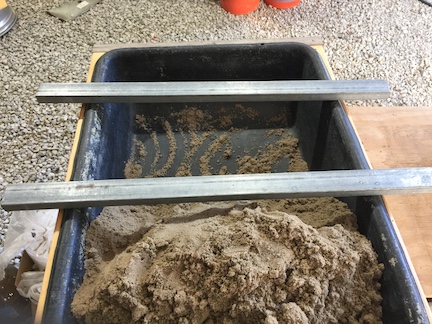
    Place two light weight rectangular steel tubes across the sand pan.
    I use steel to eliminate a source of splinters in the sand. Wood splinters in contact
    with the hot metal will burn leaving makes in the casting.
    Casting Aluminum Parts-07-support-bars.jpg

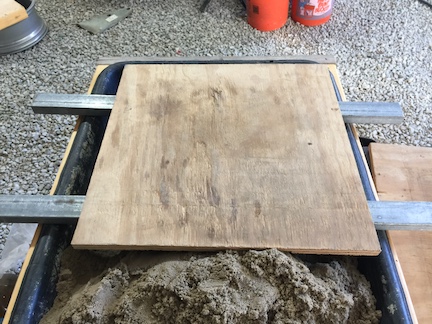
    These bars support a plywood mold board
    Casting Aluminum Parts-08-mold-board.jpg

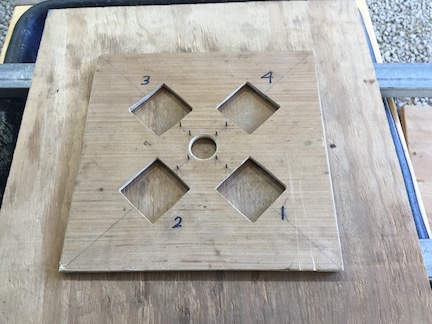
    Many times there is just a single pattern involved in casting. For this product
    the pattern is made up of 10 parts. They all need to be in the correct position.
    I use board to hold the parts in position. This is the bottom half of the mold
    being assembled upside down.
    Casting Aluminum Parts-09-pattern-board.jpg

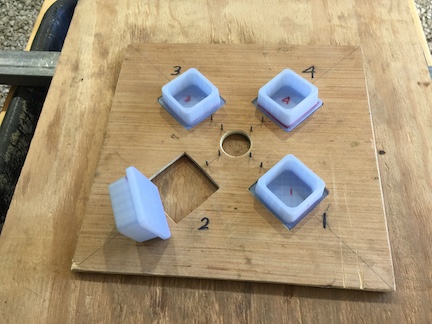
    Plastic 3D printed patterns fit into the cut-outs. (Thank you Carl and Steve )
    They need to stay in proper alignment while compacting sand around them
    Casting Aluminum Parts-10-patterns.jpg

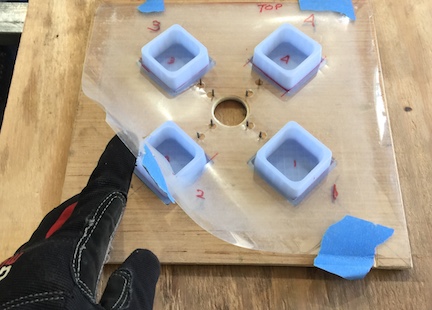
    Typically, at this point you would sprinkle a parting compound to keep sand from
    sticking to the mold board and the patterns. For this product I am using a plastic sheet.
    The plastic parts are slick and need no parting compound. This sheet keeps sand from
    getting into the little spaces between the patterns and the spacer board.
    Note the 8 small pins in the center to the board.
    Casting Aluminum Parts-11-plastic-sheet.jpg

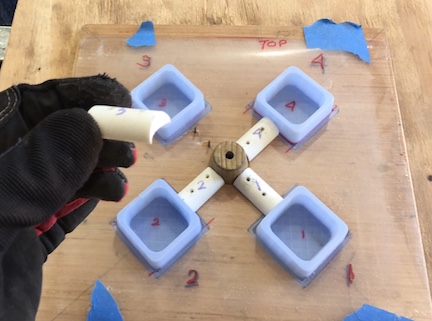
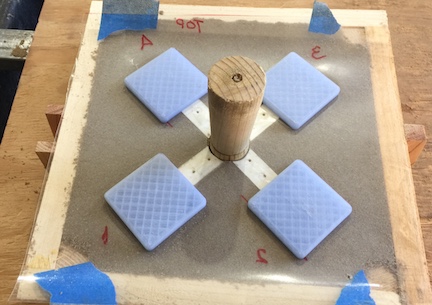
    A round wood sprue pattern placed in the center hole. Then semicylinder shaped runners
    connect the sprue to each cavity. This shape provides smooth flow into the mold cavity.
    Thye are held in position by the small metal pins in the board. The pattern parts are numbered
    because the runner patterns were match drilled for the pins, so they are not identical.
    Casting Aluminum Parts-12-runner-patterns.jpg


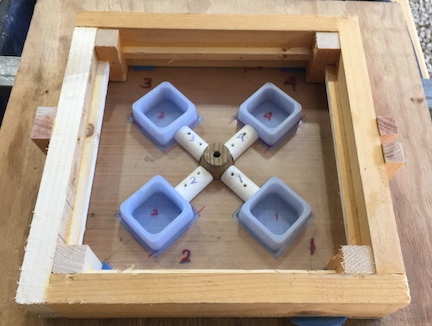
    A frame, called a drag, is placed around the patterns.
    Casting Aluminum Parts-13-drag-frame.jpg


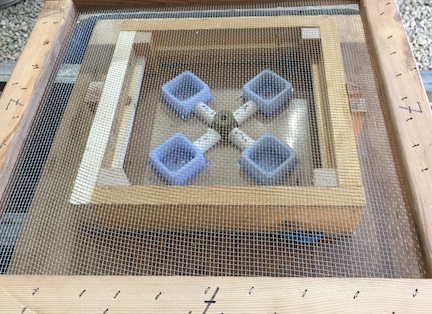
    A screen (riddle) is placed over the drag. I used a screen with 1/8” wire spacing.
    Technically this actually has 7 squares per inch so it is #7 mesh
    Casting Aluminum Parts-14-7-mesh-screen.jpg

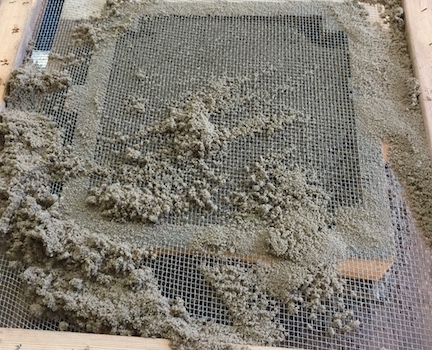
    Sand is piled on the screen and worked back and forth to fill the drag.
    Casting Aluminum Parts-15-adding-sand-.jpg

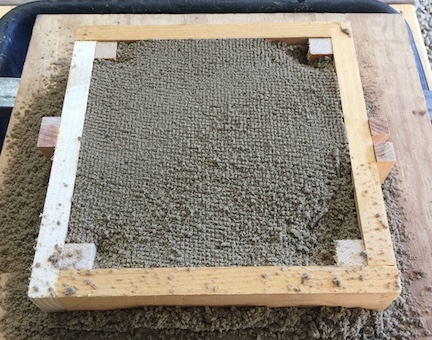
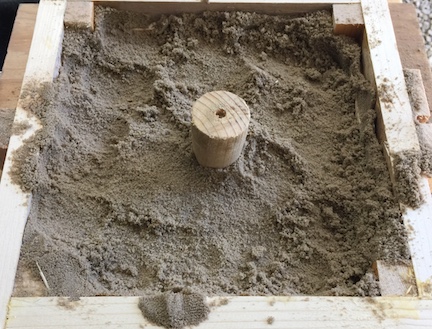
    When it is nearly full remove the screen. The fine sand has covered the pattern parts.
    Casting Aluminum Parts-16-first-sand-layer.jpg

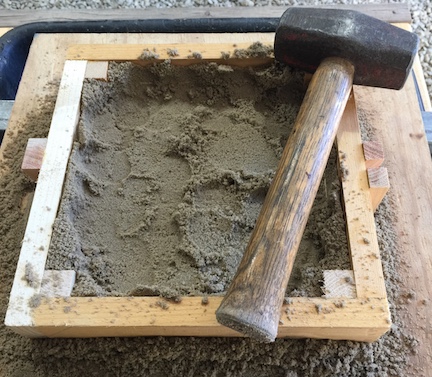
    Using your fingers, press the sand firmly into the corners of the frame and around all
    of the pattern parts. The sifted sand will be “fluffy” and compress a lot. If there is not
    enough to cover the patterns, sift more over the low spots and compress with fingers.
    Then carefully but firmly compact the sand with a ram. I find this 3 pound drilling hammer
    to be near perfect for compacting the sand. It does not require much force. Just lift and let it fall.
    The weight does the work. The handle end for the first layer as shown here
    Casting Aluminum Parts-17-first-layer-compacted.jpg

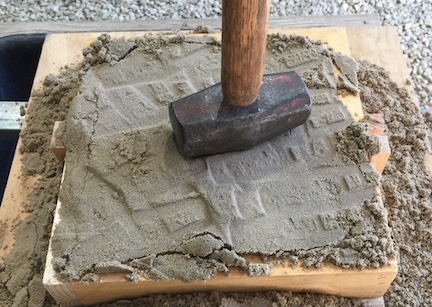
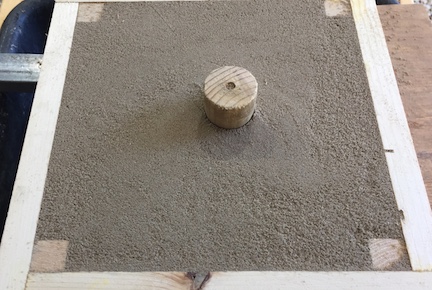
    Over fill the drag frame with unsifted sand. Compact it firmly with the large end
    of the ram. (head of the hammer)
    Casting Aluminum Parts-18-second-layer-compacted.jpg

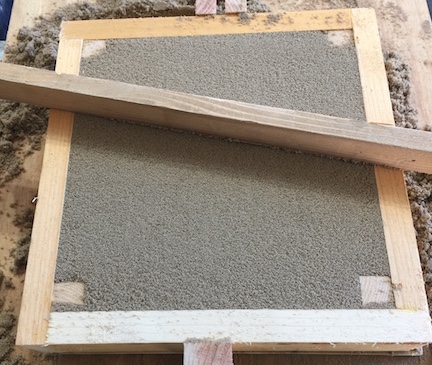
    Use a flat metal bar or stick of wood to strike off the excess sand.
    This should leave a smooth flat surface on the bottom of the mold frame.
    Casting Aluminum Parts-19-drag-strike-off.jpg

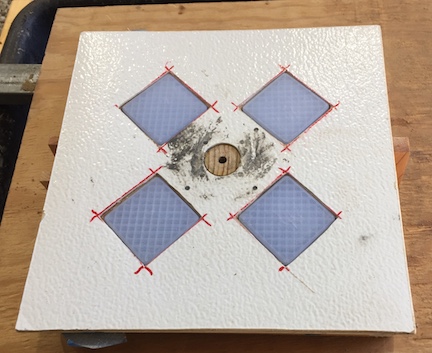
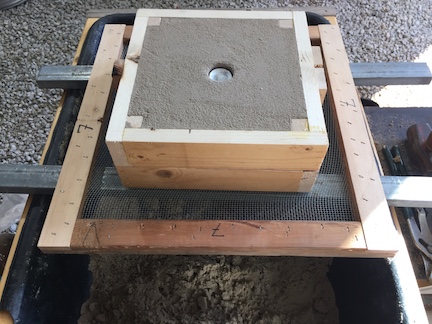
    Place another mold board over the drag. “Sandwich” the mold between the two
    boards and turn the mold over. The white is just a piece of self-stick floor tile I
    used to make the pattern board thick enough to cover the patterns.
    Note the small hole in the sprue base.
    Casting Aluminum Parts-20-drag-flipped.jpg

    Remove the pattern board while being careful to not lift the patterns. Add the
    sprue/riser to the pattern. This cone has a pin that fits into the sprue base.
    Casting Aluminum Parts-21-pattern-board-removed.jpg

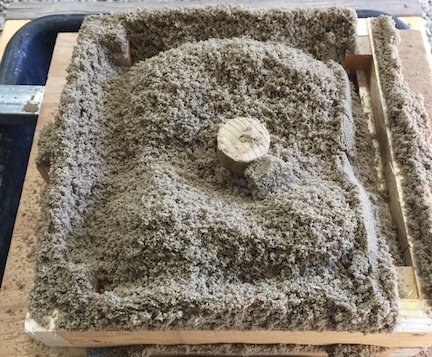
    Place the cope frame over the drag. Sift a layer of sand into the cope
    Casting Aluminum Parts-22-cope-added-.jpg

    Use your fingers, then the ram to compact the first layer
    Casting Aluminum Parts-23-first-layed-compacted.jpg

    Add more unsifted hand and ram that into place. Use caution to avoid hitting the sprue pattern
    Casting Aluminum Parts-24-second-layer-added.jpg

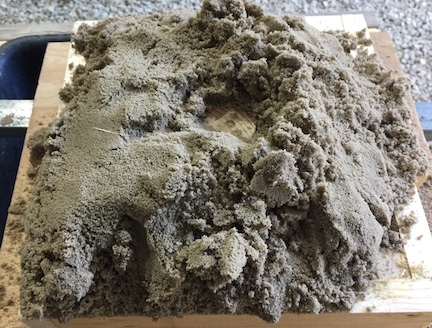
    Strike off the cope.
    Casting Aluminum Parts-25-cope-struck.jpg

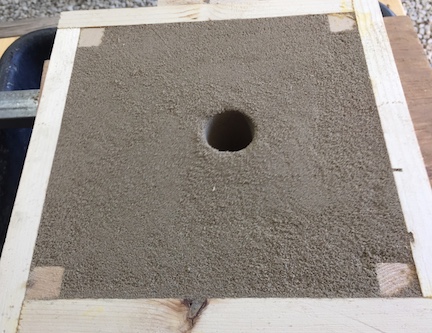
    Gently tap the sprue pattern all around the twist and remove, Use your finger to round
    the top edge of the opening and blow away any loose sand.
    Casting Aluminum Parts-26-sprue-pattern-removed.jpg

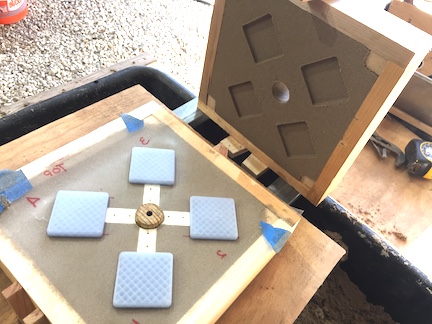
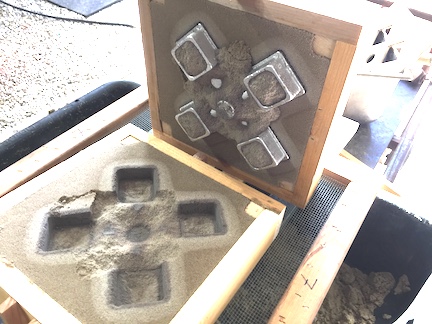
    Carefully life the cope. Stand on edge. Examine the mold for defects. At this point, if there
    is a major defect in the mold, it is easy to break up and remake it. Rather than make a bad casting.
    Casting Aluminum Parts-27-cope-opened.jpg

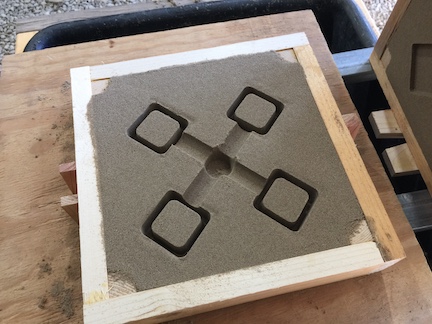
    Gently tap the pattern all around to loosen the sand a little. Then carefully remove each part.
    Gently blow loose sand from the cavities. As before, if the mold cavities are defective, you can
    remake the mold rather then cast bad parts. Small defects, especially around the parting line
    are most common and easily removed after casting.
    Casting Aluminum Parts-28-patterns-removed.jpg


    Carefully place the cope back onto the drag and move to the pouring location.
    Casting Aluminum Parts-29-pouring-station.jpg

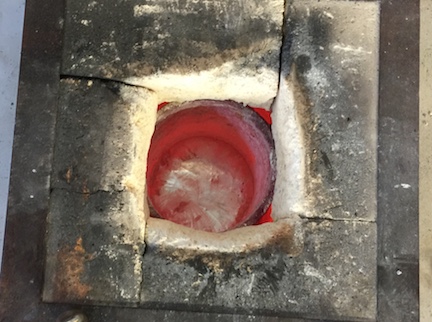
    The crucible furnace was started before making the molds. The aluminum is melted
    and ready to be skimmed off.
    Casting Aluminum Parts-30-molten-aluminum.jpg


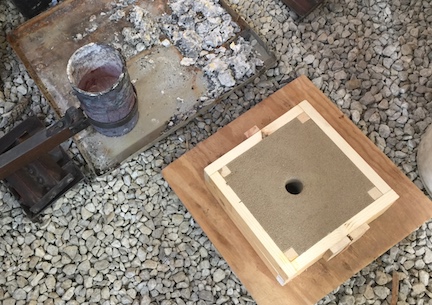
    The crucible is set into the holder
    Casting Aluminum Parts-31-crucible-inholder.jpg

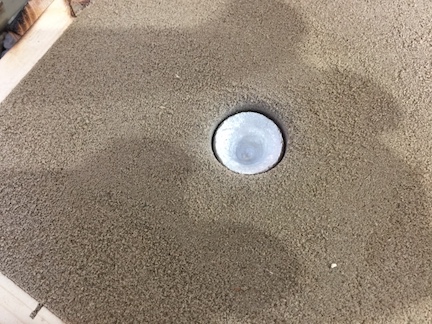
    The mold is poured. It happens too fast for me to capture a photo. When pouring stopped,
    the aluminum was rounded on top and even with the top of the sand. While, I put the
    crucible back into the furnace and got the camera the aluminum shrinks as it cooled and
    you could see the dip form as the metal flows down to fill the shrinking cavities.
    Casting Aluminum Parts-32-mold-poured.jpg

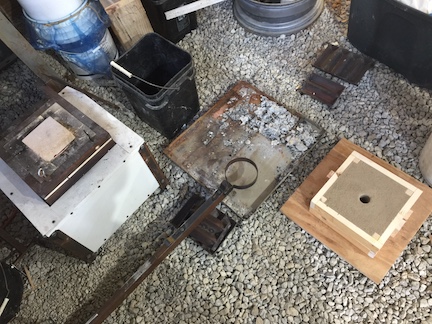
    While one mold is cooling, I make another one. When the second mold is poured,
    the first is placed on the screen over the sand box.
    Casting Aluminum Parts-33-mold-screen.jpg

    The cope is lifted and set on the bars. You can easily see where the heat has
    dried and darkened the sand.
    Casting Aluminum Parts-34-cope-lifted.jpg

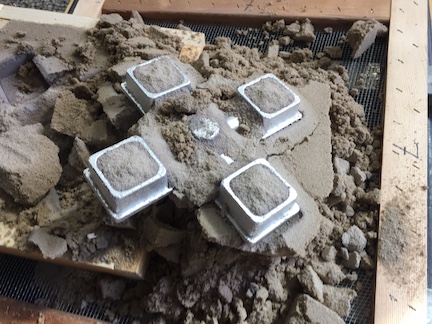
    Break the casting out of the mold keeping all of the sand on the screen
    Casting Aluminum Parts-35-mold-broken-out.jpg

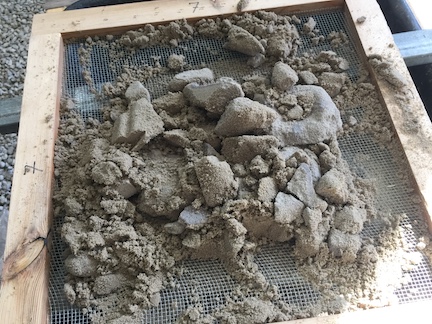
    While breaking the sand away from the casting rub the hardened clumps of
    sand across the screen to break them up. The sand is very warm.
    I use gloves to break down all of the sand clumps
    Casting Aluminum Parts-37-used-sand-.jpg

    At this point the sifted sand warm sand is drying rapidly. Mix it with the remaining sand in the box.
    Casting Aluminum Parts-38-sifted-sand.jpg


    While mixing the sand you will notice that squeezing it will not make a nice firm
    clump as before. Loose grains of sand will stick to your hand or glove.
    Casting Aluminum Parts-39-dry-sand.jpg

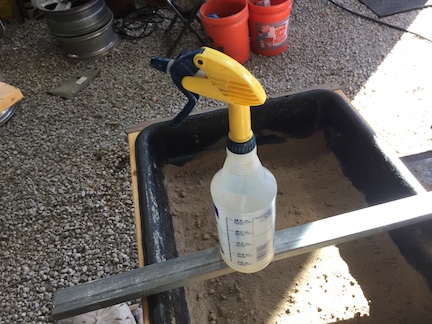
    I used a spray bottle to SLIGHTLY moisten the surface on the sand that is spread
    evenly in the sand box. Then fully mix the sand to distribute the moisture even
    through out the sand. Mist the water over the sand, do not pour the water into
    a puddle then try to mix it.
    Casting Aluminum Parts-40-water-spray.jpg

    You will know when the sand has the correct moisture content when it makes
    that nice clump when you squeeze it in your hand.
    Click image for larger version. 

Name:	06 good moisture.JPG 
Views:	49 
Size:	86.1 KB 
ID:	49874

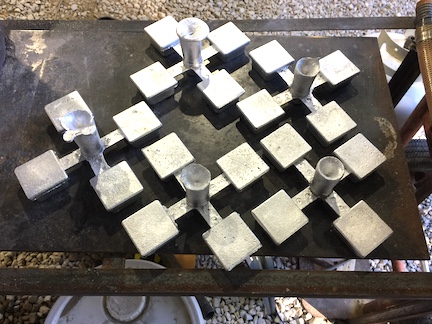
    I need 40 of these parts. 12 molds will give me 48 in case I scrap any during final machining.
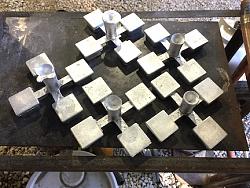
    Casting Aluminum Parts-41-raw-castings.jpg

  2. The Following 6 Users Say Thank You to hemmjo For This Useful Post:

    BuffaloJohn (Oct 29, 2025), emu roo (Oct 29, 2025), mikeatl (Oct 29, 2025), mwmkravchenko (Oct 29, 2025), nova_robotics (Oct 29, 2025), odd one (Oct 29, 2025)

  3. #2
    Supporting Member
    Join Date
    Feb 2016
    Posts
    68
    Thanks
    186
    Thanked 44 Times in 28 Posts
    Nice work!

  4. The Following User Says Thank You to rebuilder1954 For This Useful Post:

    emu roo (Oct 29, 2025)

  5. #3
    Supporting Member mwmkravchenko's Avatar
    Join Date
    Nov 2017
    Location
    Perth Ontario Canada
    Posts
    1,134
    Thanks
    5,728
    Thanked 562 Times in 384 Posts
    Quote Originally Posted by hemmjo View Post
    This is the process I used in my foundry to make and pour a batch of small parts.
    The process will vary depending on what is being cast. This uses a multi-piece
    pattern to produce 4 parts per cast.

    I use “greensand” which is graded sand mixed in proper proportions with
    bentonite clay and water. The is a process in itself. Green sand is much
    cleaner, does not smell, and is much less expensive than petro-bond
    which is about $3 pound. I have about 40 pounds with about $10 total invested.
    While greensand does require some care and maintenance, I find it therapeutic.
    I will post making greensand in another thread.

    The set up began with a sturdy wood frame to fit a 26-in L x 20-in W x 6.5-in D
    Plastic Drywall Mud Pan.

    Click image for larger version. 

Name:	01 frame.JPG 
Views:	52 
Size:	90.1 KB 
ID:	49870

    The support is required during the molding process because the plastic pan itself
    is not sturdy enough to support the mold while compacting the sand.
    Click image for larger version. 

Name:	02 plastic tub.JPG 
Views:	45 
Size:	75.0 KB 
ID:	49871

    I keep my sand ready to go in a sealed plastic bag. Moisture content is important.
    Sand can dry out if not stored properly. It is easier to keep moist than to
    re-hydrate if it drys too much
    Click image for larger version. 

Name:	03 greensand .jpg 
Views:	44 
Size:	62.1 KB 
ID:	49872 Click image for larger version. 

Name:	04 greensand.jpg 
Views:	39 
Size:	63.2 KB 
ID:	49873

    The sand will be lumpy when it is dumped into the pan but will break up easily
    being mixed with your hands. I do use gloves as the sand is abrasive
    Click image for larger version. 

Name:	05 greensand.jpg 
Views:	54 
Size:	90.8 KB 
ID:	49875

    You can tell the sand is right when you squeeze it in your hand. It will form a
    firm clump but not stick to your hand or glove. The clump will break easily,
    but will not crumble.
    Click image for larger version. 

Name:	06 good moisture.JPG 
Views:	49 
Size:	86.1 KB 
ID:	49874

    Place two light weight rectangular steel tubes across the sand pan.
    I use steel to eliminate a source of splinters in the sand. Wood splinters in contact
    with the hot metal will burn leaving makes in the casting.
    Click image for larger version. 

Name:	07 support bars.JPG 
Views:	44 
Size:	91.8 KB 
ID:	49876

    These bars support a plywood mold board
    Click image for larger version. 

Name:	08 mold board.JPG 
Views:	44 
Size:	86.6 KB 
ID:	49877

    Many times there is just a single pattern involved in casting. For this product
    the pattern is made up of 10 parts. They all need to be in the correct position.
    I use board to hold the parts in position. This is the bottom half of the mold
    being assembled upside down.
    Click image for larger version. 

Name:	09 pattern board.JPG 
Views:	50 
Size:	68.8 KB 
ID:	49878

    Plastic 3D printed patterns fit into the cut-outs. (Thank you Carl and Steve )
    They need to stay in proper alignment while compacting sand around them
    Click image for larger version. 

Name:	10 patterns.JPG 
Views:	48 
Size:	67.3 KB 
ID:	49879

    Typically, at this point you would sprinkle a parting compound to keep sand from
    sticking to the mold board and the patterns. For this product I am using a plastic sheet.
    The plastic parts are slick and need no parting compound. This sheet keeps sand from
    getting into the little spaces between the patterns and the spacer board.
    Note the 8 small pins in the center to the board.
    Click image for larger version. 

Name:	11 plastic sheet.jpg 
Views:	61 
Size:	59.4 KB 
ID:	49880

    A round wood sprue pattern placed in the center hole. Then semicylinder shaped runners
    connect the sprue to each cavity. This shape provides smooth flow into the mold cavity.
    Thye are held in position by the small metal pins in the board. The pattern parts are numbered
    because the runner patterns were match drilled for the pins, so they are not identical.
    Click image for larger version. 

Name:	12 runner patterns.jpg 
Views:	44 
Size:	57.6 KB 
ID:	49881


    A frame, called a drag, is placed around the patterns.
    Click image for larger version. 

Name:	13 drag frame.jpg 
Views:	48 
Size:	60.6 KB 
ID:	49882


    A screen (riddle) is placed over the drag. I used a screen with 1/8” wire spacing.
    Technically this actually has 7 squares per inch so it is #7 mesh
    Click image for larger version. 

Name:	14 7 mesh screen.jpg 
Views:	44 
Size:	89.8 KB 
ID:	49883

    Sand is piled on the screen and worked back and forth to fill the drag.
    Click image for larger version. 

Name:	15 adding sand .jpg 
Views:	44 
Size:	113.9 KB 
ID:	49884

    When it is nearly full remove the screen. The fine sand has covered the pattern parts.
    Click image for larger version. 

Name:	16 first sand layer.jpg 
Views:	44 
Size:	96.0 KB 
ID:	49885

    Using your fingers, press the sand firmly into the corners of the frame and around all
    of the pattern parts. The sifted sand will be “fluffy” and compress a lot. If there is not
    enough to cover the patterns, sift more over the low spots and compress with fingers.
    Then carefully but firmly compact the sand with a ram. I find this 3 pound drilling hammer
    to be near perfect for compacting the sand. It does not require much force. Just lift and let it fall.
    The weight does the work. The handle end for the first layer as shown here
    Click image for larger version. 

Name:	17 first layer compacted.jpg 
Views:	45 
Size:	98.6 KB 
ID:	49886

    Over fill the drag frame with unsifted sand. Compact it firmly with the large end
    of the ram. (head of the hammer)
    Click image for larger version. 

Name:	18 second layer compacted.jpg 
Views:	49 
Size:	85.6 KB 
ID:	49887

    Use a flat metal bar or stick of wood to strike off the excess sand.
    This should leave a smooth flat surface on the bottom of the mold frame.
    Click image for larger version. 

Name:	19 drag strike off.jpg 
Views:	50 
Size:	86.1 KB 
ID:	49888

    Place another mold board over the drag. “Sandwich” the mold between the two
    boards and turn the mold over. The white is just a piece of self-stick floor tile I
    used to make the pattern board thick enough to cover the patterns.
    Note the small hole in the sprue base.
    Click image for larger version. 

Name:	20 drag flipped.jpg 
Views:	51 
Size:	68.5 KB 
ID:	49889

    Remove the pattern board while being careful to not lift the patterns. Add the
    sprue/riser to the pattern. This cone has a pin that fits into the sprue base.
    Click image for larger version. 

Name:	21 pattern board removed.jpg 
Views:	47 
Size:	61.0 KB 
ID:	49890

    Place the cope frame over the drag. Sift a layer of sand into the cope
    Click image for larger version. 

Name:	22 cope added .jpg 
Views:	48 
Size:	111.4 KB 
ID:	49891

    Use your fingers, then the ram to compact the first layer
    Click image for larger version. 

Name:	23 first layed compacted.jpg 
Views:	48 
Size:	89.4 KB 
ID:	49892

    Add more unsifted hand and ram that into place. Use caution to avoid hitting the sprue pattern
    Click image for larger version. 

Name:	24 second layer added.jpg 
Views:	49 
Size:	98.0 KB 
ID:	49893

    Strike off the cope.
    Click image for larger version. 

Name:	25 cope struck'.jpg 
Views:	53 
Size:	68.3 KB 
ID:	49894

    Gently tap the sprue pattern all around the twist and remove, Use your finger to round
    the top edge of the opening and blow away any loose sand.
    Click image for larger version. 

Name:	26 sprue pattern removed.jpg 
Views:	49 
Size:	75.2 KB 
ID:	49895

    Carefully life the cope. Stand on edge. Examine the mold for defects. At this point, if there
    is a major defect in the mold, it is easy to break up and remake it. Rather than make a bad casting.
    Click image for larger version. 

Name:	27 cope opened.JPG 
Views:	45 
Size:	73.9 KB 
ID:	49896

    Gently tap the pattern all around to loosen the sand a little. Then carefully remove each part.
    Gently blow loose sand from the cavities. As before, if the mold cavities are defective, you can
    remake the mold rather then cast bad parts. Small defects, especially around the parting line
    are most common and easily removed after casting.
    Click image for larger version. 

Name:	28 patterns removed.jpg 
Views:	44 
Size:	69.8 KB 
ID:	49897


    Carefully place the cope back onto the drag and move to the pouring location.
    Click image for larger version. 

Name:	29 pouring station.jpg 
Views:	40 
Size:	94.7 KB 
ID:	49898

    The crucible furnace was started before making the molds. The aluminum is melted
    and ready to be skimmed off.
    Click image for larger version. 

Name:	30 molten aluminum.jpg 
Views:	48 
Size:	71.2 KB 
ID:	49899


    The crucible is set into the holder
    Click image for larger version. 

Name:	31 crucible inholder.jpg 
Views:	44 
Size:	89.6 KB 
ID:	49900

    The mold is poured. It happens too fast for me to capture a photo. When pouring stopped,
    the aluminum was rounded on top and even with the top of the sand. While, I put the
    crucible back into the furnace and got the camera the aluminum shrinks as it cooled and
    you could see the dip form as the metal flows down to fill the shrinking cavities.
    Click image for larger version. 

Name:	32 mold poured.jpg 
Views:	52 
Size:	88.7 KB 
ID:	49901

    While one mold is cooling, I make another one. When the second mold is poured,
    the first is placed on the screen over the sand box.
    Click image for larger version. 

Name:	33 mold on screen.jpg 
Views:	45 
Size:	74.6 KB 
ID:	49902

    The cope is lifted and set on the bars. You can easily see where the heat has
    dried and darkened the sand.
    Click image for larger version. 

Name:	34 cope lifted.JPG 
Views:	43 
Size:	77.6 KB 
ID:	49903

    Break the casting out of the mold keeping all of the sand on the screen
    Click image for larger version. 

Name:	35 mold broken out.jpg 
Views:	46 
Size:	85.5 KB 
ID:	49904

    While breaking the sand away from the casting rub the hardened clumps of
    sand across the screen to break them up. The sand is very warm.
    I use gloves to break down all of the sand clumps
    Click image for larger version. 

Name:	37 used sand .JPG 
Views:	44 
Size:	97.4 KB 
ID:	49905

    At this point the sifted sand warm sand is drying rapidly. Mix it with the remaining sand in the box.
    Click image for larger version. 

Name:	38 sifted sand.JPG 
Views:	44 
Size:	77.3 KB 
ID:	49906


    While mixing the sand you will notice that squeezing it will not make a nice firm
    clump as before. Loose grains of sand will stick to your hand or glove.
    Click image for larger version. 

Name:	39 dry sand.JPG 
Views:	52 
Size:	76.1 KB 
ID:	49907

    I used a spray bottle to SLIGHTLY moisten the surface on the sand that is spread
    evenly in the sand box. Then fully mix the sand to distribute the moisture even
    through out the sand. Mist the water over the sand, do not pour the water into
    a puddle then try to mix it.
    Click image for larger version. 

Name:	40 water spray.JPG 
Views:	43 
Size:	79.8 KB 
ID:	49908

    You will know when the sand has the correct moisture content when it makes
    that nice clump when you squeeze it in your hand.
    Click image for larger version. 

Name:	06 good moisture.JPG 
Views:	49 
Size:	86.1 KB 
ID:	49874

    I need 40 of these parts. 12 molds will give me 48 in case I scrap any during final machining.

    Click image for larger version. 
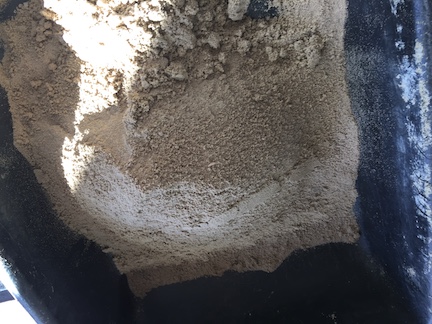
Name:	41 raw castings.jpg 
Views:	53 
Size:	87.8 KB 
ID:	49909
    Well explained. And great pics! I haven't cast anything since 97. But I did a lot of it before. You have me seriously thinking about getting back into it.

    Mark


    2,500+ Tool Plans

  6. The Following User Says Thank You to mwmkravchenko For This Useful Post:

    emu roo (Oct 29, 2025)

Thread Information

Users Browsing this Thread

There are currently 1 users browsing this thread. (0 members and 1 guests)

Bookmarks

Posting Permissions

  • You may not post new threads
  • You may not post replies
  • You may not post attachments
  • You may not edit your posts
  •