 LinkBack URL
 About LinkBacks
Wow! Nicely done!
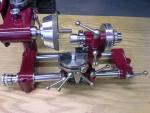
I can definitely see the the value of this tool and it’s possible variations. I am not a welder so I would have to approach a build like this in another way.
Thanks for posting and congratulations on a well deserved win!
Dick




Wow! Nicely done!
I can definitely see the the value of this tool and it’s possible variations. I am not a welder so I would have to approach a build like this in another way.
Thanks for posting and congratulations on a well deserved win!
Dick
Dick
Links to some of my plans:
https://www.homemadetools.net/forum/...965#post105972 OFF-SET TAILSTOCK CENTER PLANS
http://www.homemadetools.net/forum/s...995#post112113 SMALL TURRET TOOL POST PLANS
http://www.homemadetools.net/forum/l...994#post112111 LARGE TURRET TOOL POST PLANS
http://www.homemadetools.net/forum/m...383#post110340 MINI-LATHE CARRIAGE LOCK PLANS
http://www.homemadetools.net/forum/s...191#post106483 SMALL QC TOOL POST PLANS
http://www.homemadetools.net/forum/q...849#post119345 QUICK CHANGE LATHE TURRET
http://www.homemadetools.net/forum/m...949#post119893 MINI LATHE COMPOUND PIVOT MODIFICATION
emu roo (Aug 16, 2025)
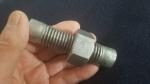
I made one of these about 12 months ago and used a female threaded plastic knob in place of the nut which squeezes the ball bearings together. This very conveniently allows the tightness to be hand adjusted.
Also if ball bearings are placed in a slow combustion wood heater for a few hours and the fire is allowed to die down to hot ashes overnight the bearings will become soft enough to drill and if drilled in a lathe the hole will be dead centre of the sphere. If the hole is just a whisker undersized the shaft can be press fit into place. This not only saves welding but allows a neater joint free of weld metal.
I found a hole size about 10% larger than ball bearing provided the best fit and level of grip whilst allowing maximum movement within the side brackets.
The addition of a large switchable magnet as the base also adds a very significant improvement in usability.
Hope this helps anyone intending to make one.
emu roo (Aug 16, 2025), Karl_H (Jan 28, 2022), neilg4dbn (Feb 1, 2022), old_toolmaker (Jan 29, 2022), Philip Davies (Jan 29, 2022), schuylergrace (Jan 28, 2022)
I like the idea of making the rods a press fit. I wondered about trying to anneal some balls then drilling and tapping them, but a simple press fit should work better. Thanks.

That would be a great idea!
Agree with schuylergrace and Frank S, all kinds of positives.
T-handles a possibility, potentially get caught up in sleeves and cuffs. Having them part of kit, saved for useful manipulation might solve that.
Like Marv observes, the balls may lap in after awhile and slip; the centered bolt is large enough to delay it for some time.
Only detail I'd really alter is contour of the bracket clamping the spheres. Arch or peak in the middle, truss-like; averting bend or collapse with tightened fastener, backed up with heavy washers.
Sincerely,
Toolmaker51
...we'll learn more by wandering than searching...
I have regularly used my articulating arm and noticed no degradation of clamping force over time. The mating surfaces between the ball bearings and the side brackets do wear with use but due to pressure rather than by rubbing together.
In use the clamp is kept loose until the correct position is found when it's then tightened very firmly. Adjustment whilst tightened isn't necessary so wear isn't an issue.
Wear with use would increase the surface area of the mating parts and allow greater friction between them anyway.
I used 10mm thick steel for the brackets and therefore didn't need to bend up the sides for added rigidity.
Use the largest ball bearings you can find, (mine are 25mm) and rusty (but wire brushed clean) is best.
A good source of free used large bearings is your local Caterpillar or heavy machinery dealer. Mine came from the main bearings allowing rotation between the body and tracks of a large excavator. The bearing was 400mm in diameter before I destroyed it to remove the balls themselves.
Also the plastic knob to tighten the assembly needs to be heavy duty, large in diameter and with a sturdy steel or brass insert for the thread. I used a 75mm diameter knob with an M12 thread. You need to screw it down tightly so movement is almost impossible.
The end result is extremely robust indeed.
schuylergrace (Jan 28, 2022), Toolmaker51 (Feb 1, 2022)
Another suggestion is to drill right through the annealed ball bearing whilst it's in the lathe, countersink one end, then weld or braze the shaft in place filling the countersink with weld metal, which is then ground or linished off to retain the spherical shape.
The holes in the brackets need to be perfectly aligned as matching pairs (drill them together) and be placed close to the ends of the brackets to allow maximum articulation of the shafts.
You will be very pleasantly surprised at how rigid the structure becomes when the knob is tightened firmly.
Toolmaker51 (Feb 1, 2022)
I have a mag base with three rods and two articulating couplers like this, but smaller, intended to hold a chip-guard. It's remarkably stiff despite the balls being very small. so I can imagine this would be good and solid. I'd be tempted to drill the holes undersize, then use a ball-nosed end mill the same size as the balls to get a matching curve on the holes. Over-engineer All The Things! I'll save this tip for a rainy day.
I re-hardened the balls by heating to cherry red and quenching in oil. No real need to champher the holes in the brackets as the sharp edge will lock onto the ball bearings, there's a lot of force applied to a small surface area. Trust me, if the knob is tightened firmly the arms won't move.

Very nice idea and well done. Thank you, you gave me an idea,, tome now to get on it.

Visit me on You Tube for many tool making videos.
Link: https://www.youtube.com/user/Catfish6945
There are currently 1 users browsing this thread. (0 members and 1 guests)
 Posting Permissions



 Reply With Quote
Bookmarks