
 LinkBack URL
 About LinkBacks

There are many types of palms. I have no idea how many types or what the names are except for a few. Some I have seen are very tough and have structure much like a "real tree", but the annual rings are not as noticeable. I always told my students to imagine a tree as a bundle of tiny straws standing on end. This helped to explain the reason for the difference between cross cutting and ripping in wood. Also helped them visualize the reason for wood splitting so easily one way but not the other.
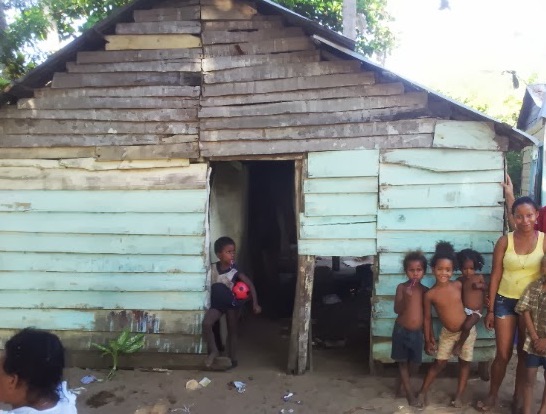
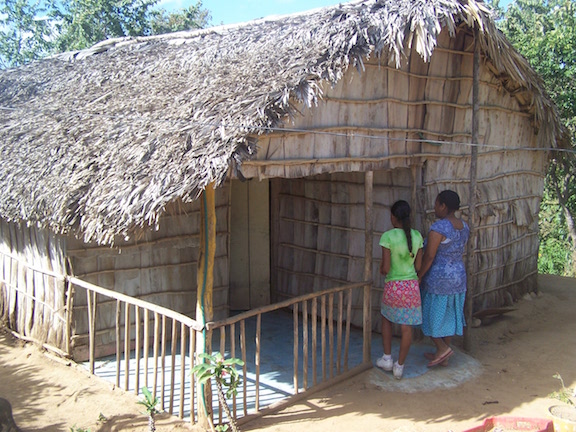
The "straws" in a palm are very large in relation to an oak or poplar etc. The "wood" of these can be carved, but the large straws, make the process much different and result is a very different looking finished piece. This wood can also be easily split into slabs that are used for building. Very often siding materials. For example, this home is sided with split palm wood. Coconuts grow some of these type of trees although there are many other palms like this that are not coconut.
Other palms (maybe they are not really palms to a botanist) are more like grass. I have seen one 8" in diameter cut down with a single stroke from a machete. Water droplets dripping freely from the cut. I was sure surprised to see that happen!! The layers that make up the trunk are wrapped together much like a blade of grass. These layers can be easily separated and unrolled when fresh, held flat with rocks and allowed to dry in the sun. These flat sheets are then used like siding to cover homes. Bananas grow on "trees" like this.
The tree being sliced in the photo appears to be different than either of the ones I have seen cut down. The trunk does not seem to be layered like the ones they make sheets from. It also does not appear as tough as the type they split into boards.
Just FYI,
John


 Reply With Quote

Bookmarks