Just a question from a noob. Wouldn't this method dull your file?

Printable View
Just a question from a noob. Wouldn't this method dull your file?
That concern always bothered me as well. It's a technique that harkens back to the time when a homeshop mill was a rarity, so I took a different path.Quote:
Originally Posted by eimerbuilt
If you have a mill, consider making something like my rounding-over jig...
https://www.homemadetools.net/forum/...ll-parts-27242
Hi
Thank you for your interest
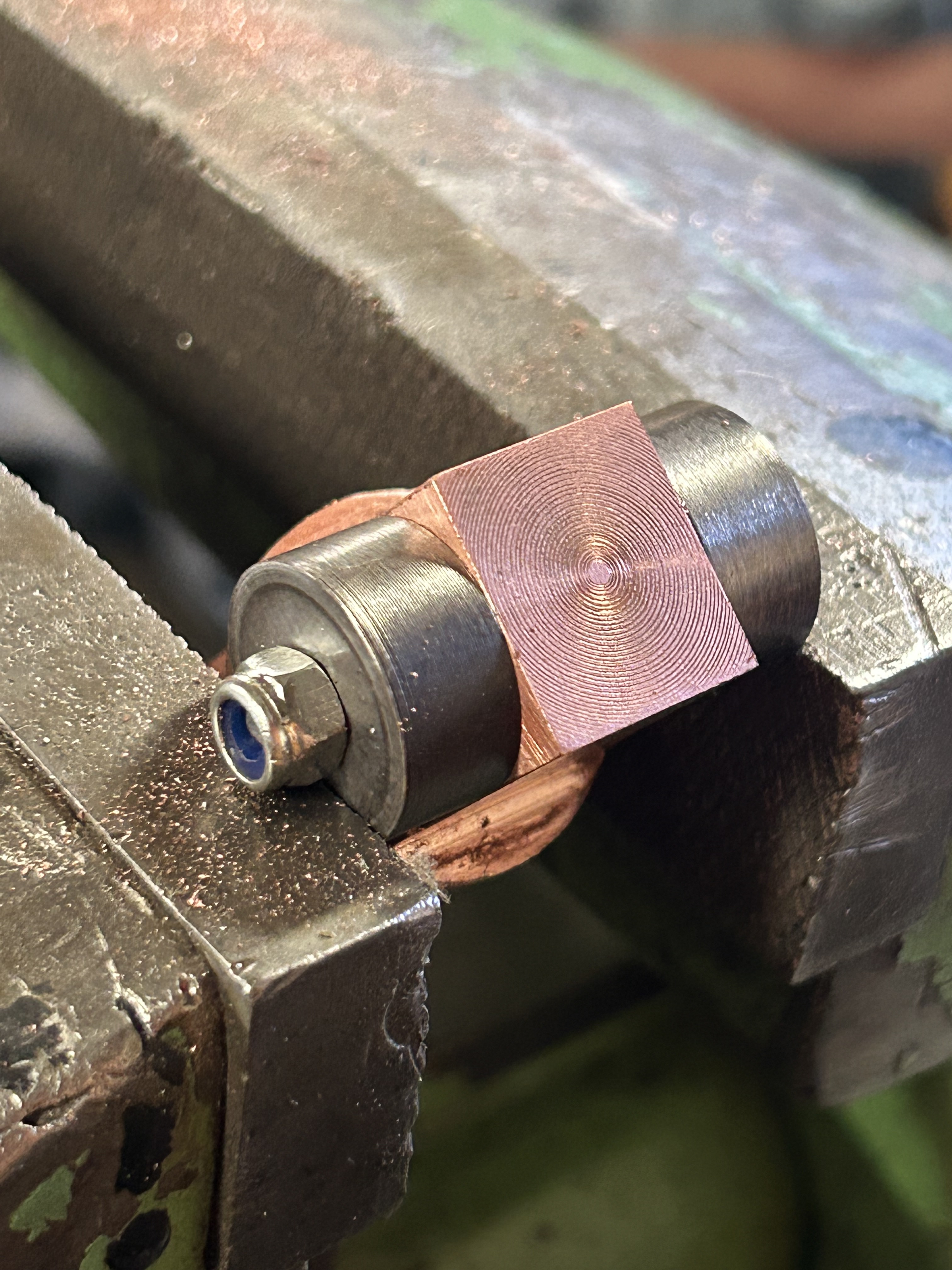
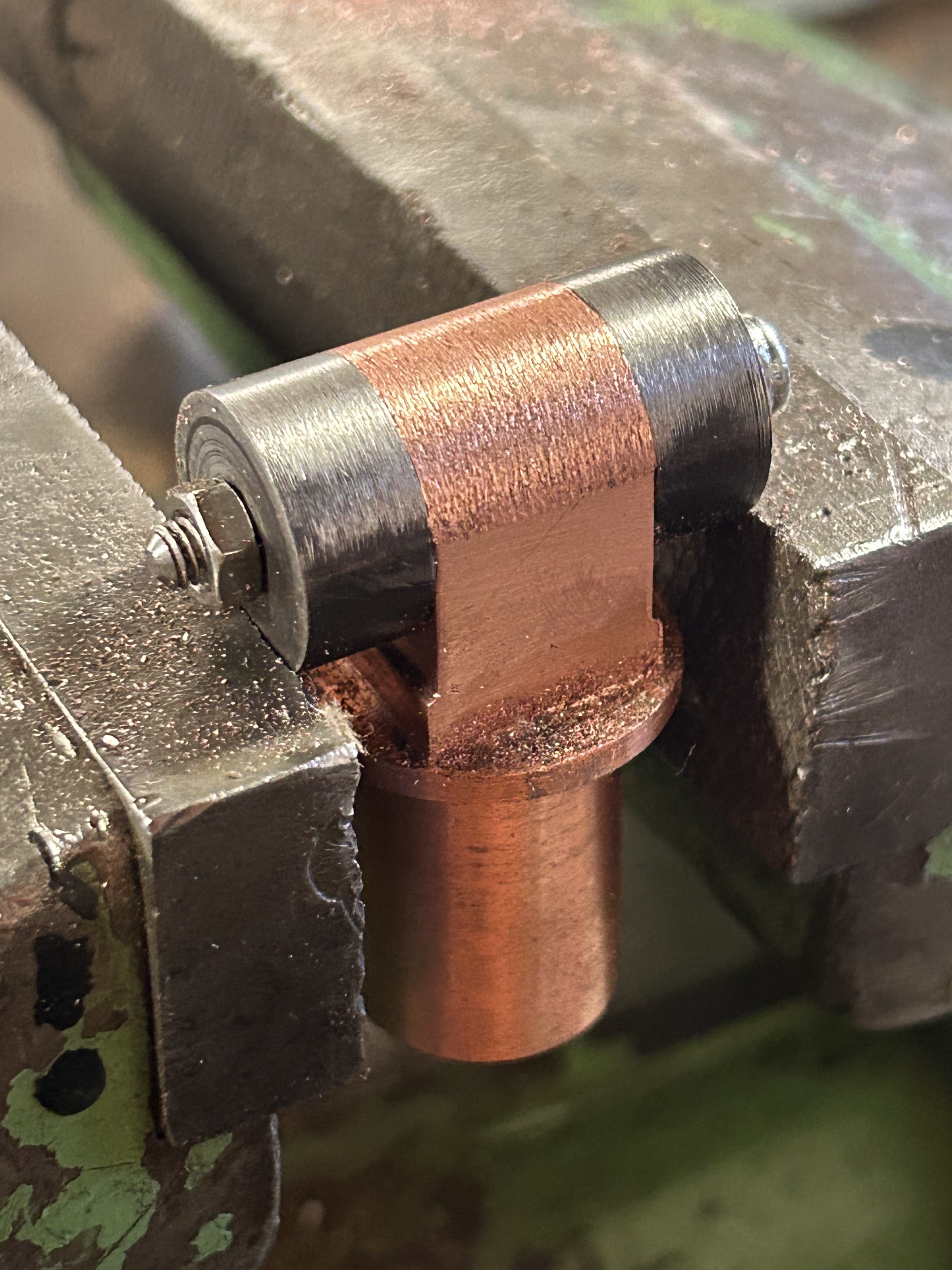
The buttons act as a guide, but when rough filling with a course file this prevents any damage by filling it down too far. So initially there shouldn’t be any contact with the buttons. The buttons are really a safety feature so you don’t file the radius under size and as soon as any contact is made with the button you just stop filing in that area. Damage to your file will only be an issue if you allow the file to run on the button with a lot of pressure. This is a really quick and easy way to produce small radius’s on components that could be difficult to clamp down to a table therefore less chance of damage and setup time ext and a file is definitely cheaper than a milling cutter. This is definitely my preferred way to finish radius’s on components rather than using a milling machine and rotary table when ever possible. Once the buttons are made I simply put them in a designated tin for next time. The buttons don’t necessarily have to be hardened if worried about damage to your files. This method I use frequently both at home and with in my job as a skilled craftsman making components for science research. So I would disagree with Marv that this is old hat. However with modern CNC machines I would definitely agree with Marv that this is not a necessary skill but in my manual workshop it works really well.
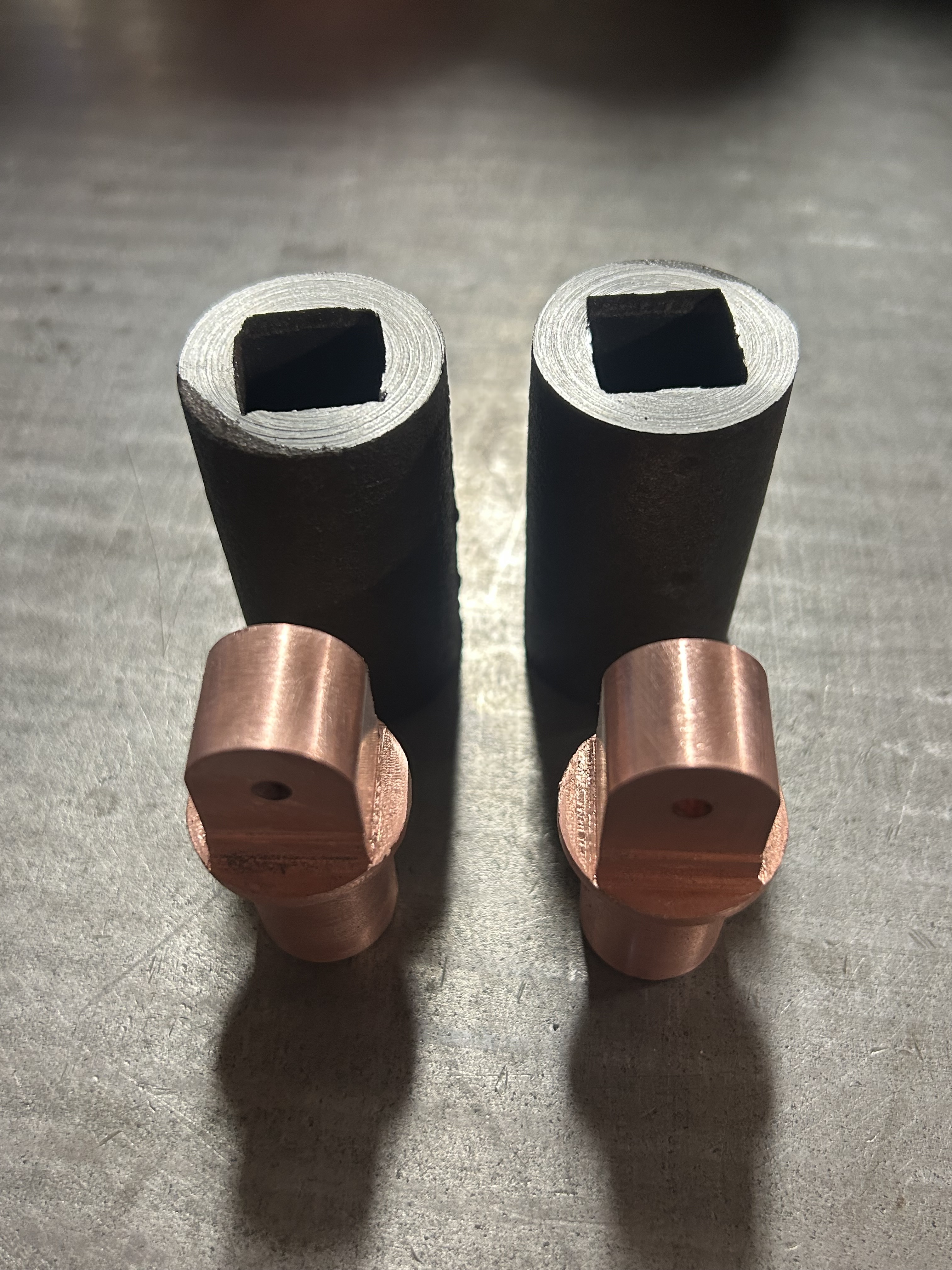
Attachment 47028 Attachment 47029 Attachment 47030
This is a copper diesink for spark eroding two castings, as can be seen this component doesn’t offer a lot of clamping area to be clamped down to a rotary table safely.
I hope this has convinced you to try this method and I am sure like me you will like the results.
many thanks again for your interest
The Home Engineer
Home Engineer, I have used this method for some years and it was a favorite with model engineers, I tend to fix the soft buttons to rotate freely on the jig so as not to damage the files. A great way to form cosmetic radius and quicker than setting up a machine thanks for posting.
Nice project, I have a few of these I purchased over the years for modification on gun frames. Thanks.