
 LinkBack URL
 About LinkBacks


Sometime ago (wow, it was ten years ago), I offered some thoughts on centering work in the 4jaw chuck...
Centering work in the four jaw chuck
The majority of that discussion assumed that the workpiece had some projection from the chuck jaws for the DI (dial indicator) to bear on. However, if the feature to be centered is a punch mark or a hole, the DI has nothing on which to bear; a different approach is needed.
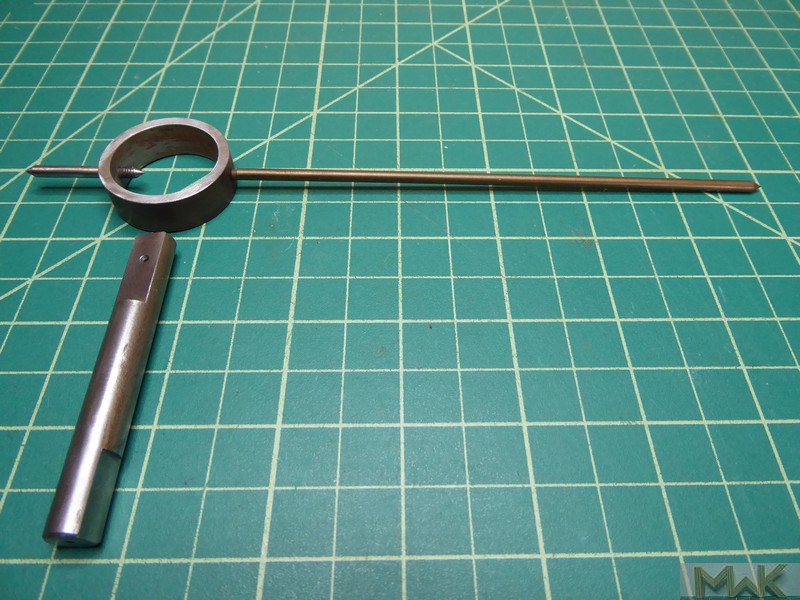
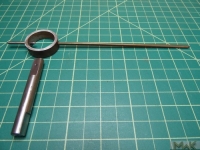
The punch mark is first roughly centered using the tailstock center as a reference. If the punch mark isn't perfectly centered, it will describe a circle when the chuck is rotated. As it approaches centered, the diameter of the circle gets smaller and smaller. Early machinists decided that they needed to magnify the circle so they could more easily center accurately. Thus was born the form of motion magnifier (I call it a "wiggler") shown in this photo...
The steel rod with the small hole in it is mounted in the tool holder and adjusted so the hole is close to the lathe centerline; the tailstock center can act as a reference tor locating it. The point inside the circular piece is placed in the small hole and the point on the left in the picture is placed into the punch mark in the work. With this arrangement the point on the long rod on the right will describe a magnified circle as the chuck is rotated. The chuck jaws are then adjusted until the magnified motion is eliminated as the chuck is rotated.
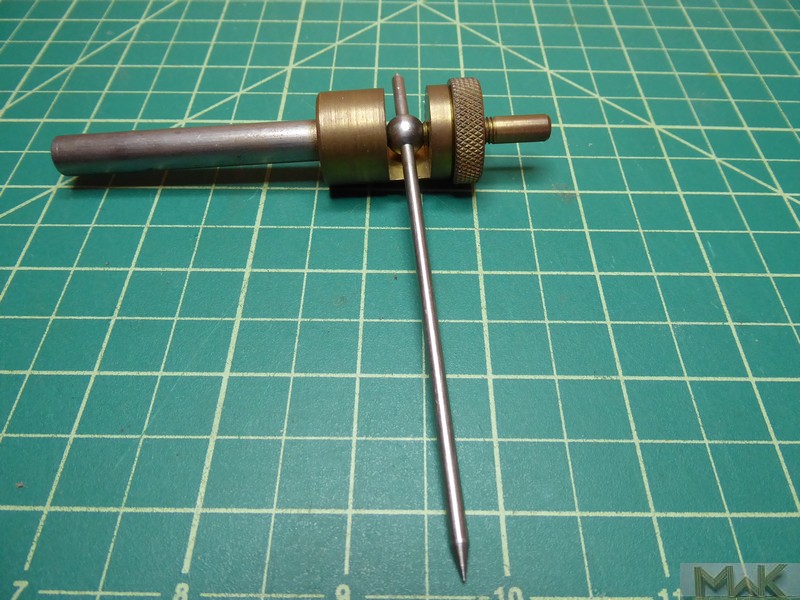
I built this device early in my amateur machinist career. While it had the advantage of not needing a then expensive DI, it quickly revealed its shortcomings. It is beyond fiddly to set up. Having seen the Starrett version of this tool (No. 65) by this time, I decided that if the indicator rod was supported by a sphere free to rotate in two axes, the device would be a single unit that wouldn't fall apart at the slightest disturbance. Thus was born wiggler version 2...
Definitely easier to set up. However, if you want the wiggler indicator end to point to the tailstock center when the punch mark is centered, the wiggler pivot point must be on the lathe centerline. That and the fact that neither wiggler is useful for centering holes means that we haven't yet achieved perfection.
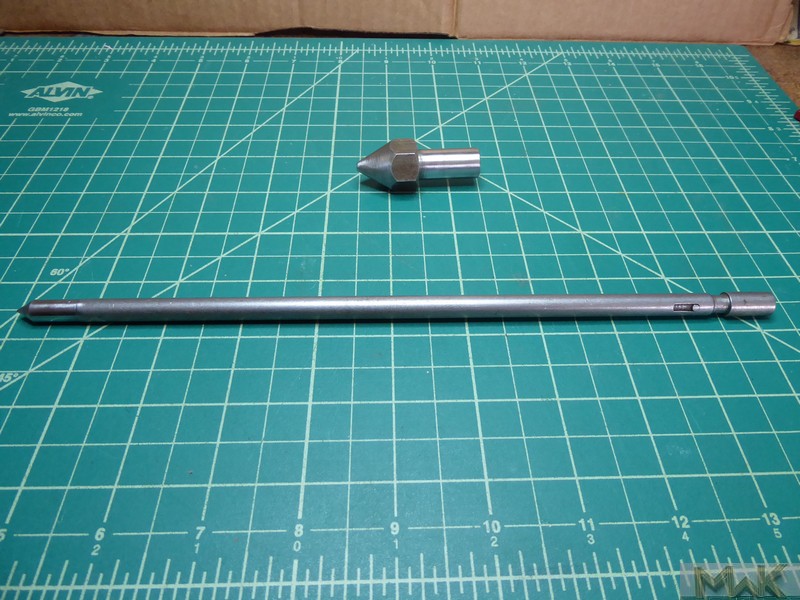
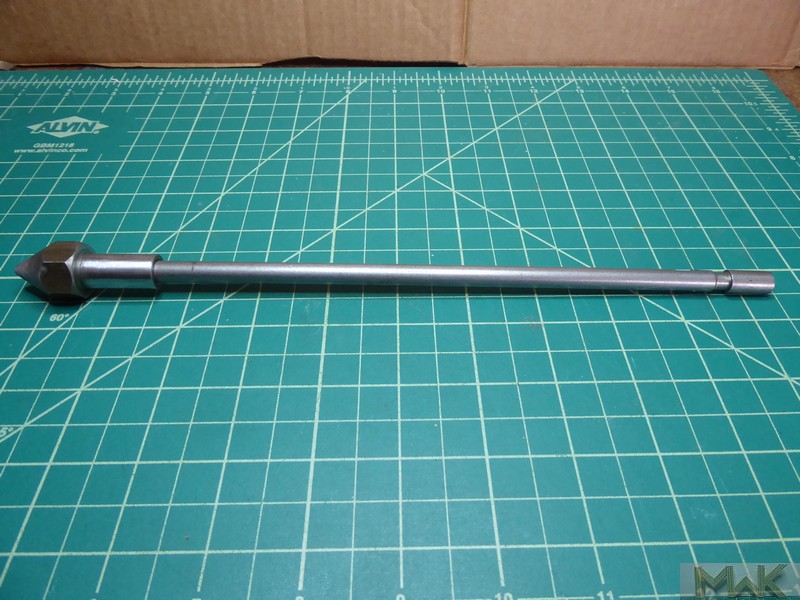
Then a retiring "real" machinist gifted me a pump center. I quickly realized that it, with the addition of a DI, solved all these problems. Easy to set up and the spring-loaded end kept it in place. Its pointy end tracked the punch mark and the DI, mounted on the tool holder, measured the motion of the punch mark.
And, with the addition of a turned cone that slipped over the pointer end, it could be used to center holes.
An inexpensive import DI is fine for this use since it is only acting as a sensitive motion sensor, not a measurement device. That said, I always recommend the pump center approach to this problem. Nevertheless, motion magnifying "wigglers" have applications elsewhere so keep them in mind.



 Reply With Quote


Bookmarks