1 Attachment(s)
Looking for tips -- > Cam and Gear assembly
I have some questions about Cam and Gear Assembly. I am sure some on this list have experience with this.
I have my old Ford 860 tractor apart to replace the cam gear. The original cam/gear design for this engine,
was a slip fit gear secured with a bolt. The new design is an interference fit between the cam and gear.
Perhaps an interesting side note. I acquired this tractor over 30 years ago, not running, with the cam broken
at the gear. I think that I was sold the new style cam with the old style gear. The gear just slipped onto the cam
and was held in place with a woodruff key and snap ring. Over the years, the gear banging back and forth
against the key eventually sheared off the key. Thus the new gear.
I have pressed bearings in and out or things before, but never measured them. I have no concept
of how much interference is a lot. Text from the vendor where I ordered the gear states,
•This is a cast iron Gear.
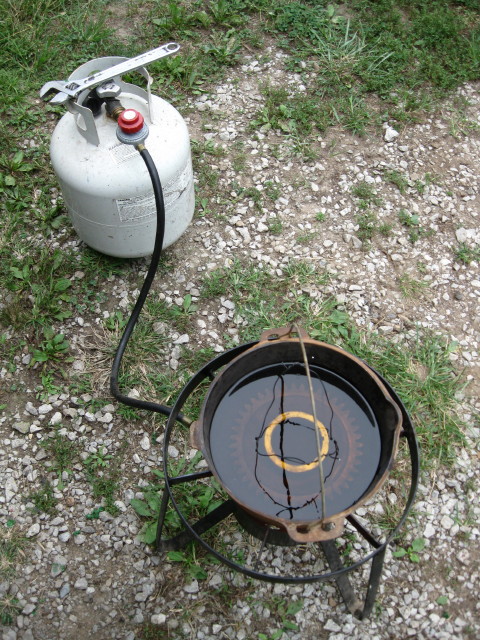
•Cam Gear MUST Be Immersed In Hot Oil & Then Pressed On
But it does not say how hot the oil should be.
The gear bore is 1.0000”. The cam nose is 1.0022.
According to an expansion calculator, it needs to be about 500˚f hotter
than the cam to get the bore to 1.003
400˚ difference will get the gear to 1.0024.
Maybe soaking the cam in an ice bath at 32˚ might help. Or dry ice -100˚.
But cast iron does get brittle when cold.
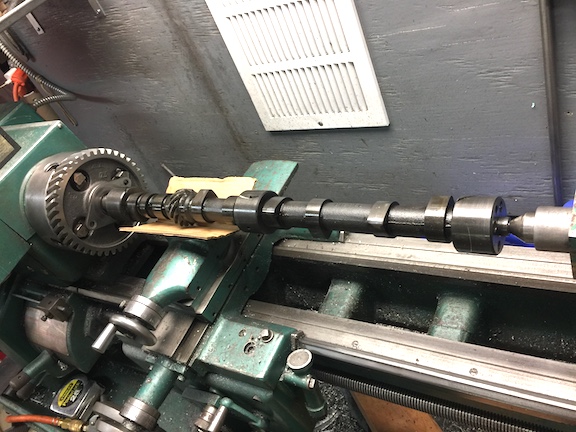
Right now I have the gear mounted in my lathe. The cam is cradled on cardboard
on the cross slide, shimmed to proper height, and aligned front to back.
The other end of the cam mounts on center in the tail stock.
Attachment 49434
During a cold test run, I can move the gear from the heat, mount in the chuck and advance the
tailstock to press the cam against the gear in 10-15 seconds.
My concerns are, if the gear starts to shrink before it gets pressed all the way on, will the tailstock
be able to push hard enough to finish the job.
I do not have a press to either finish the assembly or remove the gear if the first attempt fails.
Motor oil flash point is around 400˚. I have found that refined avocado oil flashes around 520˚.
But both of these would be dangerously close to burning into flame. So cooling the cam seems appropriate,
but how cold is cold enough or too cold?
I have worked on lots of engines and equipment over the years, but have never done a shrink fit assembly.
Am I thinking too much, making this too hard?
I appreciate hearing some of your experience.
Thanks,
John