-
6 Attachment(s)
Mini lathe carriage feed
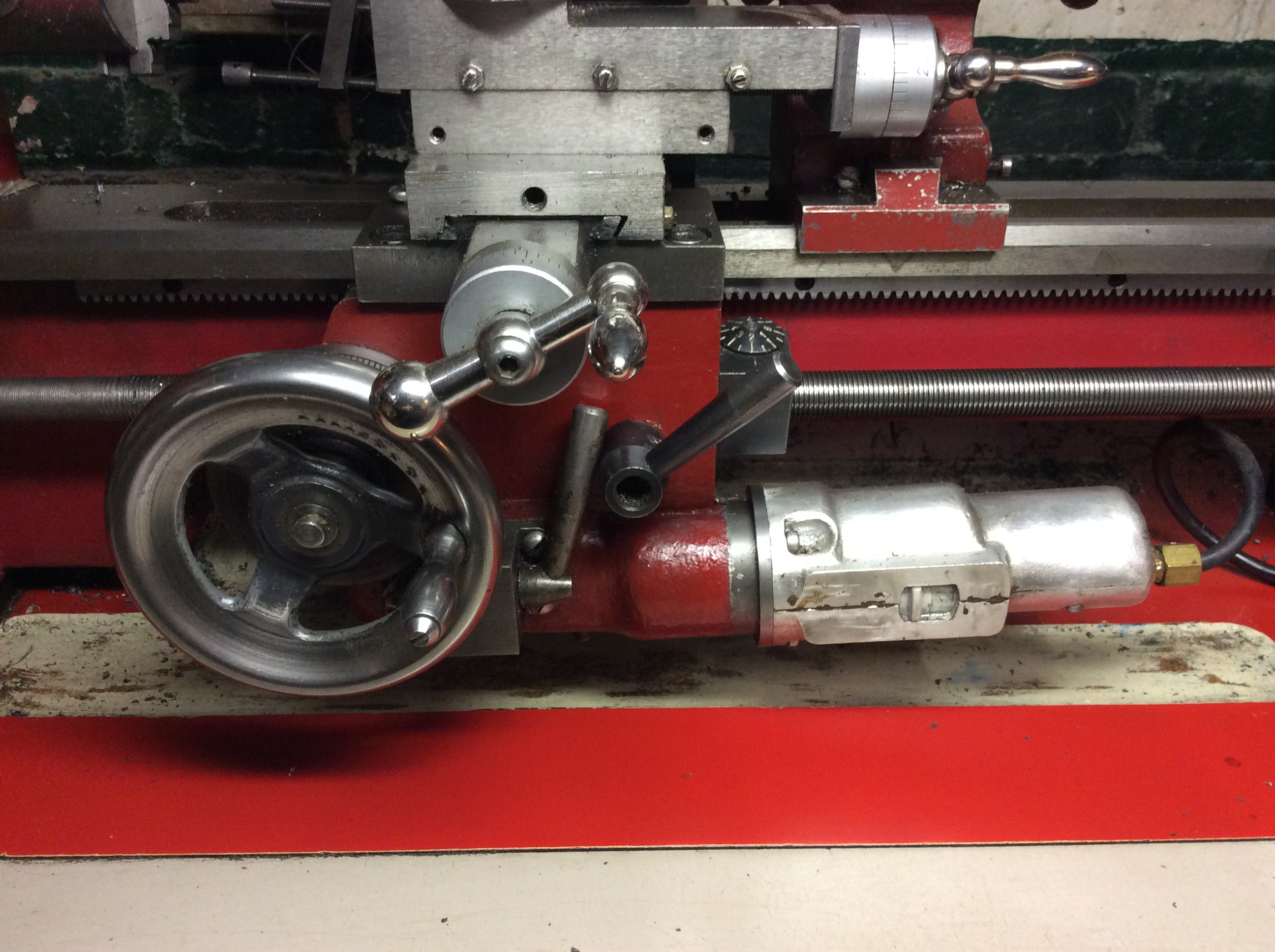
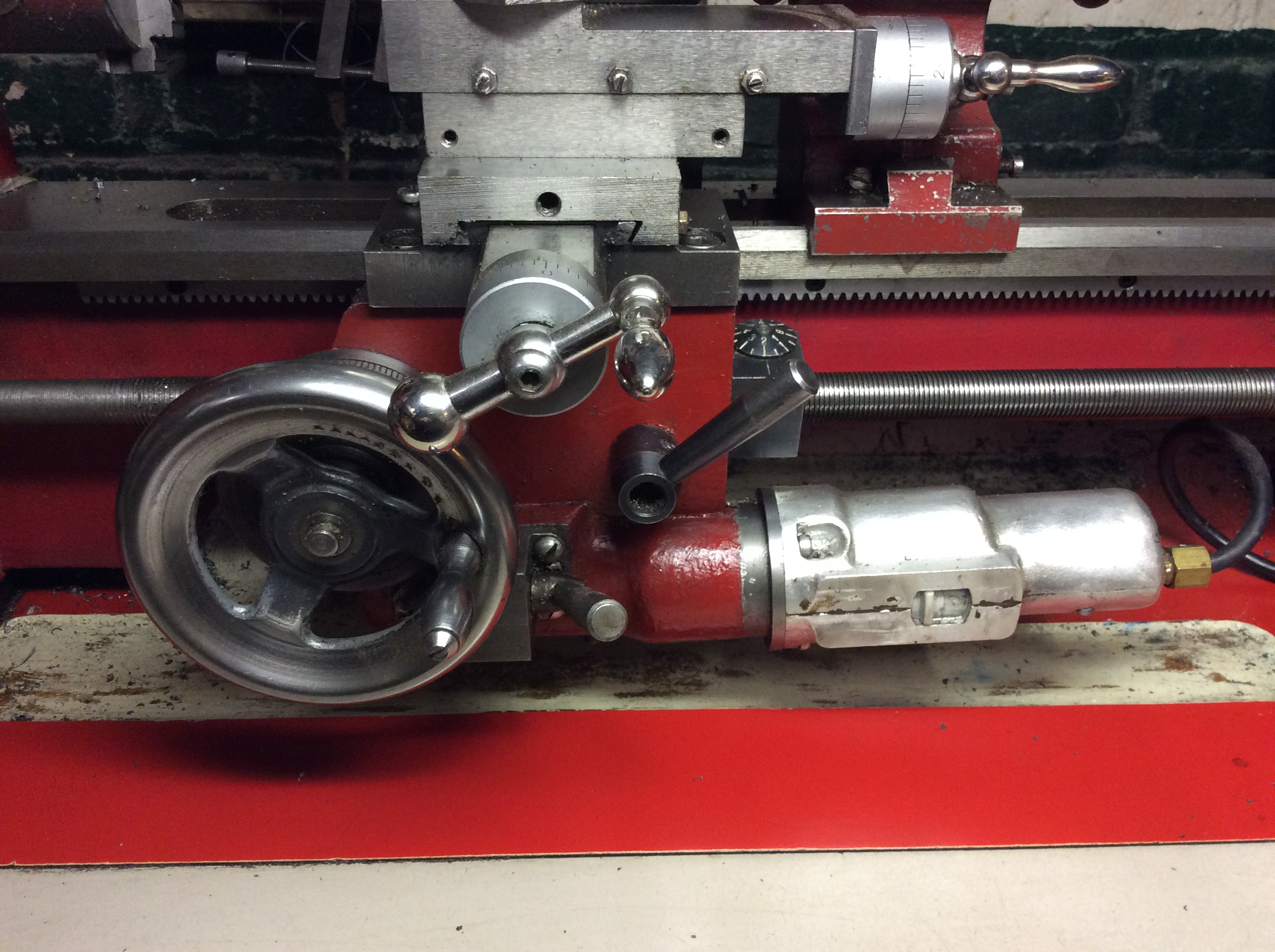
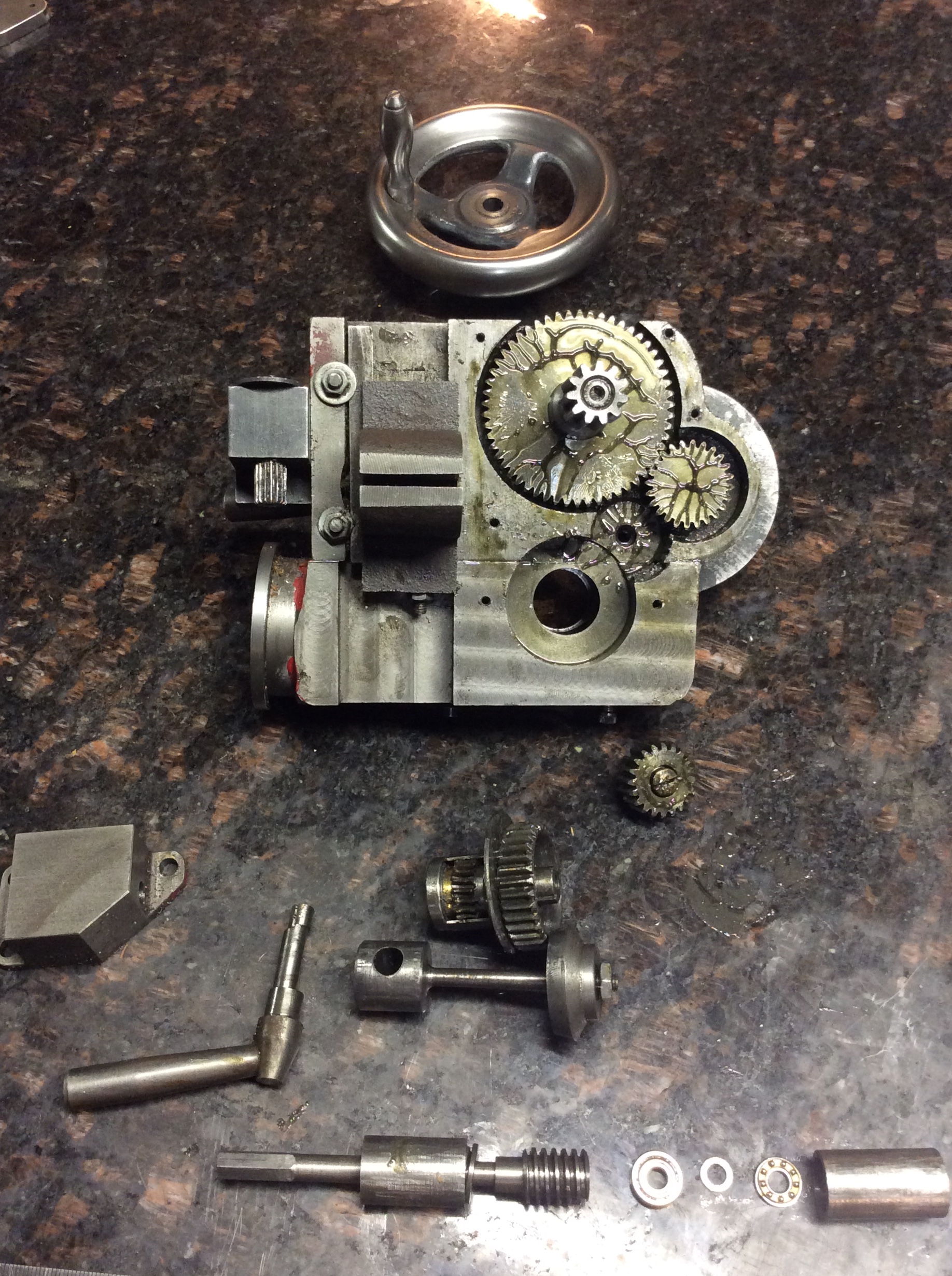
This is a variable speed feed drive I made for my old 7x10 that’s now on my 7x16. It kind of looks like what’s on some Hardinges but is smaller and cruder and only works in one axis.
Like the Hardinge apron feed it’s powered by a dc gearmotor and works using the hand feed rack instead of the lead screw. It has two speed ranges, I think up to only 3 or 4 ipm, I bought a faster motor to improve this but haven’t installed it yet. It engages with a lever operated cone clutch which I can set to slip when the carriage hits a bed stop.
It works pretty well and is strong and easy to use but without cross feed isn’t very practical compared with straight forward lead screw drives like Varmint Al’s ultra-fine power feed and jjr2001’s slow speed feed for the mini lathe, or even some kind of stand-alone stepper or servo-driven synchronized system like John Dammeyer’s “Electronic Lead Screw”, and different similarly named, mostly Arduino controlled projects based on the same principles. The modified apron probably has twice as many bearings and gears as the rest of the lathe.
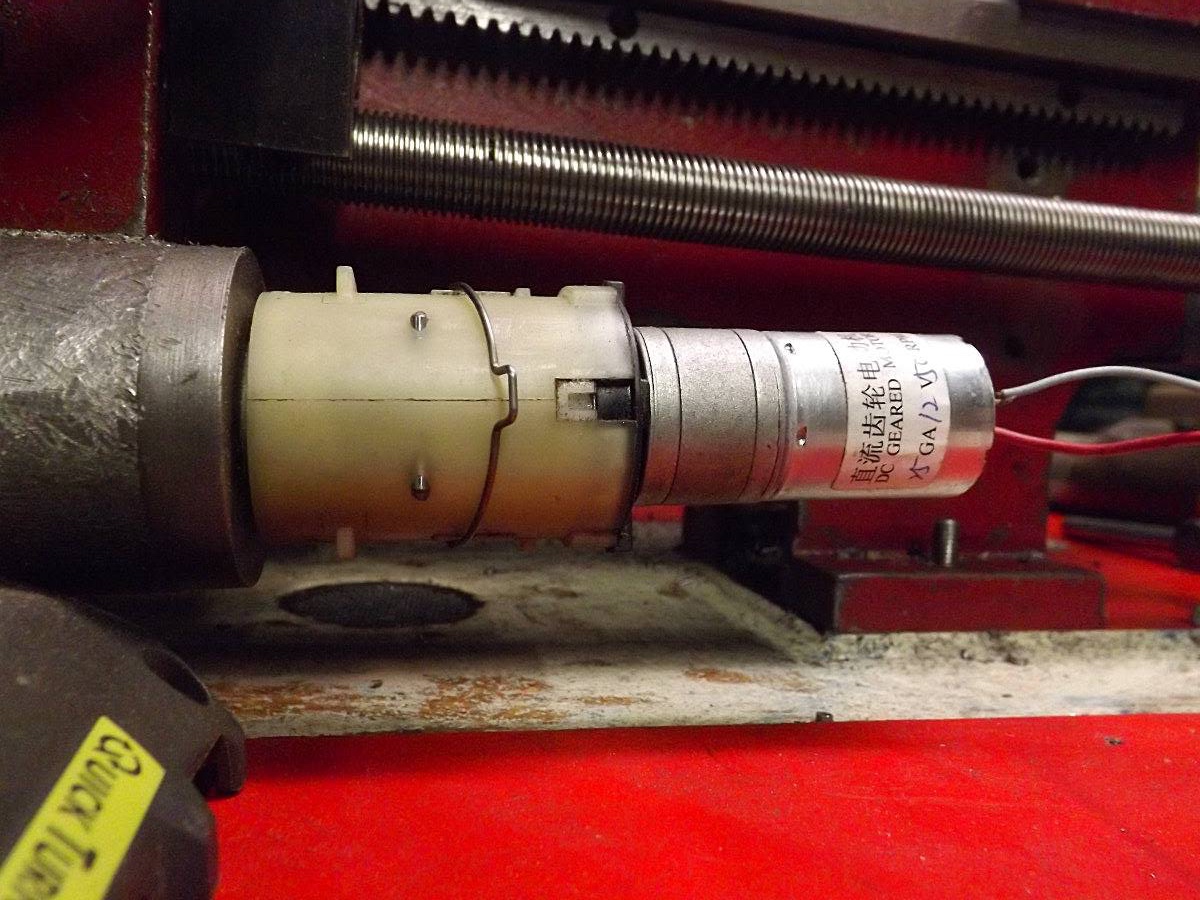
I used a 500 rpm gearmotor, a 2-speed planetary transmission from an electric screwdriver and a 20:1 worm gear, with a couple of gears to mesh with the regular handwheel drive.
Attachment 27274 Attachment 27275
Attachment 27276 Attachment 27277
Attachment 27278 Attachment 27279
https://youtu.be/3-rScjws45c
-
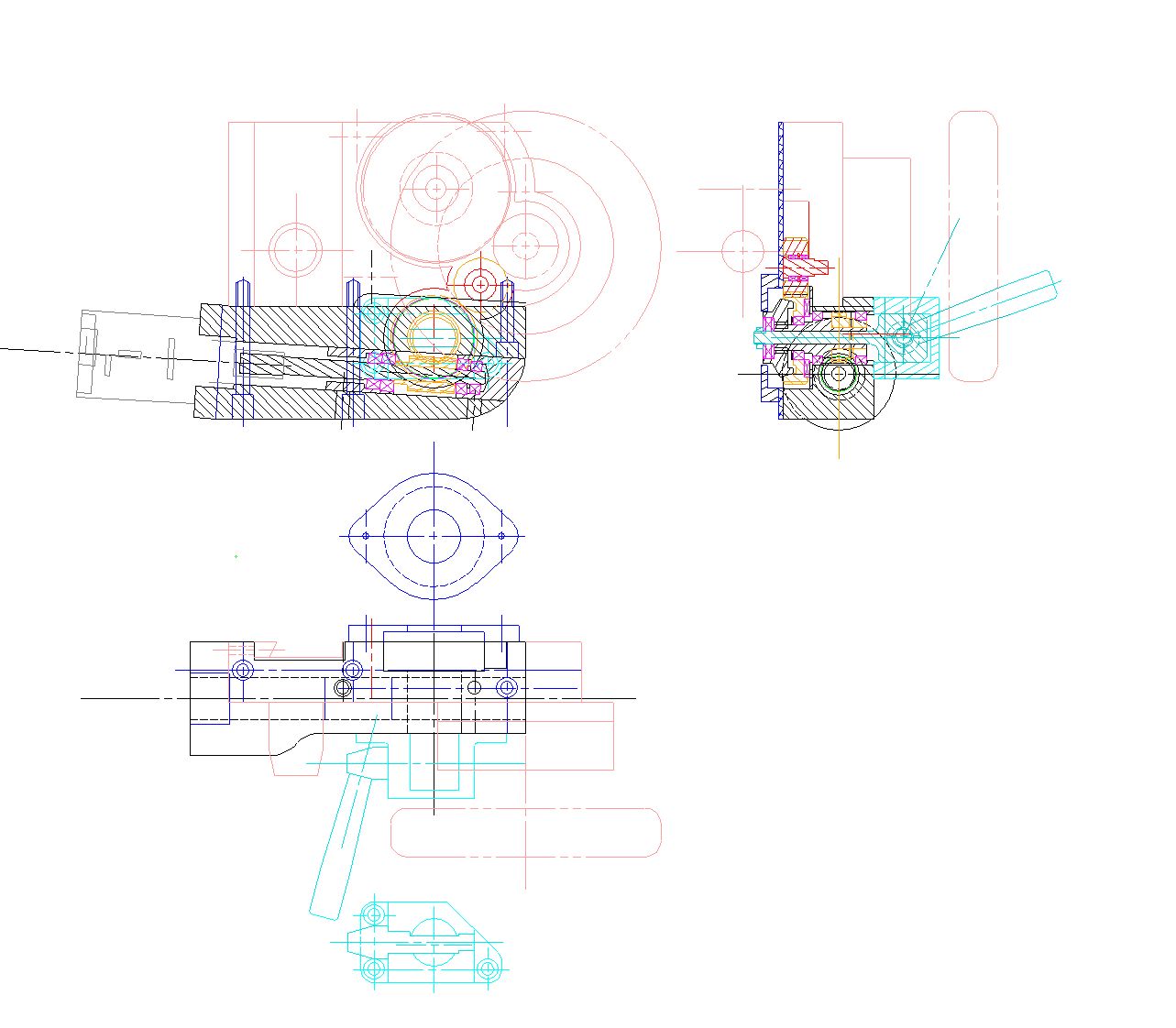
Quite the build Threesixesinarow! The complexity and spacing of the gearing is terrific and by the video relatively quiet. Also liked you took the Hardinge approach and being closer coupled. Particularly interested in the add on to the apron, as it looks like cast material? Did you weld or bolt it then machine the recesses? The CAD drawing is a bit complex to read but get the picture of fit up and the long shaft on the motor is similar to a motor I pulled out of a coffee grinder. Are the gears off the shelf?
Thanks for sharing this complex build and appreciate the references to Varmint Al and others as he was one of the first I spent time going through his great mods.
:hattip: PJ
-
Thanks, PJs,
I learned a lot starting out reading through Varmint Al’s site, along with stuff from Frank Hoose, J. W. Early and others I can’t remember now. I wonder how many of us they’ve inspired to squeeze more out of these little lathes.
I’m not sure this feed does that but it makes it really easy to switch between turning and threading.
The noise is mostly from the cheap gear motor I wanted to try first before buying something less familiar like a small stepper. The home made extra gears are about the same size as mini lathe change gears but with some extra details - the bigger one is part of the clutch.
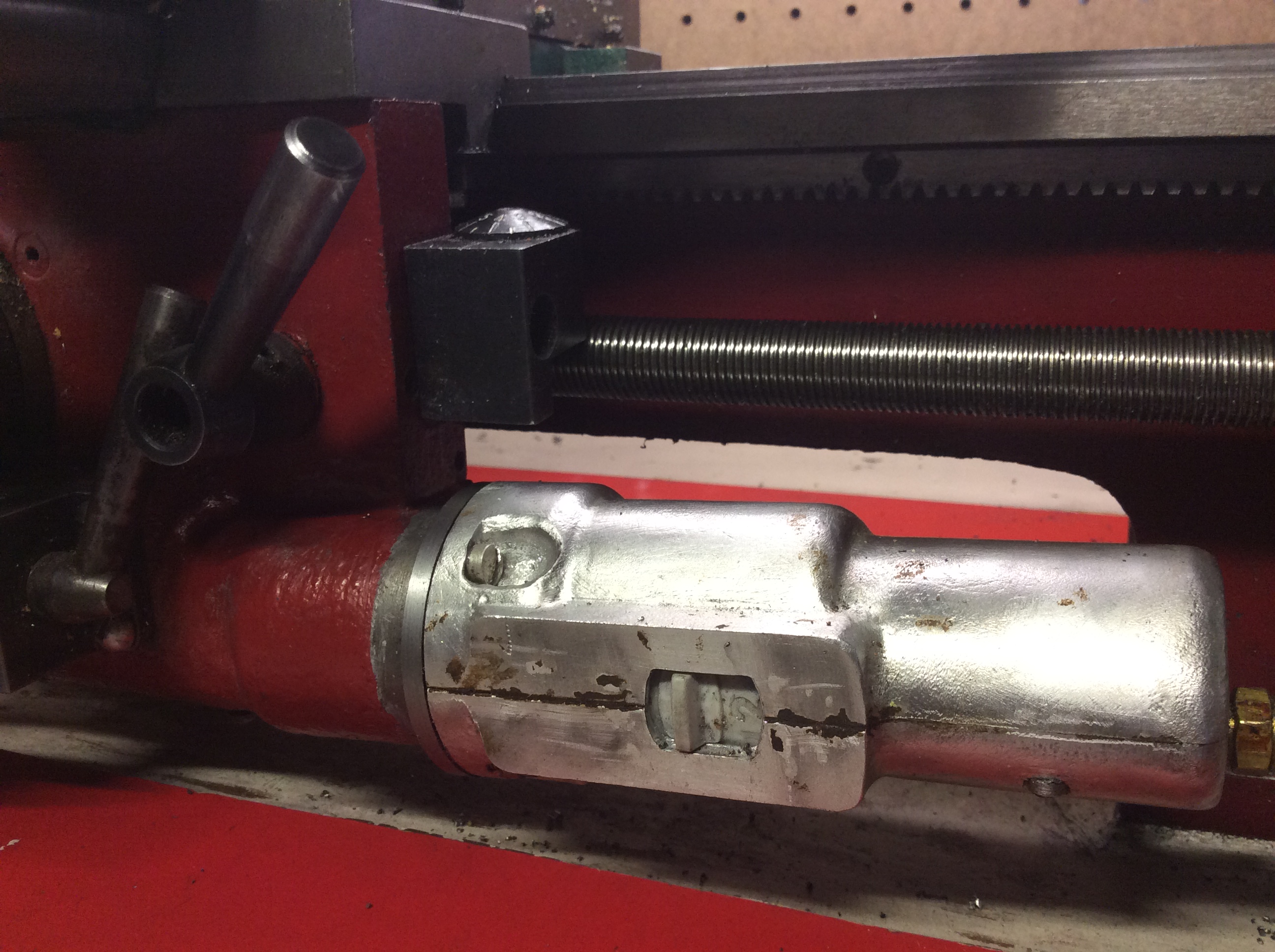
I made the bottom extension from a left over rectangular piece of cast iron bar stock. The working parts are packed in tight but drilling and boring the interior was pretty simple, and the outside texture that seems to help with painting is just from a carbide burr in a moto-tool with a loose front bearing. It’s attached with three bolts, which you should be able to see in blue on the side view if you click on the drawing when it’s displayed in the lightbox.
- Clark
-
Thanks Clark. They are all good to great sources in the beginning, to countless numbers I believe. Marty Nissen at Tools and Mods is another great source and inspiration for these mini's. It's part of why I built my site to pay homage those folks and pass it forward to others.
I can see the bolts now and still think it's a bit tough to get all the gear centers correct for proper mesh. Have considered bushing the wheel/rack gear and the other to reduce the lash mine has. Nice hand wheel you have! Shimming the rack and apron gets pretty decent mesh with the rack and a rework of the half nuts does wonders for engagement.
Like you said though a stepper requires all the other stuff...analog works for me.
Thanks again, PJ
-
<!-- BEGIN /var/www/html/homemadetools/protected/modules/zeus/views/tool/postUpdate.php -->
Thanks threesixesinarow! We've added your Mini Lathe Carriage Feed to our Lathe Accessories category,
as well as to your builder page: threesixesinarow's Homemade Tools. Your receipt:
<div id="blocks">
<div class="block b1 pngfix">
<div class="bimg">
<div>
<a href="http://www.homemadetools.net/homemade-mini-lathe-carriage-feed">
<img src="/uploads/219893/homemade-mini-lathe-carriage-feed.jpeg"/>
</a>
</div>
</div>
<div class="head pngfix"></div>
<div class="left pngfix"></div>
<div class="right pngfix"></div>
<div class="blockover b1 pngfix">
<div class="title">
<a href="http://www.homemadetools.net/homemade-mini-lathe-carriage-feed">Mini Lathe Carriage Feed</a>
<span> by <a href="http://www.homemadetools.net/builder/threesixesinarow_2">threesixesinarow</a></span>
</div>
<div class="tags">tags:
<a href='http://www.homemadetools.net/tag/lathe'>lathe</a>, <a href='http://www.homemadetools.net/tag/power-feed'>power feed</a> </div>
</div>
</div>
</div>
<!-- END /var/www/html/homemadetools/protected/modules/zeus/views/tool/postUpdate.php -->
-
1 Attachment(s)
I wonder if they’re purposefully made so gears can’t ever bind despite loose tolerances - in any case, I did a lot more to tighten up backlash in the gears than any of the feed screws on my 7xes.
For making only one it just takes careful measuring and planning to get the right center distances.
I do plan to replace the change gears with a simplified synchronized lead screw stepper system, but will keep the apron feed as well. A couple of those include a stepper for the cross slide in the more complete versions, to automate cutting threads and tapers, and probably facing as well. I still want to figure out a way to use this apron drive for that, too, though.
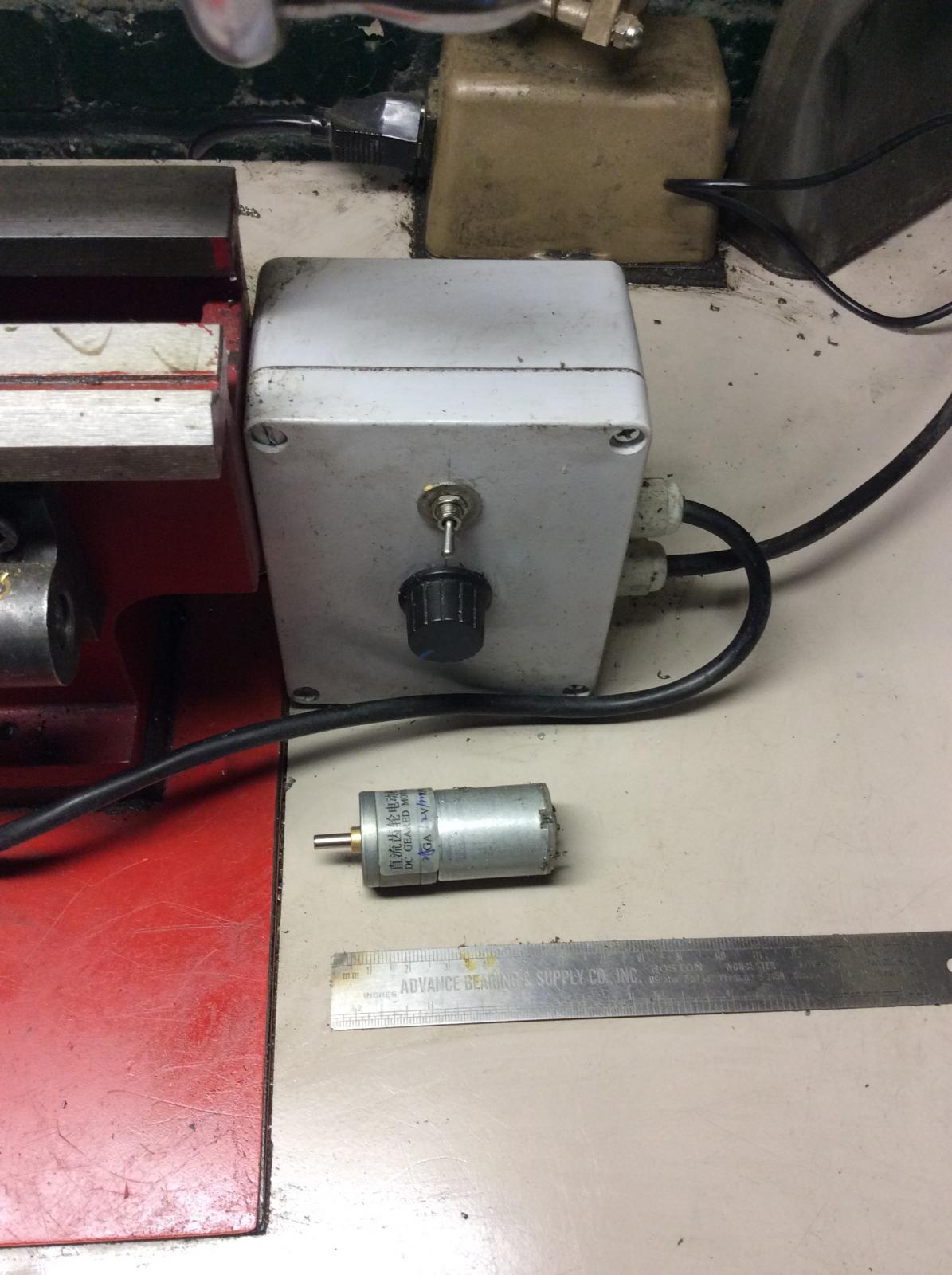
Speed control and new motor:
Attachment 27305
-
Looking forward to seeing what you come up with.
Thanks!
PJ
-
Hi:
Great metal work! You will really see the advantage of the DC motor if you add a variable power supply like the Hardinge lathe. The two simplest methods are:
1) AC to a light dimmer to a 120>12 volt transformer, AC>DC rectifier to the motor.
2) 120 to 0 variac or variable transformer, AC>DC rectifier to the motor.
The second option provide a more stable running, I think.
Good luck, Carl.