
 LinkBack URL
 About LinkBacks


These inexpensive 4 mm precision screwdriver kits, e.g....
https://www.amazon.com/Syntus-Precis...11&s=hi&sr=1-9
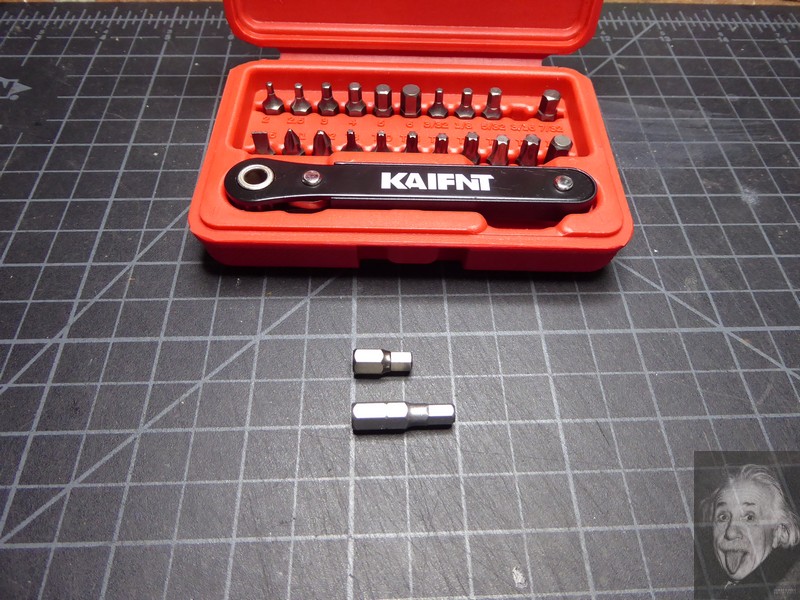
are great when working with miniature equipment. A bit for virtually every screw type (with the possible exception of JIS Pozidrive) is included along with metric sockets in the 2.5 - 5.5 mm range. All these bits have a 4 mm hex shank that fits the included handle and extensions therefor.
The one thing that isn't included is a 4 mm ratchet wrench, a tool that allows access to fasteners in locations that prohibit use of the screwdriver format handles. Commercial 4 mm ratchets are almost impossible to find. The only one I could locate is this...
https://www.amazon.com/Lisle-14540-H...8191086&sr=8-3
gadget for adjusting Ford headlights. Its head is rather bulbous and the ratchet isn't reversible; to reverse the action one must remove the bit and reinsert in the other direction - not a deal killer but not ideal given that there are better solutions.
Chris Rueby, one of the genius-grade modelmakers over on MEM, designed and fabricated a scratch-built 4mm ratchet...
https://www.modelenginemaker.com/ind...topicseen.html
George Britnell, another genius modelmaker, made his own version...
https://www.modelenginemaker.com/ind...html#msg239454
I didn't want to take the time to do a complete build as they did, but still wanted to have the capability for the rare occasions where it might be needed.
This style offset screwdriver...
https://www.amazon.com/MulWark-Profi...191343&sr=8-20
has the advantage of a small, thin head as well as a switch to reverse direction. I have one I picked up cheaply at HF a long time ago.
The problem is that it takes only a 1/4" hex, not 4 mm. An adapter is needed. Wiha makes a 1/4" to 4 mm adapter, e.g. ...
https://www.amazon.com/Wiha-75802-In...8958965&sr=8-1
but its length nullifies the advantage of the thin offset screwdriver head...
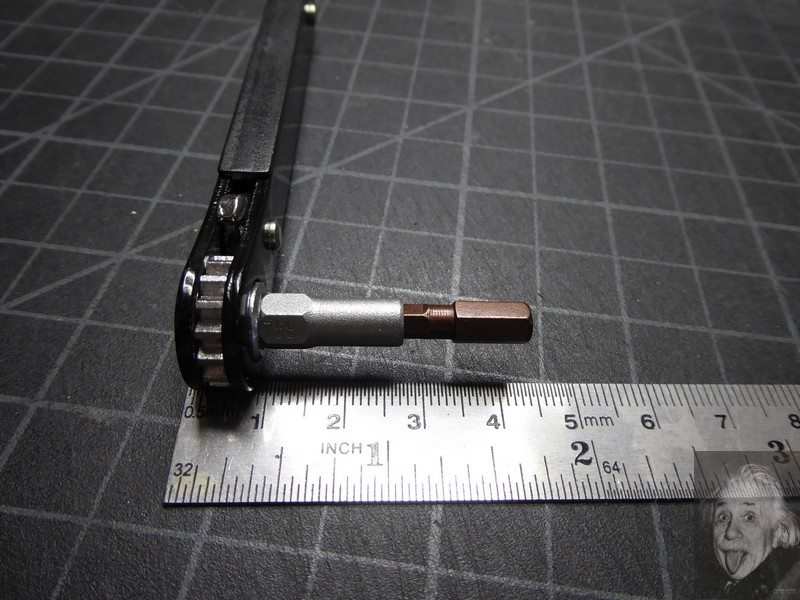
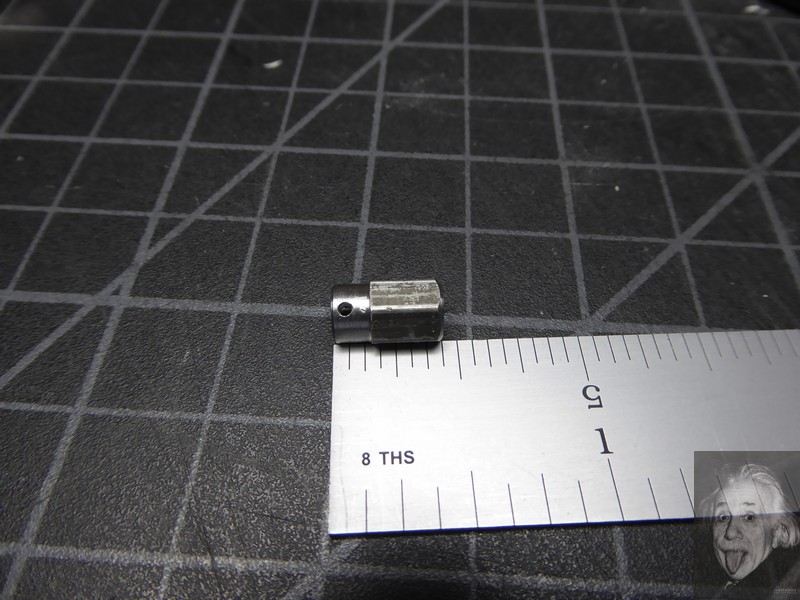
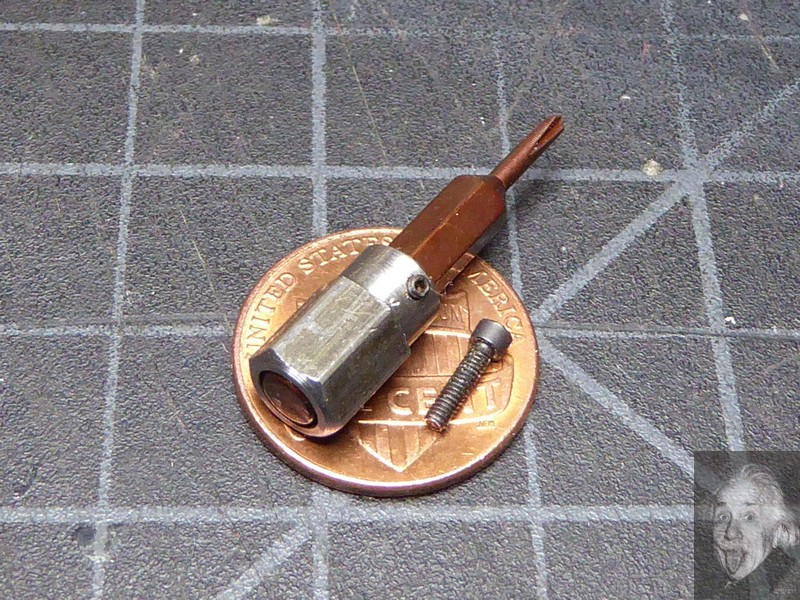
I have some 1/4" hex steel but carving a 4mm hex into it would test my patience. This is a really low torque application so a simple hole with a setscrew acting on the 4mm hex flats would work so I made this...
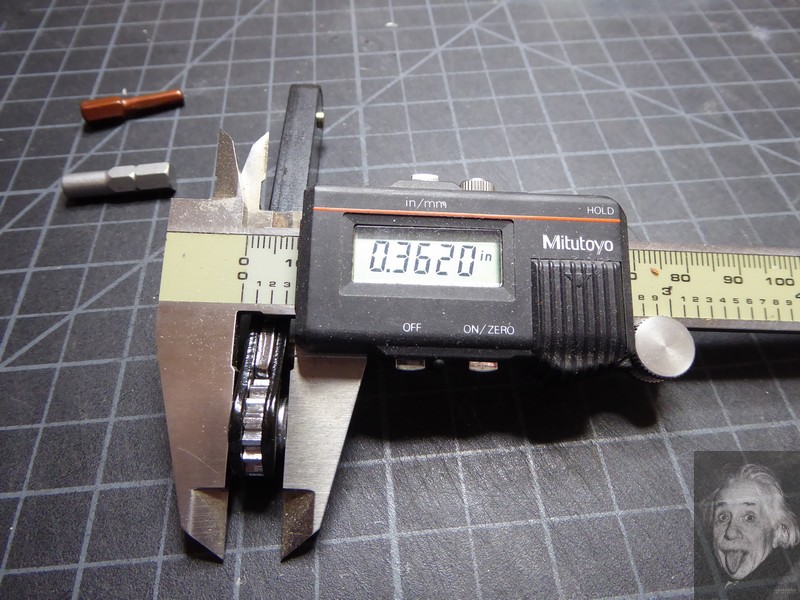
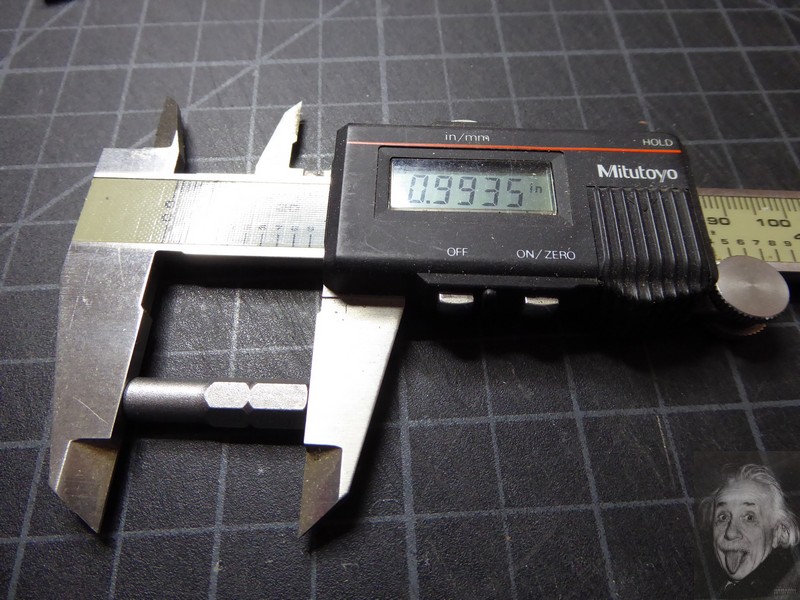
A half inch length of hex has a turned down section (to slip between two retaining tabs on the wrench) which has a cross-drilled and tapped 0-80 hole for a setscrew to lock the bit in place. The hex is drilled through with a #16 drill (0.177" ~= 4.5 mm) that is a slip fit on the 4 mm hex shanks on the various bits and sockets.
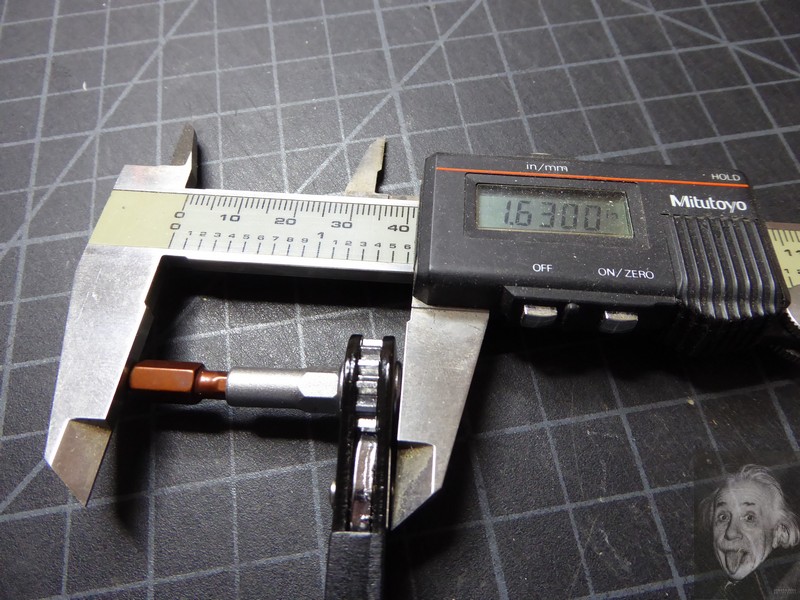
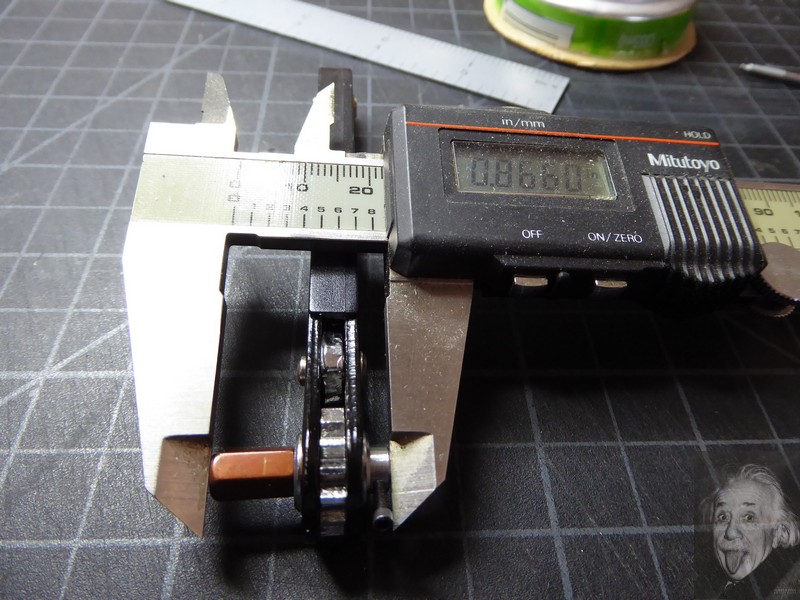
Fully assembled, it looks like this...
and can fit into a crevice less than an inch wide.
I abandoned the idea of a 0-80 setscrew early on; they're just too tiny. A 0-80 SHCS works much better; it can be held on the end of a 0.050" Allen wrench for mounting.
Yes, this is all rather fiddly but it will only be used very rarely, if at all, so I'm willing to live with it.



 Reply With Quote
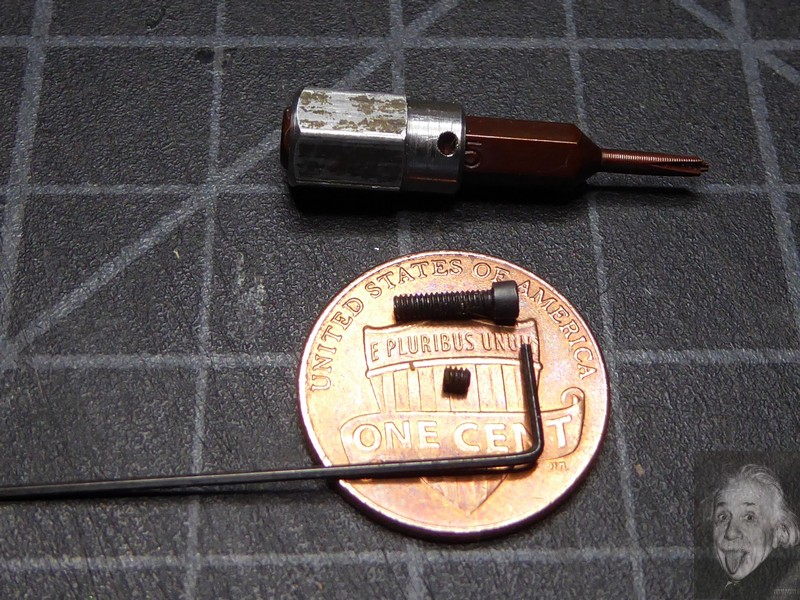

 It would be much easier to fake a picture than imagine making a .028" hex hole in a screw less than a 1/16 of an inch in diameter. But I have worked with 0-80 screws in the past so I am aware of their size. Can't say as I have ever needed a 0-80 grub screw though.


Bookmarks