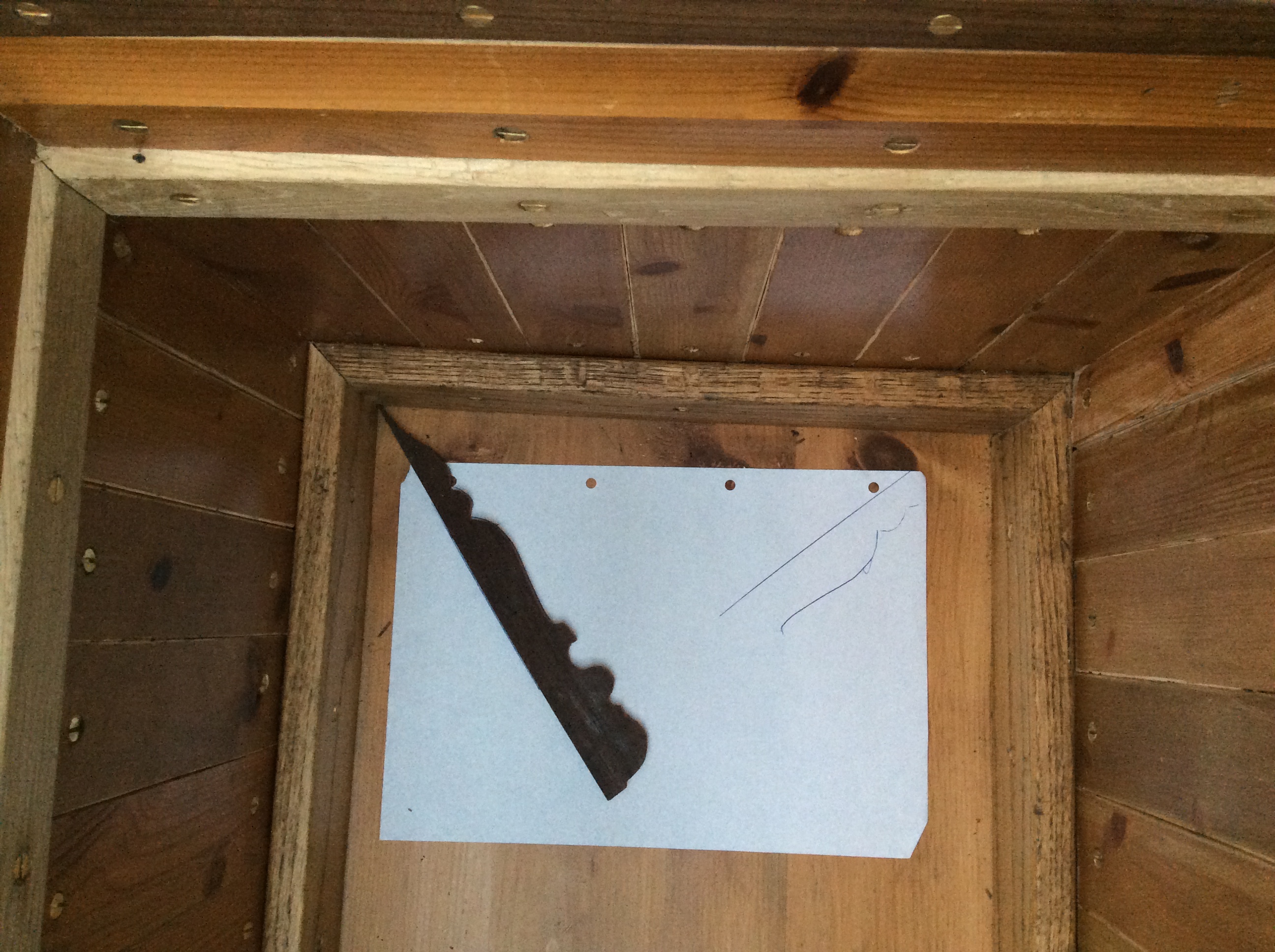
I could not see the point in using such a spiling stick in your example. Why not just use a pencil to draw around the object's profile?
I assumed it could be used on larger (longer) items, i.e. boat building, where tracing a profile to a "template" is beneficial. This prompted me to look on Wikipedia
spiling stick which shows the intended use, though with a different "stick".
I further assumed that the notches are more for creating a line or mark at specific distances from the edge being profiled. Hence the taper of the stick.
So, instead of using the point as an indicator of sorts, the "back" (unnotched) edge is moved across the board being profiled and the pencil or other marker placed in a suitable notch, is moved along/across the template. This generates an appropriate "cut" line for the template or the new board that fits against the previously "profiled" board. Obviously in boat building this is a useful tool, for smaller items, perhaps not so useful.
Best wishes...

 LinkBack URL
 About LinkBacks


Originally Posted by Peter Sanders




 Reply With Quote


Bookmarks