-
3 Attachment(s)
Adaptable SWAGE BLOCK
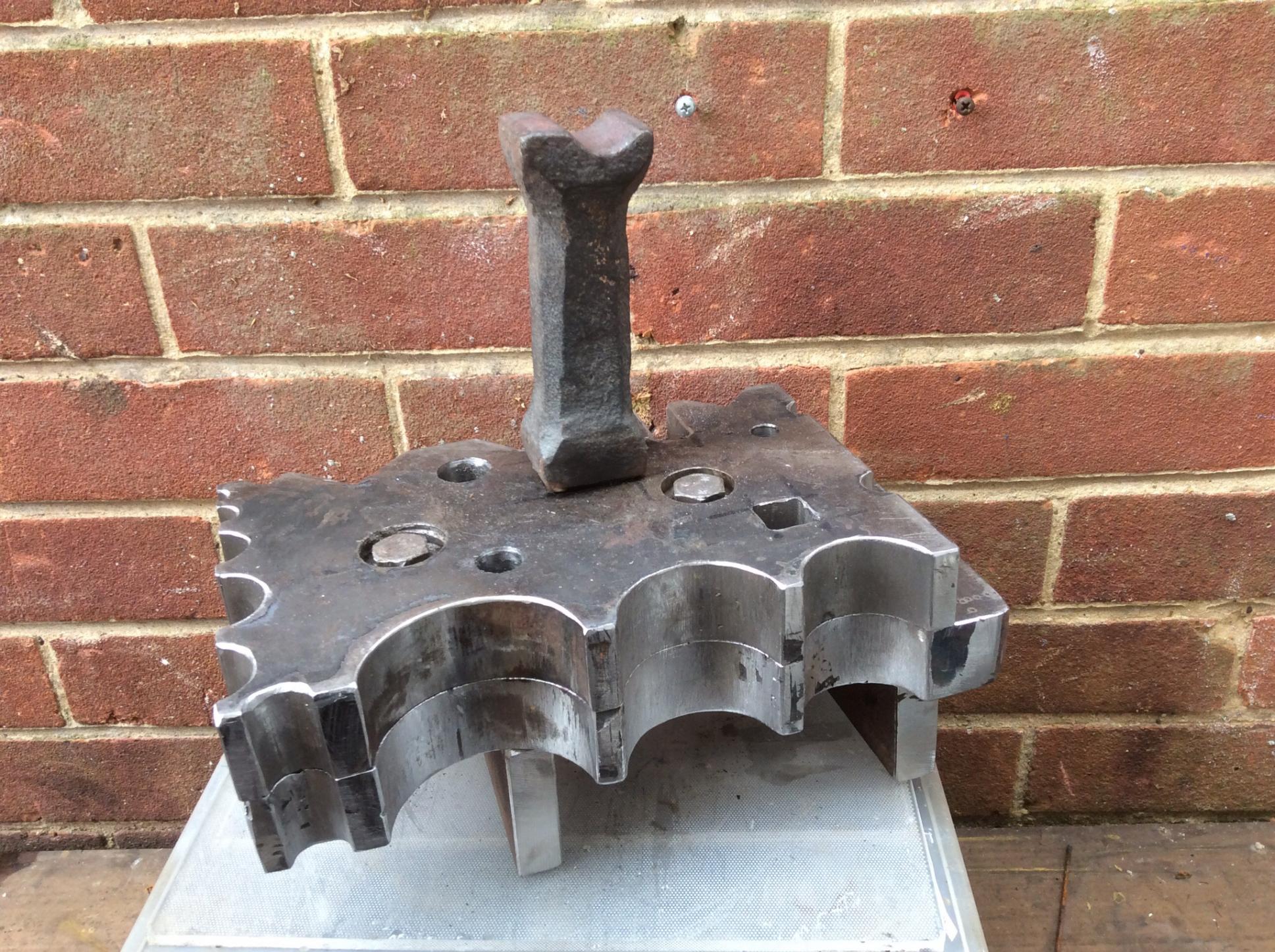
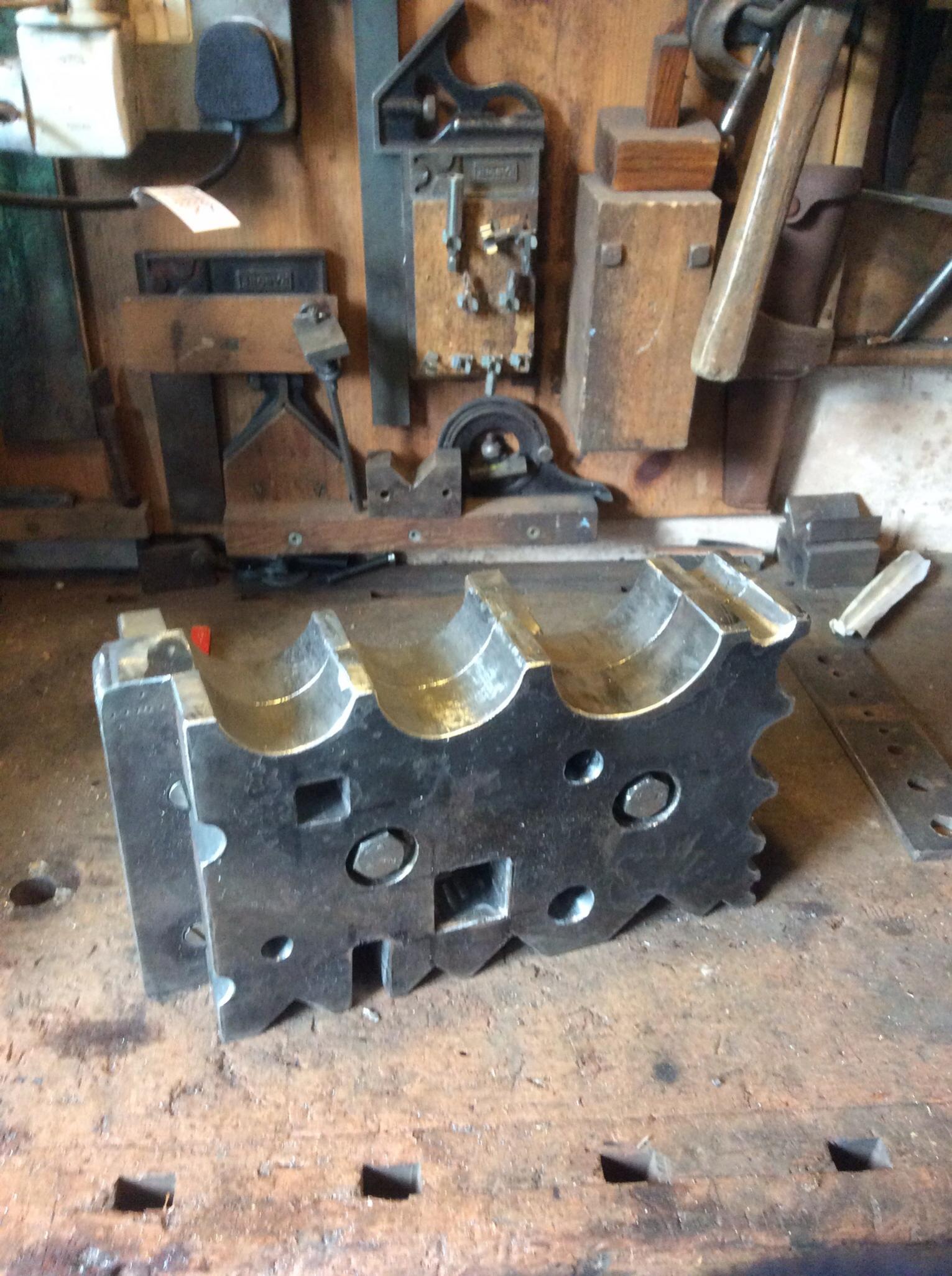
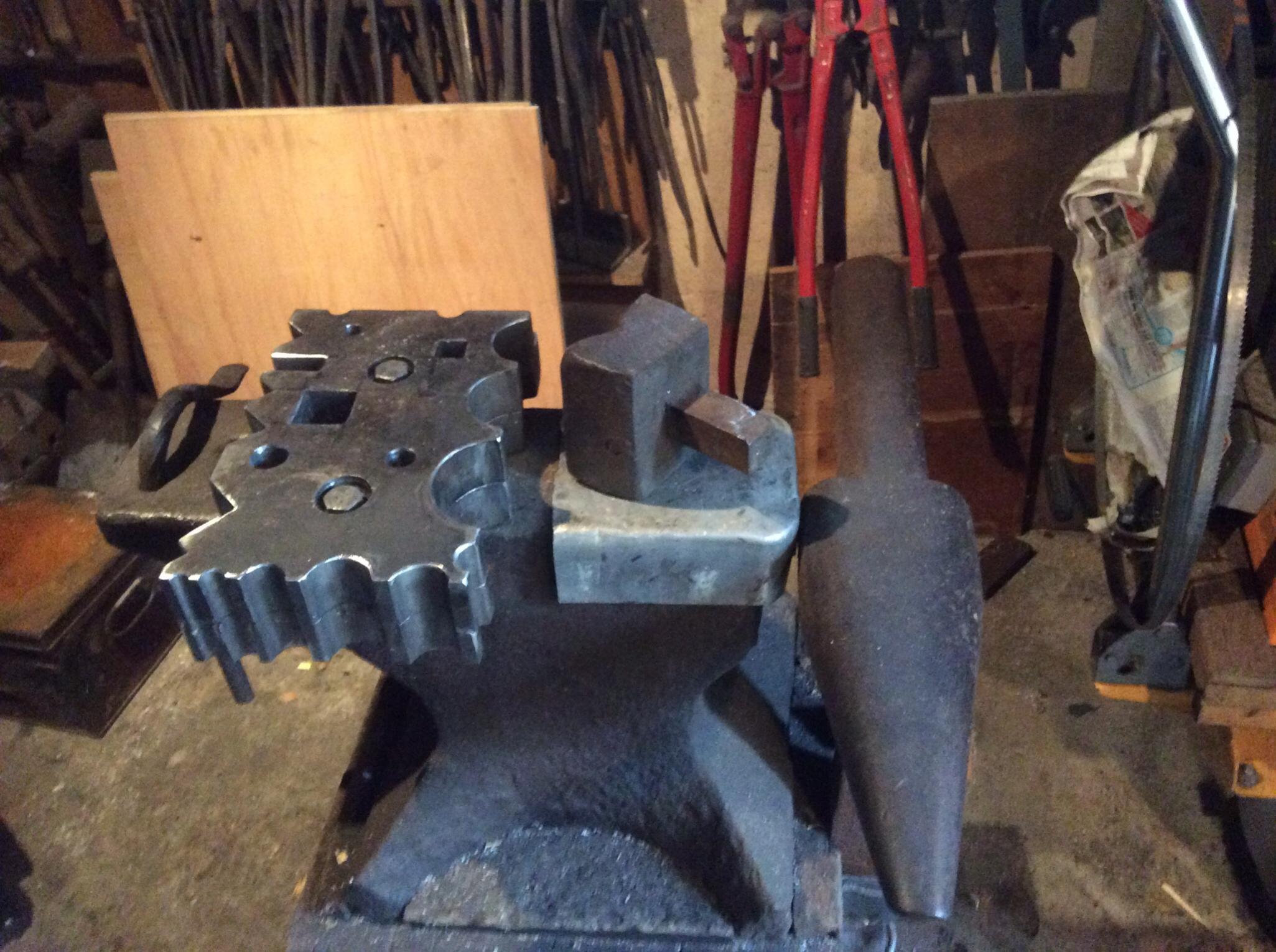
This is a bench top swage block, consisting of four components, bolted together. It is formed of two plates, cut from a salvaged plate, one and one quarter inches thick. It has been many hours' work, carving it with hand tools (apart from the initial drilling', as a result of which I discovered, too late,that my drill press table is way out of true. Also, I used a disc sander at work to true the edges) . The legs provide a saddle and prevent it sliding about on the anvil. My anvil lost its bick in the remote past; I don't want to break the hardy hole as well. Now I can make some top stages to suit.
I began it four months ago and finished it yesterday. This has been my main hobby time project during this period. While resting my arms, though, I have been also making other stuff, some of which will be posted in due course, if I am spared.Attachment 9515Attachment 9516Attachment 9517
-
<!-- BEGIN /var/www/html/homemadetools/protected/modules/zeus/views/tool/postUpdate.php -->
Thanks Philip Davies! We've added your Adaptable Swage Block to our Metalworking category,
as well as to your builder page: Philip Davies's Homemade Tools. Your receipt:
<div id="blocks">
<div class="block b1 pngfix">
<div class="bimg">
<div>
<a href="http://www.homemadetools.net/adaptable-swage-block">
<img src="/uploads/145963/adaptable-swage-block.jpeg"/>
</a>
</div>
</div>
<div class="head pngfix"></div>
<div class="left pngfix"></div>
<div class="right pngfix"></div>
<div class="blockover b1 pngfix">
<div class="title">
<a href="http://www.homemadetools.net/adaptable-swage-block">Adaptable Swage Block</a>
<span> by <a href="http://www.homemadetools.net/builder/Philip+Davies">Philip Davies</a></span>
</div>
<div class="tags">tags:
<a href='http://www.homemadetools.net/tag/swage-block'>swage block</a> </div>
</div>
</div>
</div>
<!-- END /var/www/html/homemadetools/protected/modules/zeus/views/tool/postUpdate.php -->
-
Well done!
I've been staring at a piece of A36, 12 inches square by 2 inches thick
for close to 10 years and wondering how to make a swage block of it...
Now I see at least part of the answer
-
I love it. A lot of good work went into that part.
I am going to buy mine, but I think you did a great job. Thanks.
-
Hi Seamus,
Welcome! :welcome:
What are you planning to do with the swage block once it's done?
Ken
-
Thank you very much. For professional use you are of course better off with a cast iron swage block. There are some excellent new ones available, and you can get stands which enable them to be easily turned. Made in Germany, I think.
The versatility of mine is that I could insert a plate between the 2 halves for eg collars and also it is lighter to move about.
-
Thank you, Seamus, and may I say that your profile picture is a favourite one of mine. Have you seen the movie?
-
Thanks again Seamus. I wanted to say why I chose to do it by hand but the reply has gone into the aether. I wanted to experience for myself the old way of doing things. It is salutary to think that I probably laid 50k hammer blows and in excess of 20k file strokes. I know no-one near with a plasma cutter, and I would not trust myself to cut accurately if I dared to ask for a loan of one. It is mild steel so only suitable for occasional use. But there are easier methods!
-
Yes indeed, although the version I saw was not
complete. Missing a fair amount of footage in the middle
and at the end. What's neat to me about it is that it shows
a blacksmith working on Model T's. While it's fiction, I have to
assume it was at least partially based on what was going on
at the time, the transition from oats to oil...
-
Seamus, I tried to add to the private message. Did you get it? Try again and I shall let you have my email