
 LinkBack URL
 About LinkBacks
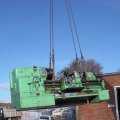

Way back in time, working in 70's era mold shop, the lead and grease thing came in this way. One mentor [a cast bullet shooter] advised us lead shrinks slightly as it chills. The plug tightens it, dampening vibration well, in a tapered bore. Our non-scientific hypothesis said that a cylindrical shape wouldn't attain as much contact between lead and the bar interior. Cerro/ bismuth metal would have worked but the volume meant high cost, I suppose.
Regarding tapered bore, a true taper is possible but depth was an issue. They relied on mere step drilling. The difference of which end, tool bit or tool holder, worked better wasn't solved. IMO, variables of machine condition, feed & speed rates, tool form, cavity size of mold etc too extensive to formulate. These were large trashcan like profiles, radii at top lip, stacking band, and bottom, requiring male radius form tools. That allowed good feed rate but a real pucker-fest disengaging at exact depths while backing off cross slide. Carriage stop not good for that. No DRO's or CNC's back then either, just creeping up on long travel indicators or Trav-A-Dial.
Come to think of it, still prefer watching an indicator count-down instead of DRO doing that slot machine act.


 Reply With Quote

Bookmarks