Remarks:
*The delay comes from the Newton's second law: F = m a = m (dv/dt). The "dt" argument introduces the "delay", or better a time shifting factor in the transfer function of the motion from workpiece on the spindle (in the case of the lathe) to the boring bar holder. We can use this transfer function to assess the stability of the system composed by the workpiece in rotation (as action) and the boring bar (as reaction) and a noise generator determined by the point of contact of the tool with the workpiece. This noise will induce oscillations that could increase in aplitude if the system resonates (i.e., it's not stable).
N.B. This is to explain my intuition, I do not know if this is the common way to model a system like this.
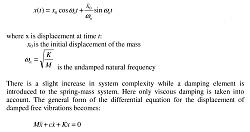
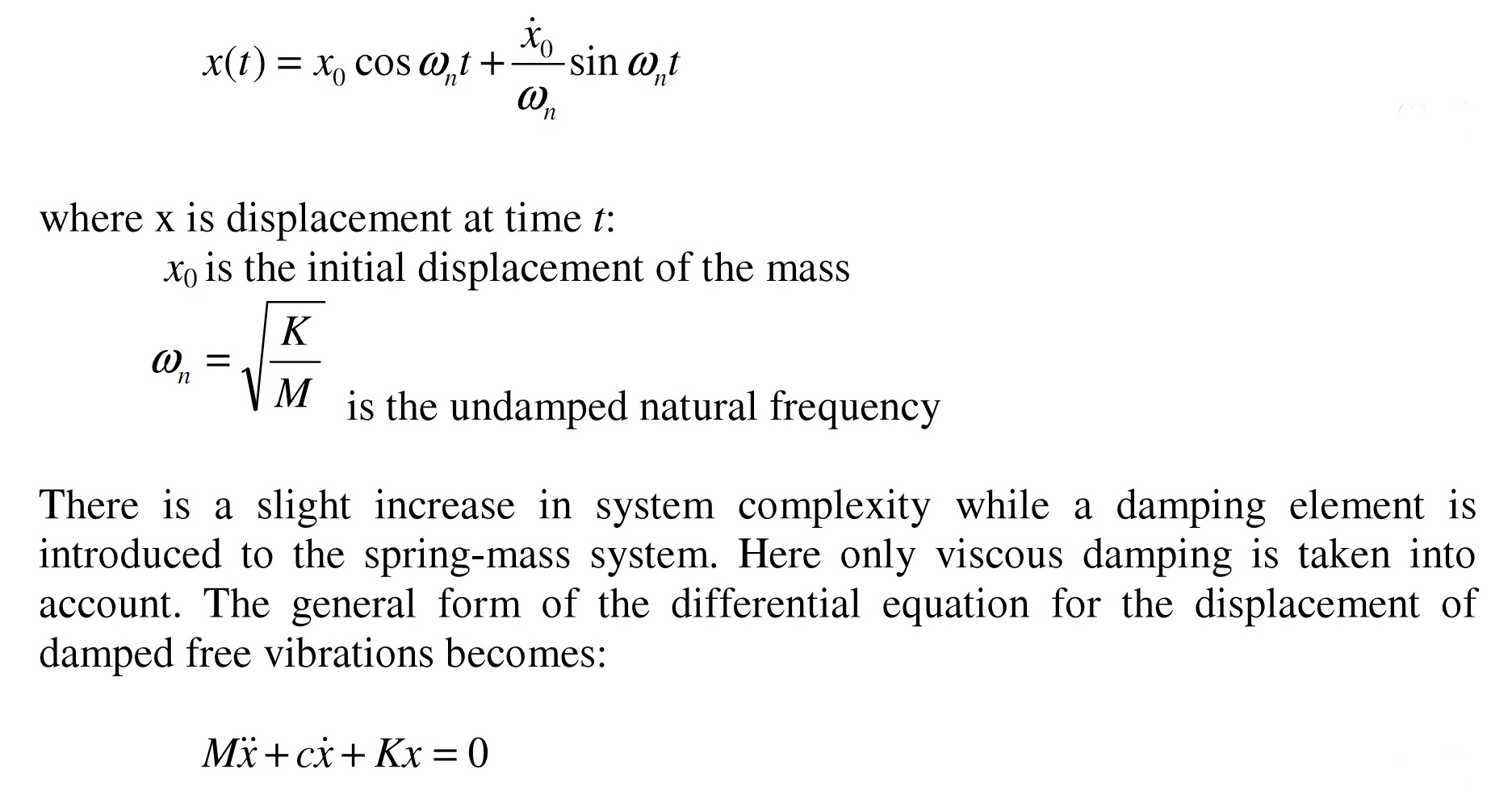
M4A says: The correct solution for this mass-spring system is...

 LinkBack URL
 About LinkBacks

Originally Posted by machining 4 all



 Reply With Quote

Bookmarks