
 LinkBack URL
 About LinkBacks

 Help with Whitworth (three plates) method

Hello everybody and happy new year. I have a question about the Whitworth method, also known as three plates method. I've read some that say the plates to make flat should be rotated by 90° to be sure no twist remains, saying that a rotation by 180° could not reveal that twist.
I've read the paper written by J. Whitworth and he mentioned to flip the plates, not to rotate by 90°. Also I am not an expert in this field so I would like to ask you guys for a little help.
To better understand the problem I also made a sort of simulation using a some semi-transparent drawing.
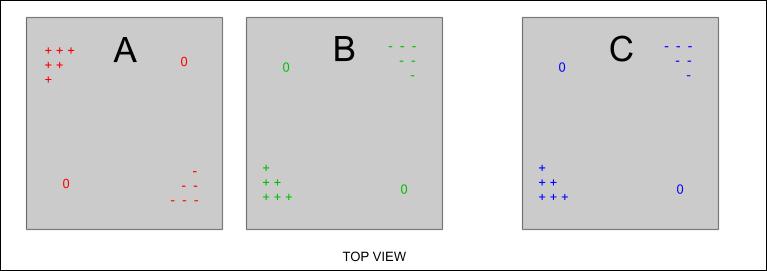
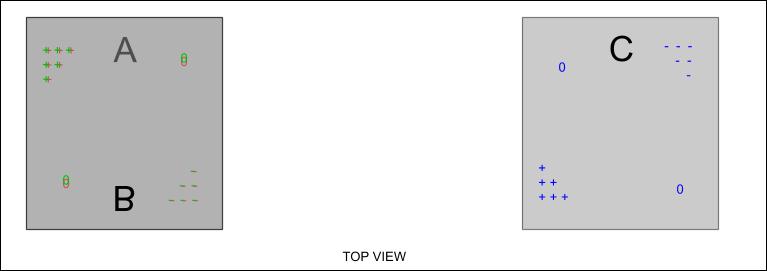
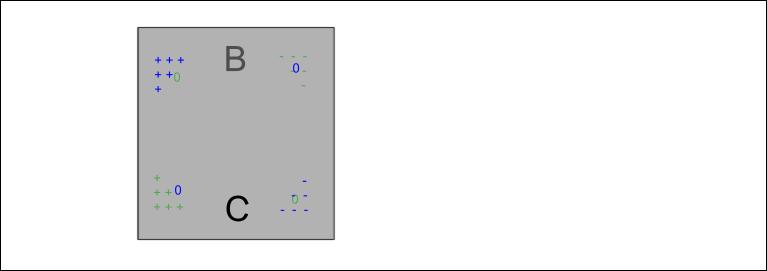
So suppose we have three plates, A, B and C as in figure 1. The plus signs indicates the peaks (or highs) and the negative signs the througs (or lows). Zero indicate a middle point. In figure 1 the plates are seen from top, with the surfaces to be made flat up.
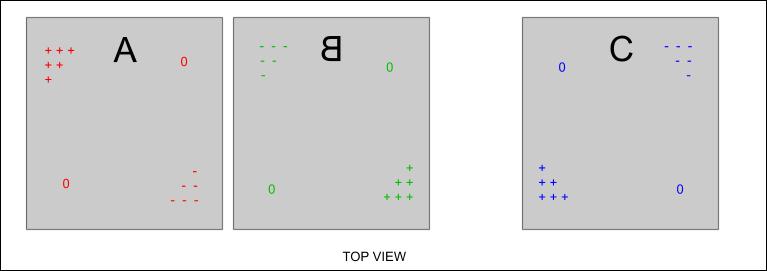
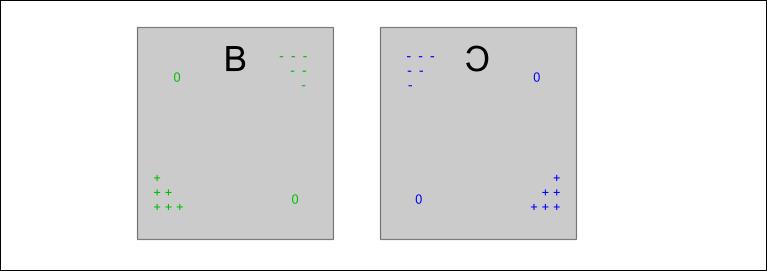
Now suppose we try to match B against A, figure 2, to do this we turn upside down B and in the drawing it is shown mirrored as it actually happens in reality. It is also in transparency to let us see where the highs and lows go in the simulation.
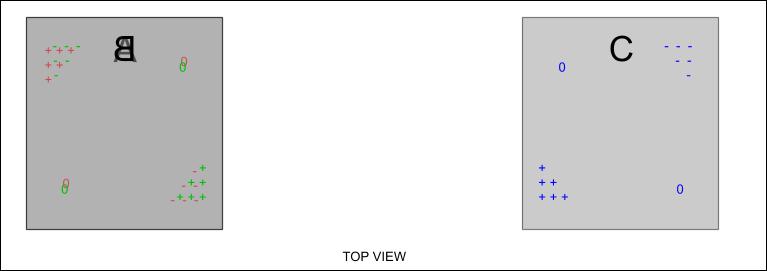
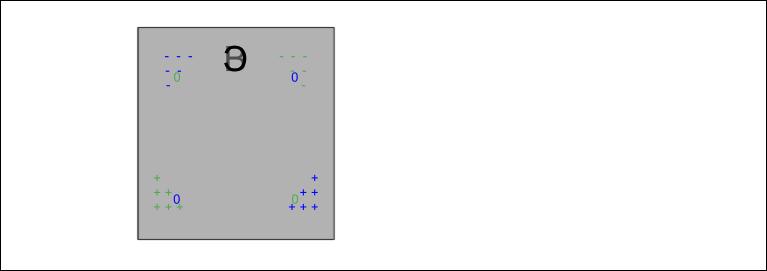
Overlapping the parts (figure 3) we can notice that red plus of A match the green negative of B, and viceversa on the other corner, making them to cancel out each other. If we were to lay color we would see an even distribution on A (and B).
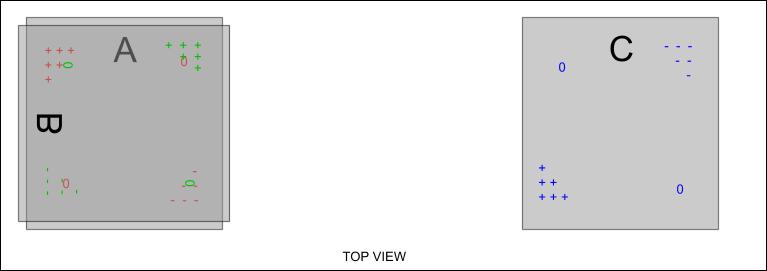
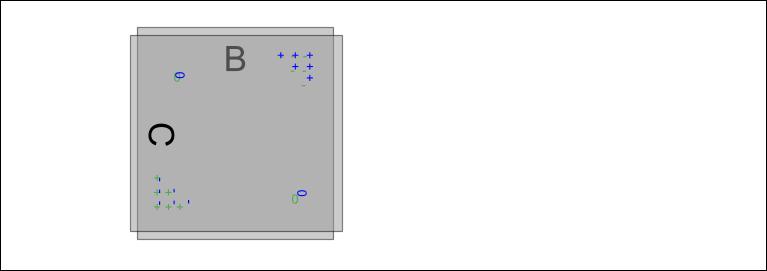
Rotating by 90° (figure 4) the plus and minus no longer match, and probably we would be able to detect where the highs and lows are.
However rotating by further 90°, or 180° in total which is equivalent to flip around the plate (figure 5), the highs and lows are even more detectable.
So let suppose that what we have in figure 1 is the result of a previous work of lapping the parts, and we got both B and C mirror-matching A.
Now we try to match B and C, so C is turned upside down (figure 6) and overlapped to B (figure 7).
We see that plus and minus match with zero on one side or the other, so the average would cause us to hardly detect any high or low.
Rotating by 90° (figure 8) the situation goes worst as the plus and minus match cancelling out each other. Rotating by 180° (figure 9) put us in the same situation seen in figure 7, where some highs and lows can be detected even though not very clearly as plus and minus match with zero.
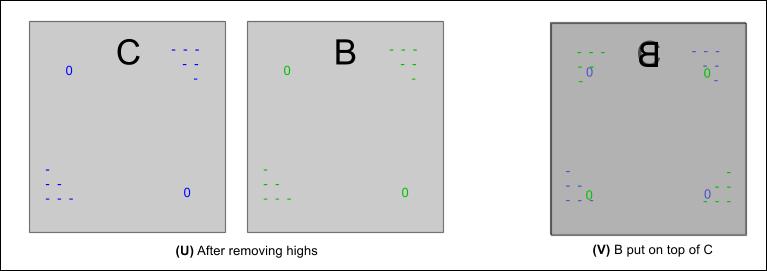
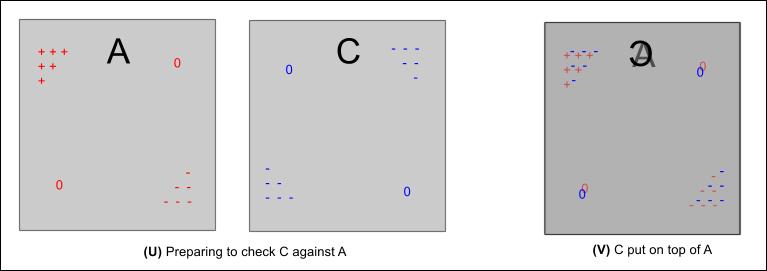
So suppose that we was able to remove the highs positioning the parts as in figure 7 or 9, and get the result shown in figure 10, and now we try to check C against A (figure 11).
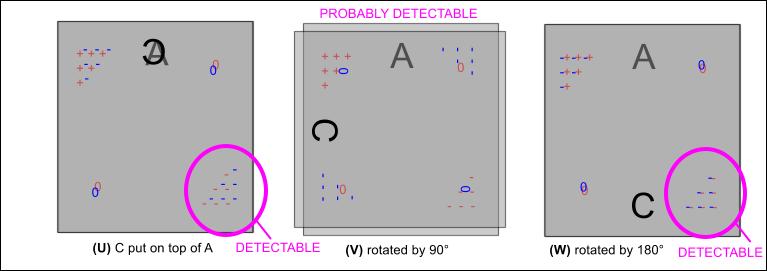
The figure 12 shows how the highs and lows match at 0°, 90° and 180° respectively. You can see that at 0 and 180° the plus signs of A match with plus signs of C, and minus signs of A match minus signs of C, making them easily detectable, while at 90° plus and minus match with zero making less detectable.
Conclusions.
Maybe I've mistaken something, but to me the argument that plates need to be rotated by 90° seems to be pointless. What I've missed? May you provide some help?
Thanks.
fig. 1
fig. 2
fig. 3
fig. 4
fig. 5
fig. 6
fig. 7
fig. 8
fig. 9
fig. 10
fig. 11
fig. 12



 Reply With Quote


Bookmarks