 LinkBack URL
 About LinkBacks
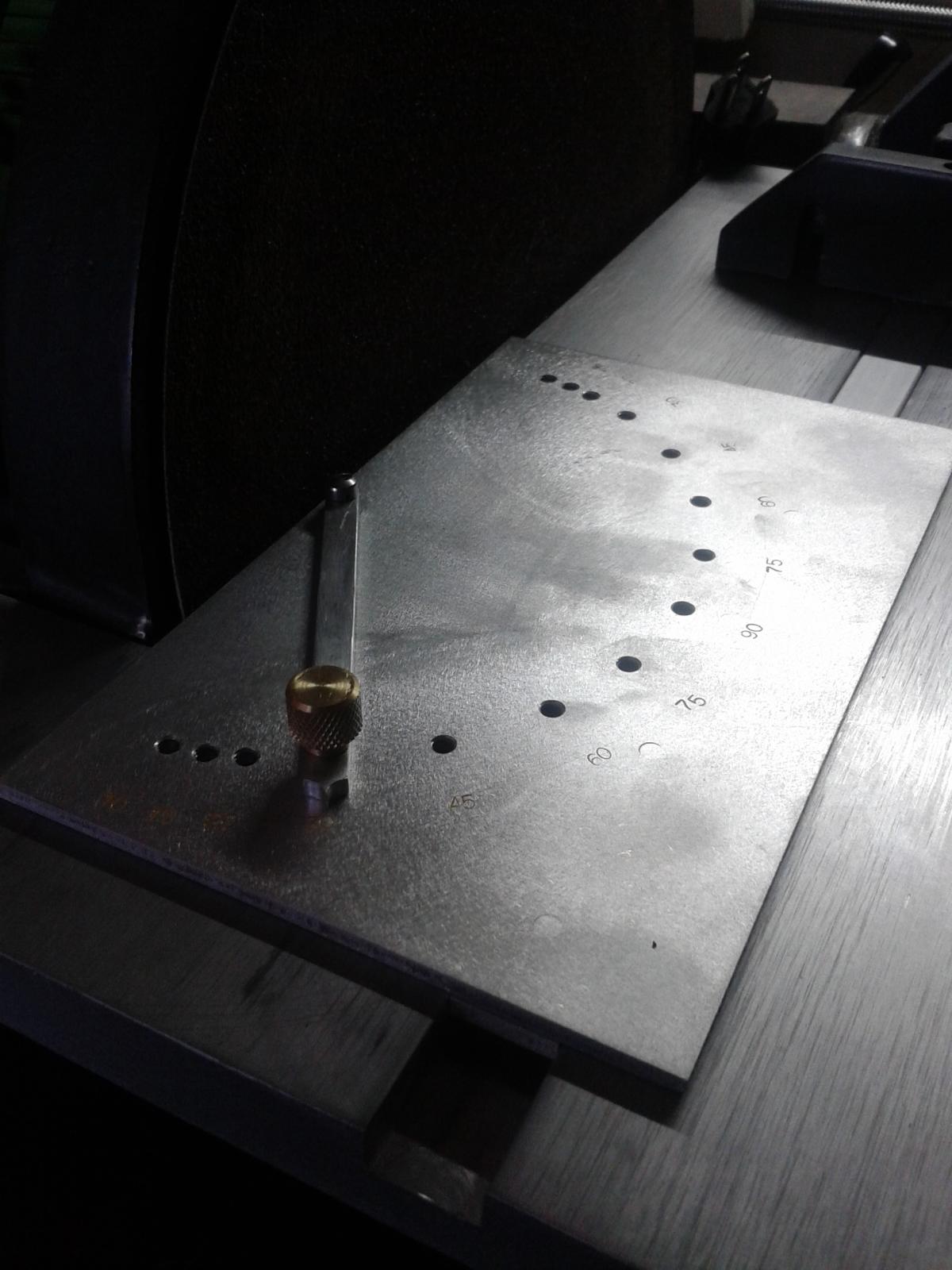
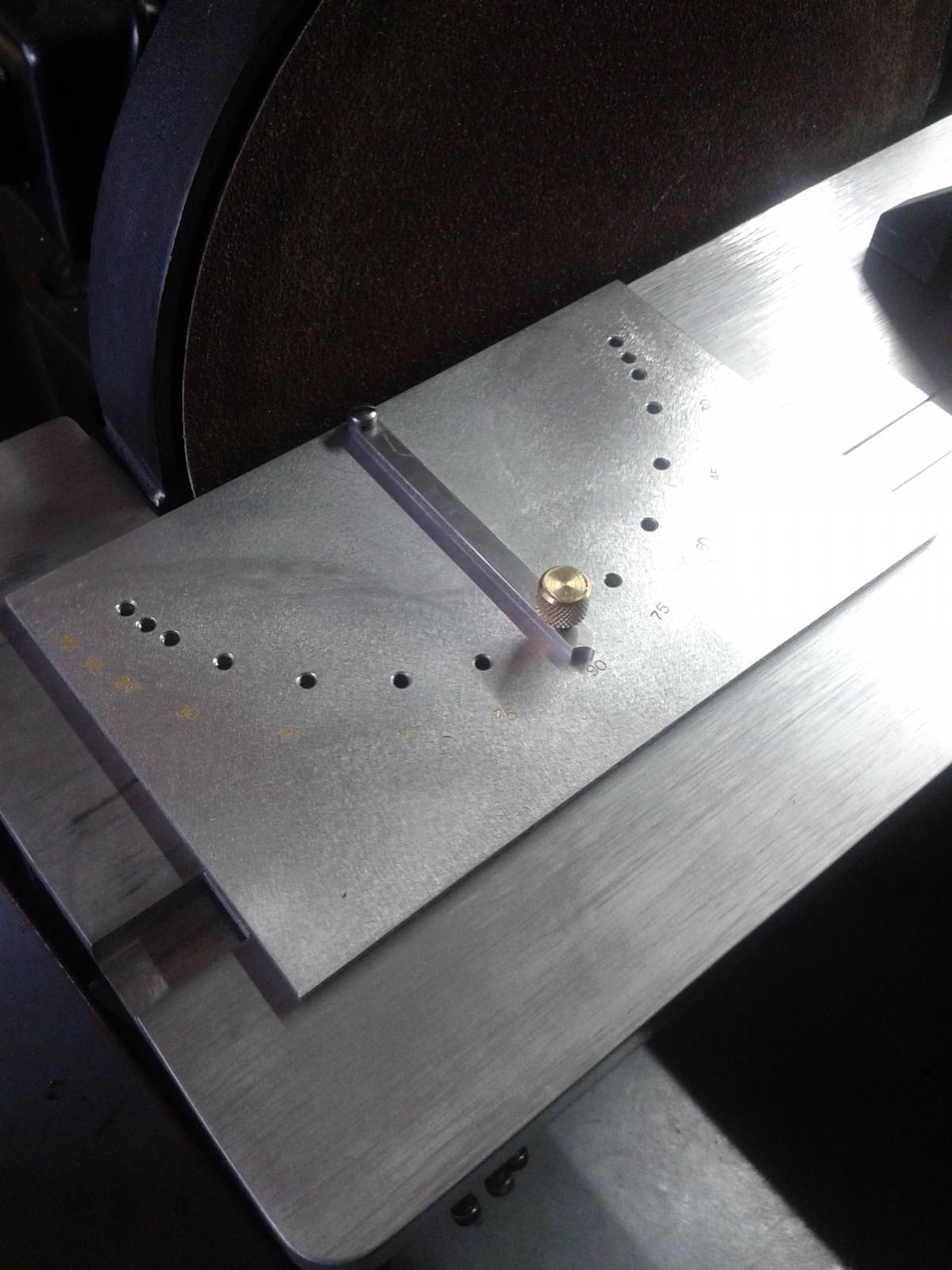
I made this angle plate for my 12in disk sander so I could grind accurate tool bits for my lathe.
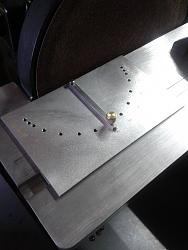





I made this angle plate for my 12in disk sander so I could grind accurate tool bits for my lathe.
bobs409 (Jul 4, 2019), bruce.desertrat (Jul 3, 2019), charles scozzari (May 13, 2024), Christofix (Jul 4, 2019), Home-PC (Aug 20, 2021), Jon (Jul 1, 2019), Ralphxyz (Jul 2, 2024), rlm98253 (Aug 17, 2021), shopandmath (Jul 5, 2019), Sprig1 (Jul 3, 2019), Tonyg (Jul 3, 2019), whitebear (Jun 27, 2024)

This is a genuine question not a criticism.
Why are disc sanders popular? I have always failed to see any benefit over a belt sander. The surface speed varies over the face whereas it is constant with a belt.
I have a combined belt and disc sander but I have removed the disc because I could not find any application which the belt did not do better.
What am I missing?
Beserkleyboy (Jul 3, 2019), bobs409 (Jul 4, 2019), Jon (Jul 3, 2019), Tuomas (Jul 4, 2019), Wmrra13 (Jul 3, 2019)

I'm with Tony and eager to be taught some new disc sander skills/uses.

Tony,
my take on answering your question...
disc sanders were popular because the sanding media is cheap - a disc is as simple as a piece of ply with a flange nut attached, and the sanding paper is a simple flat sheet glued on, and trimmed to fit, whereas for many years belts were seen as expensive (in comparison) and mounting them could involve adjusting the tracking on your machine.
when I was at school, the teachers encouraged us to use the disc more than the belt simply because the disc was cheap and easy to change, the belt could be trashed in a few seconds if a student wasn't paying attention and ripped it.
if order of "cheap-ness to feed" the least expensive is hand sanding, followed by 1/3 sheet orbital, followed by disc, followed by belt.
Nowadays you would have to figure out where highly proprietary units like oscillating tools, mouse sanders, etc fit in the mix - probably between disc and belt.
Thinking about it further, the disc sander is easy to make - simply a motor spindle, and a table - whereas a belt grinder/sander requires higher precision in frame construction, belt tension devices, tracking abilities, as well as the same key components of a disc sander...
my 2c
Des
Originally Posted by tonyfoale

Last edited by desbromilow; Jul 3, 2019 at 04:43 PM. Reason: added manufacturing considerations
Beserkleyboy (Jul 3, 2019), greyhoundollie (Jul 3, 2019), Jon (Jul 3, 2019), tonyfoale (Jul 4, 2019), volodar (Jul 6, 2019)
I agree that a belt sander is nicer, to be honest, the variable sfpm isn't a concern but I would rather have a belt sander but all I have is the disk sander, I also have a bench grinder but the important thing here is even with a belt sander as long as you have a table with a slot which most belt sanders do then you could make an angle plate for it the same way.
tonyfoale (Jul 4, 2019)

You cannot beat a nice portable belt sander if you need a nice flat or simple convex curve. A stationary is very nice also. I wish I had one, but I clamp my portable in the vise if I must have the belt stationary.
Disk sanders are cheaper and can be made easily from a drill if you do not have a dedicated one. Just today, I made one from a nut, bolt, sandpaper, and a piece of wood. Chucked the bolt in my lathe, got the job done even though the belt broke on my belt sander.
You can get disk sanders (portable) into places you cannot get a belt. A disk is more suited to surfaces that are more complex. Autobody work for example. Yes they have straight line flat air tools in the body shop, but mostly you see orbital disks for finish work or course disk grinders for stripping paint, etc from complex shapes.
I think it boils down to cost, disks are cheaper. On your stationary, do your roughing on the disk, save the belt for those things that need the better finish surface
Lots more examples, but I am being summoned for dinner.

Tony,
I would imagine it's an issue of time. Time on production, ease of adjustment (none - belt takes a bit longer time to replace and the guy replacing it 'should' know what he's doing), ease of replacement, and since Joe production worker used that at work... him and all his buddies knew that was what they had to buy...
Jim
tonyfoale (Jul 4, 2019)

Very clever jig! If I have a disk sander this will defenetly a jig I will build.

I didn't have a sander of any sort and I bought some stick on sanding discs to fit my calibration plate for my table saw and boom I instantly had a powerful disc sander that's proved to be useful. If you have a table saw you should already have a calibration plate for aligning the motor precisely to the table top for safety and more accurate cuts. I'll buy a belt sander too when my lotto ticket hits.
If you can't make it precise make it adjustable.
tonyfoale (Jul 4, 2019)

My concern here would be introducing a dust much finer than sawdust, as well as abrasive sanding medium, into the table saw motor and bearings. I loves me a hack as much as the next guy, but you can run these things out into “penny wise, pound foolish” territory, say when you compare the price of a HF sander, belt or disc, against a replacement table saw.
How long you been running that set up on your table saw, and how often? Observe anything wonky?
Last edited by N00b Machinist; Jul 4, 2019 at 09:58 AM.
There are currently 1 users browsing this thread. (0 members and 1 guests)
 Posting Permissions


 Reply With Quote
Bookmarks