Free 186 More Best Homemade Tools eBook:  
New: 300+ fresh build posts/day from 275 forums → BuildThreads.com

User Tag List

Page 3 of 3 FirstFirst 1 2 3
Results 21 to 30 of 32

Thread: Homemade tools made with Harbor Freight tools

Hybrid View

  1. #1

    Join Date
    Nov 2016
    Posts
    11
    Thanks
    13
    Thanked 7 Times in 4 Posts
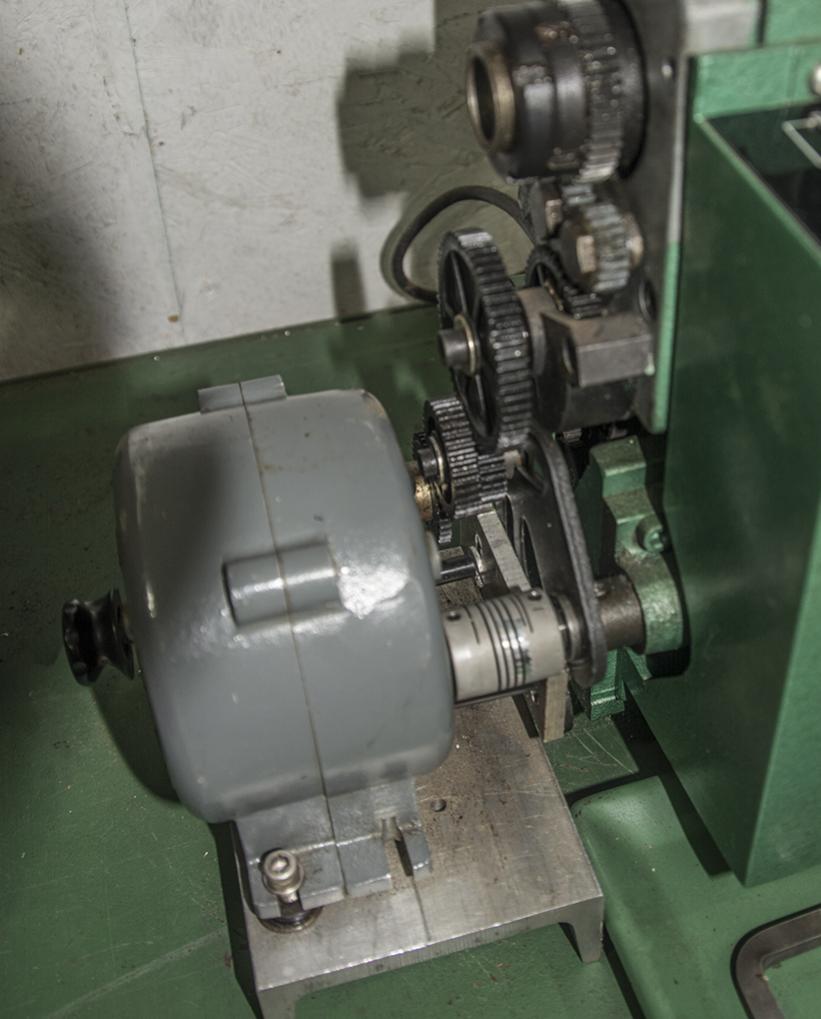
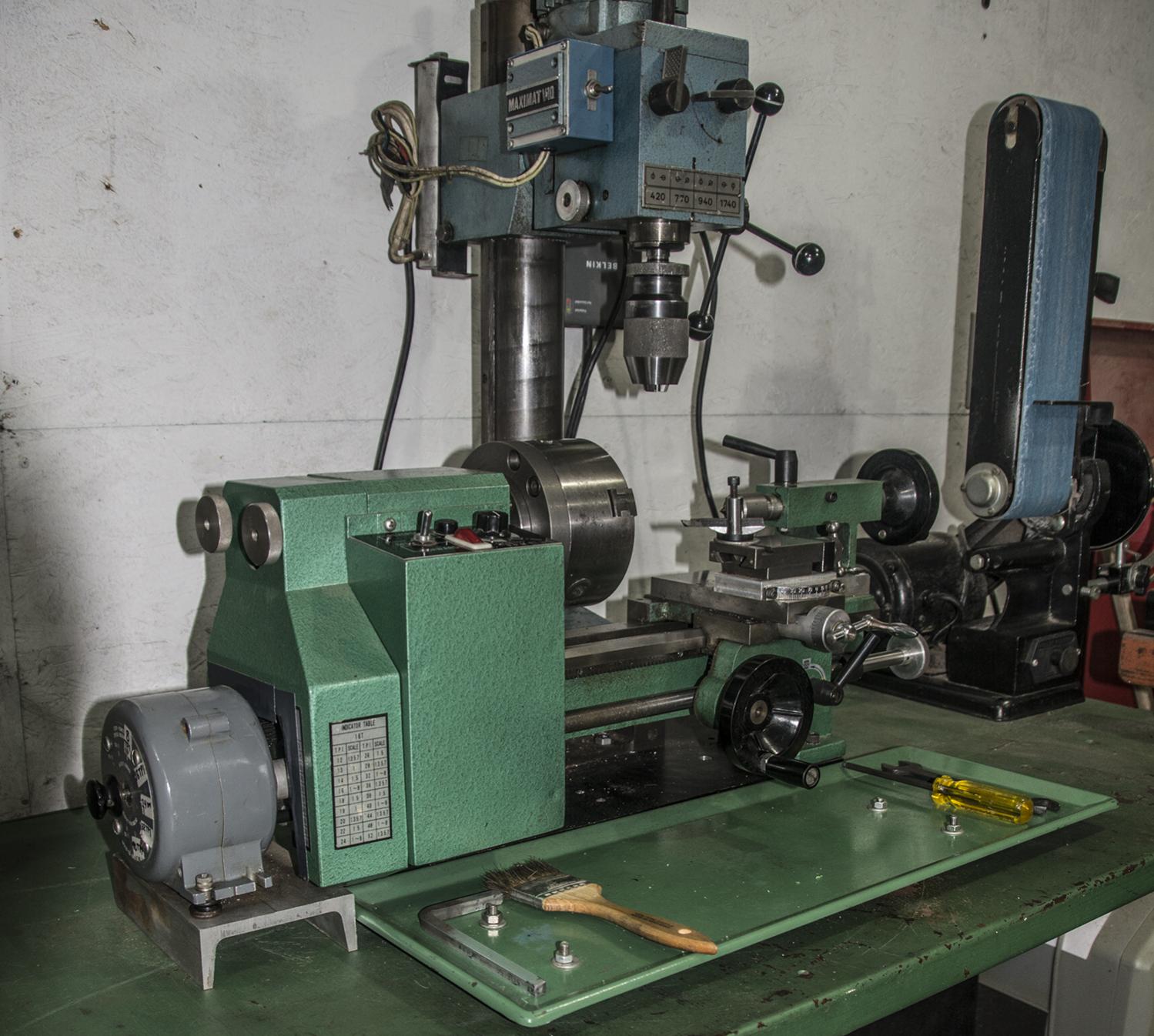
    I have a Harbor Freight 7X10 mini lathe that was almost useless when I brought it home from the store. I think the designer had seen a lathe and knew what they were for but had never used one. There were many problems with the lathe but the basic structure was sound so I set about making improvements. My first mod was the gib that was on the back side of the saddle. That was made of cast iron and when adjusted it broke. Replaced that with a piece of bronze. The tailstock as supplied was not accurately adjustable for center. I added an adjustment screw and better clamping. The carriage cross slide travel was rather short so I extended the travel by an inch (see "Gordon Scott's Cross slide Mod", that's me!). The top slide was functional but very sloppy so I replaced it with a Cleveland slide. While the change gears available for the lathe are versatile they are not handy! I added a leadscrew gearbox that while not as versatile as change gears, permits a nice range of thread cutting and a superb selection of cutting speeds. It will cut 8,16,24,32 and 40 TPI and has an additional 5 speeds for cutting as slow as .002" per revolution of the spindle.
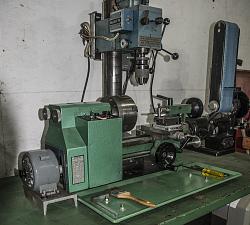

    Homemade tools made with Harbor Freight tools-gearboxdetails.jpgHomemade tools made with Harbor Freight tools-quickchangegearbox.jpg

  2. The Following 4 Users Say Thank You to Iconoscope For This Useful Post:

    Captainleeward (Nov 14, 2016), Paul Jones (Nov 17, 2016), PJs (Nov 15, 2016), Toolmaker51 (Nov 15, 2016)

  3. #2
    Supporting Member Toolmaker51's Avatar
    Join Date
    Feb 2016
    Location
    Midwest USA
    Posts
    5,355
    Thanks
    7,074
    Thanked 3,569 Times in 2,209 Posts

    Toolmaker51's Tools
    Quote Originally Posted by Iconoscope View Post
    I have a Harbor Freight 7X10 mini lathe that was almost useless when I brought it home from the store. I think the designer had seen a lathe and knew what they were for but had never used one.
    ...and that's by same general guys who have a 'navy' we're worried about? Hells bells; if a going and apparently profitable industry can't produce an engine lathe; with hundreds of well designed machine examples to reverse engineer and copy, how do they generate vessels complicated as surface combatants, let alone subs?

    OK, that little vent is over.
    Great job on the up-mods to the 7x10 lathe. Bronze gib is common to first rate machine tools, a great dissimilar material choice. Good steel is often used, probably in the range 1045 or so, but I've seen cast iron on occasion. Always an issue to store and handle, hard to see logical design, two similar materials in sliding close contact?
    Also excellent use of a heli-flex coupler from box to lead screw, regardless how well you were able to align radially/axially. Did they provide for a shear pin in their connection from final drive to lead screw?
    And I croaked laughing about Cleveland slide. That likely had more design + process engineering work than they spent on entire lathe, not to mention how long ago; all slide rules, scales, and vellum! Likely a bit of hand fitting as well.
    One little correction. Use of original change gears or new box allows feed selection.
    Speed refers to RPM in machine tools, whether rotating material (ie lathe), or a cutter (ie mill). Accordingly described as strokes or inches per minute for linear cutters (shapers, planers, band saws, etc).
    Sincerely,
    Toolmaker51
    ...we'll learn more by wandering than searching...

  4. The Following 3 Users Say Thank You to Toolmaker51 For This Useful Post:

    Iconoscope (Nov 15, 2016), Paul Jones (Nov 17, 2016), PJs (Nov 15, 2016)

  5. #3

    Join Date
    Nov 2016
    Posts
    11
    Thanks
    13
    Thanked 7 Times in 4 Posts
    Thanks for the encouragement! Indeed, the proper term can only be "feed" instead of speed. There is no shear pin and that is a potential disaster waiting to happen. I would like to devise an adjustable means to disengage the half nut when the carriage approaches the chuck or face plate, but that may not be feasible on this lathe. A better solution would be to drill a small hole through the leadscrew shaft where the coupling is and use an easily sheared brass or copper wire to maintain coupling instead of the set screws currently used.

  6. The Following User Says Thank You to Iconoscope For This Useful Post:

    PJs (Nov 15, 2016)

  7. #4
    Supporting Member Toolmaker51's Avatar
    Join Date
    Feb 2016
    Location
    Midwest USA
    Posts
    5,355
    Thanks
    7,074
    Thanked 3,569 Times in 2,209 Posts

    Toolmaker51's Tools
    [QUOTE=Iconoscope;79244] There is no shear pin and that is a potential disaster waiting to happen. I would like to devise an adjustable means to disengage the half nut when the carriage approaches the chuck or face plate.[QUOTE]

    You'll need to complete a short list of details:
    1] Wire will be unsatisfactory unless you can calculate torque [by diameter and grade of material turned x deepest cut acceptable x appropriate feed rate] of the lead screw at full load, in to select section diameter to withstand that shear force.
    2] Wire requires close fit to drilled AND reamed hole, or you'll endure backlash issues. A taper dowel would be more conventional. A small OD rollpin would be decent alternative. Rollpins are hardened spring steel; shearing is certain to raise a burr between shaft and coupling. A simple fixture bored to lead screw OD, clamped by a pair of machine screws, and a predrilled guide hole is one solution. Assembly could be removed to mill or drill press.
    3] Typically and intentionally that will not be physical centerline, when pin breaks, correct 180 reorientation will be unmistakable. Use a ball endmill for starting pocket. Cutter geometry resists deflection better than web of center drill off-axis from apex of round stock.

    SOME lathes use a face clutch. In general, that's radial teeth of gear profile or 45 degrees rigidly fixed to one side. The other side is pushed into engagement by coil spring(s) backed by a simple adjustment, a threaded nut. Increase the pressure until the bare minimum of positive engagement is attained.
    Some larger lathes arrange a projection through bottom of carriage that tips off feed of X axis. Can't think of many examples for threading. Adding instantaneous action seems problematic to equip carriage thus.
    Then sell it back to HFT engineering at a serious $$ premium.

    As usual, I invite email/ posts with questions on anything unclear or neglected.
    Last edited by Toolmaker51; Nov 16, 2016 at 07:05 PM. Reason: embolden portions of qoute, expand details
    Sincerely,
    Toolmaker51
    ...we'll learn more by wandering than searching...

  8. The Following User Says Thank You to Toolmaker51 For This Useful Post:

    Iconoscope (Nov 17, 2016)

  9. #5

    Join Date
    Nov 2016
    Posts
    11
    Thanks
    13
    Thanked 7 Times in 4 Posts
    All valid considerations, most of which occurred to me. Some manufacturers use a nylon rod for a shear pin (Taig), But I found a better solution. I will implement a mechanism to open the half nut when the carriage approaches the headstock. I have the method mostly worked out and will soon have it installed!
    Thanks for your input!!

  10. #6
    Supporting Member Captainleeward's Avatar
    Join Date
    Jul 2014
    Location
    San DIEGO, California
    Posts
    1,097
    Thanks
    496
    Thanked 1,399 Times in 550 Posts

    Captainleeward's Tools
    Bravo bravo my thoughts exactly.......

  11. The Following User Says Thank You to Captainleeward For This Useful Post:

    Iconoscope (Nov 14, 2016)

  12. #7
    Supporting Member Frank S's Avatar
    Join Date
    Aug 2015
    Location
    Peacock TX
    Posts
    12,611
    Thanks
    2,677
    Thanked 11,100 Times in 5,384 Posts

    Frank S's Tools
    While I quite agree that any lathe worth its salt would have a device incorporated in the mechanics which drive the lead screw to prevent the total or preferably even partial destruction of any components of the machine. Shear pins as such really should be tapered. I prefer in most cases when making a new taper pin to use relatively soft metals I also like to make the pins long enough to add a thread on the small end so I can use a nut to tighten the pin in the taper, thus yielding a positive tight connection for the shaft involved.
    However this only addresses half of the problem since long before any such installed device could shear even should the pin in wuestion be made out of tempered glass a lot of damage would have already occurred like deep gouges in the chuck or jaws or work piece the cutting tool would either be destroyed or at the very least severely dulled or have the tip broke off possibly embedding in the lens of your safety glasses, reminding you why you wear them in the first place.
    Looking at the carriage Apron of the lathe in question I see that the half nut engagement lever appears to rotate up and down in the same plane as the apron in moving, therefore as I see it a mount needs to be made to hold a sliding disengagement shaft , Some sort of tab may have to be installed between the leaver and the apron for the rod to strike and this may have to be made to fit in the 12 or 6 o;clock position on the other end of the disengagement shaft should be adjustable this way the stop could be used to halt the movement of the X axis at very nearly any position.
    to Further enhance the beauty of the re-engineering of this little lathe would be a 3,4 ,5 or even 6 indexed position rotary cylinder with adjustable stops of different lengths. These would allow for a multi stop setting for repeatable turning,
    I would require a close up pic of the apron with some dimensions if possible to draw up a rudimentary design for such a device
    However after reading your posts I am pretty sure that you can figure out one for yourself given a little nudge in that direction.
    U really admire using a Cleveland style slide on your cross slide that is top drawer thinking
    Never try to tell me it can't be done
    When I have to paint I use KBS products

Thread Information

Users Browsing this Thread

There are currently 1 users browsing this thread. (0 members and 1 guests)

Bookmarks

Posting Permissions

  • You may not post new threads
  • You may not post replies
  • You may not post attachments
  • You may not edit your posts
  •