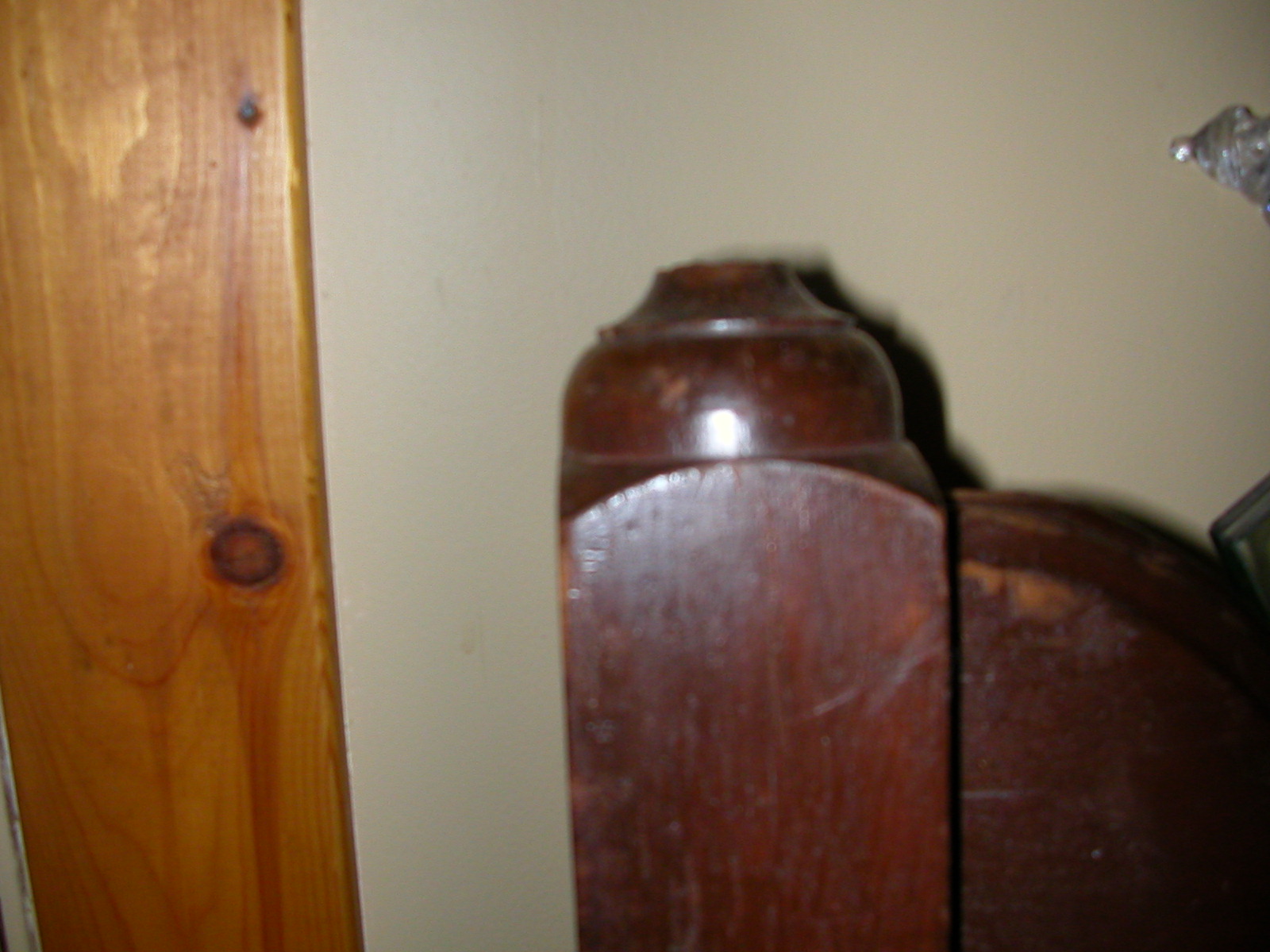
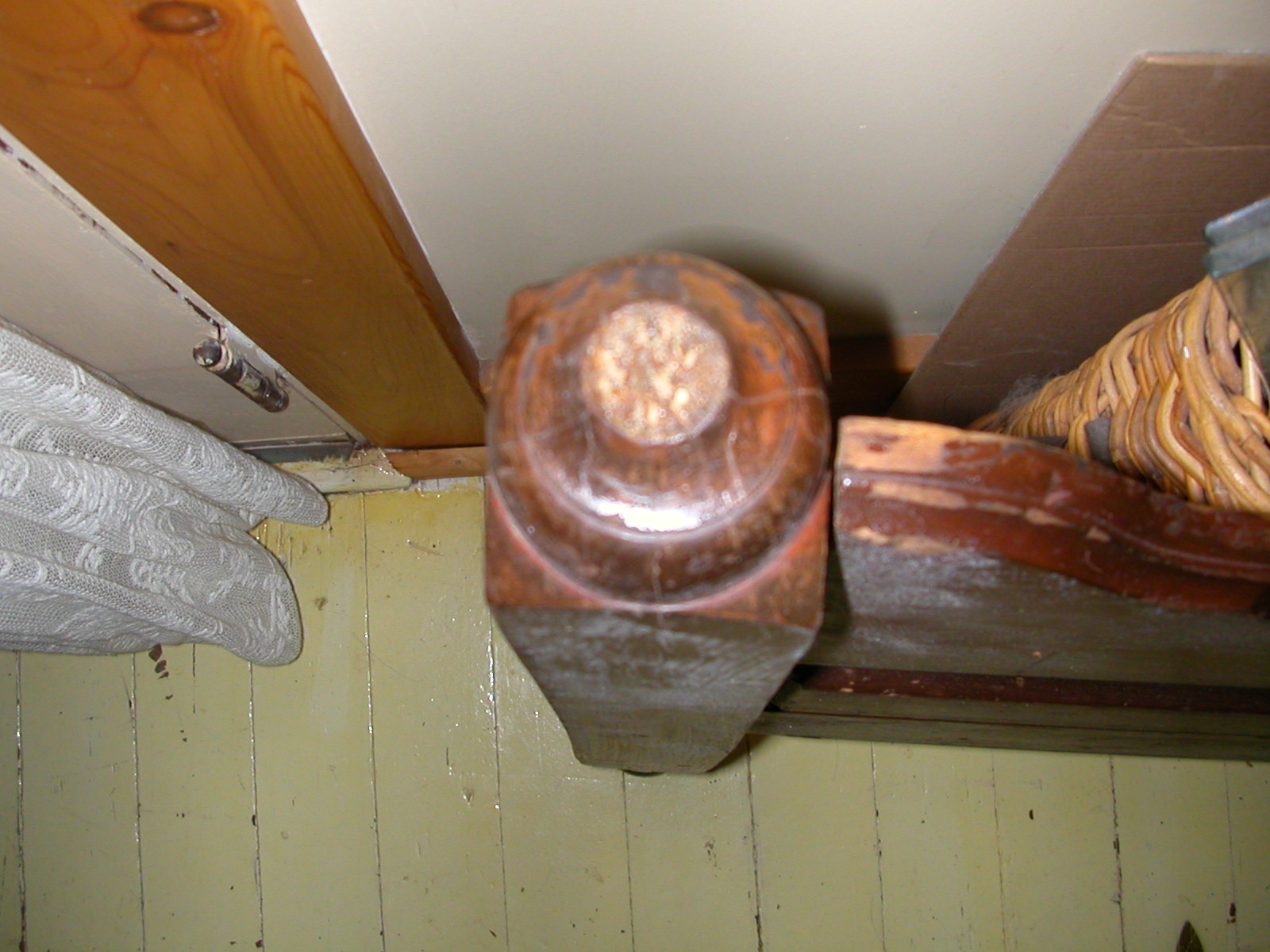
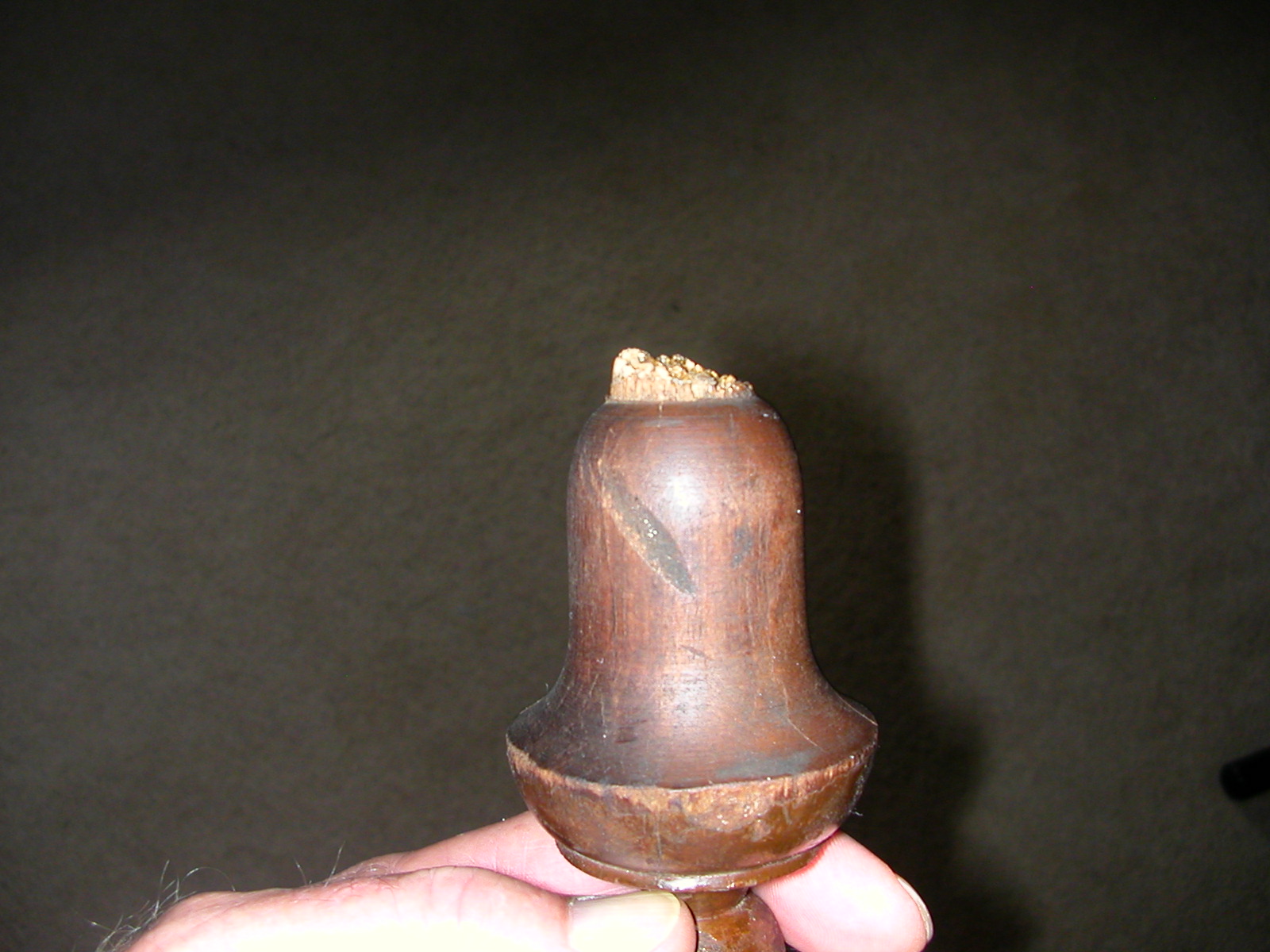
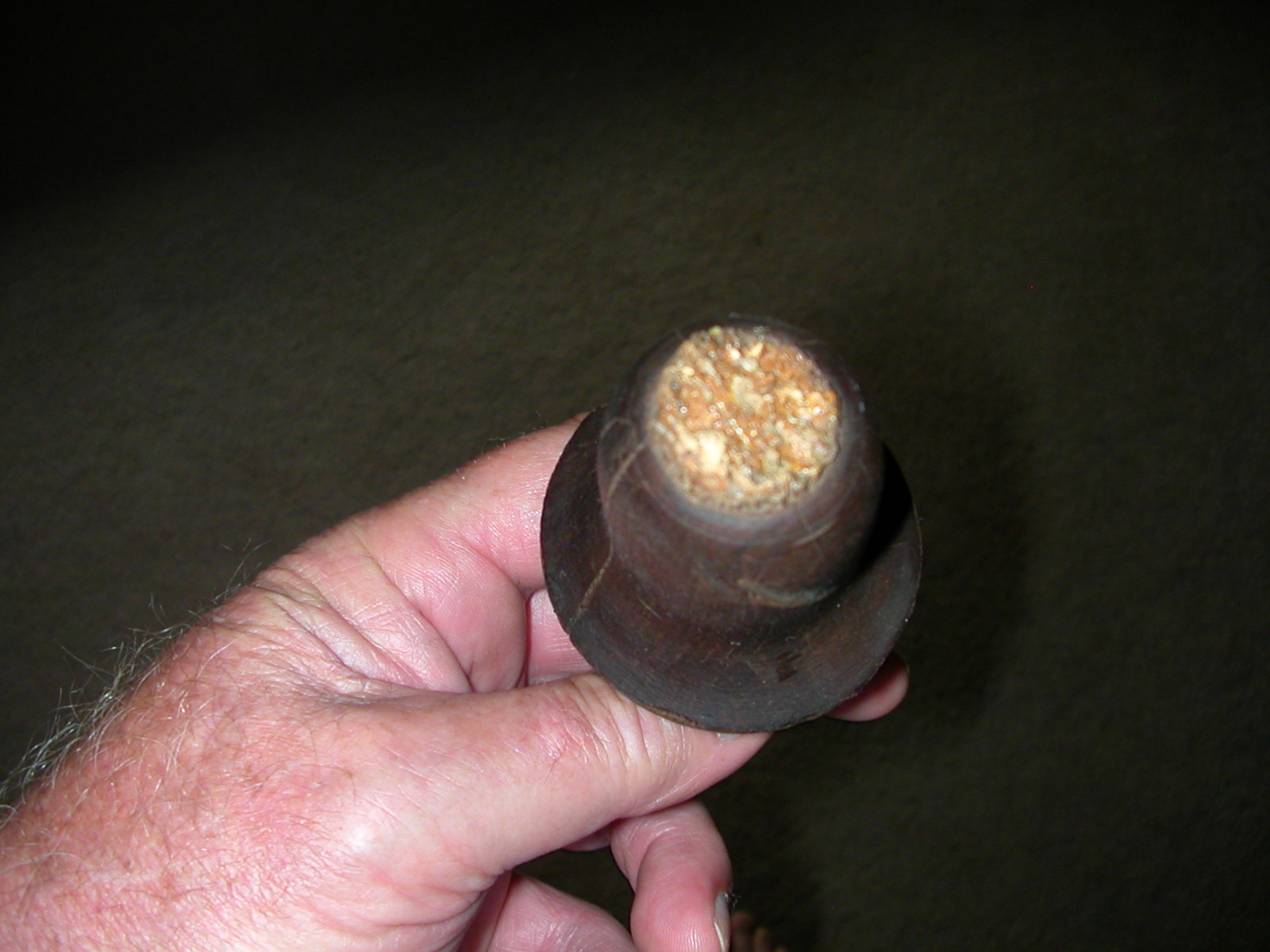
I have a broken bed post. I want to drill a hole for a dowel on each piece so I can glue it back together. I would like to hear any ideas as to how to go about this.
Attachment 12959Attachment 12960Attachment 12961Attachment 12962

Printable View
I have a broken bed post. I want to drill a hole for a dowel on each piece so I can glue it back together. I would like to hear any ideas as to how to go about this.
Attachment 12959Attachment 12960Attachment 12961Attachment 12962
I'll assume you don't have access to a lathe.
Make or buy a center marker...
Veritas® Center Marker - Lee Valley Tools
Since both pieces have a rounded, cylindrical end, a redneck approach might work...
Obtain a funnel such that the workpiece sits about half-way down in the mouth. Find or make a pointed rod that's s good fit in the funnel spout.
With the funnel held level on the workpiece, insert the rod and tap it to make a center mark on the work.
Not terribly accurate but, hey, I did say "redneck".
The redneck idea might work. I do have an old South Bend Lathe but the foot board is assembled and I don't want to take it apart. The broken off piece has no straight diameter to chuck on either. I have a center finder for my Starrett square, but there is only the eyeball to locate it on either piece, though I had thought about trying that.
I may make a wallowed out hole for the dowel anyway so I can put some 5 minute epoxy in to make the fix? That way, it wouldn't HAVE to be exactly centered on both pieces like for a tight fitting dowel.
Quote:
Originally Posted by mklotz
Despite the fact that it's my suggestion, I really hate the funnel idea; it's just too inaccurate.
How about this approach...
Make a "corner" jig similar to the Lee Valley one in my URL. Make it from plywood. Now, measure the radius of the finial and, at that distance along the base diagonal of the jig, drill a hole. Clamp the finial into this impromptu jig and, using the guide hole in the base, drill the hole for the dowel.
Now, repeat the above but this time, instead of the radius of the finial, use half the diagonal of the bed post. Clamp this jig to the square part of the bed post and use the hole as a guide to drill the dowel hole into the bed post.
Done carefully, the two holes should line up well enough that any errors won't be obvious to the casual observer.
If I've good understood, this is just a decorative part, then why not just replace it with normal wood glue, positionning exactly as broken and with a wooden mallet and something to protect push it in place.
I've repaired a lot of antique furniture or treen broken parts just with hot animal glue and maintaining in place until hard without problems after.
I would go for centering both holes with your own Mk1 eyeball and making a well fitted hole in the top part. As both of these holes are probably going to be drilled by a hand held drill they are unlikely
to end up perpendicular, so being slightly off centre shouldn't matter too much. Then I would glue an extended length of threaded rod or cut off bolt into the top part, and wait until it dries. Then make an oversized/wallowed out hole in the base part and offer up the dowel and check that it aligns. If not wallow out some more until it does. Then glue together using a gap filling wood glue, but I guess that epoxy would also be O.K. Mask it up well before gluing, particularly if you use epoxy, and you won't have to restore the antique finish. I'd use the metal dowel because you don't ever want it to break off again. The next repair would be even harder.
There is an old Naval saying when it comes to wood working, "Engineers work to the nearest thousandth of an inch, Shipwrights work to the nearest ship".
Go to youtube, call up how to find the exact center. Good video.
If you have access to a drill press, clamp a board on the table and drill a hole large enough to accommodate a snug fit on the broken-off bed post top. Remove the large drill and replace it with a smaller size;perhaps 13/32 diameter. Now, push the bed post into the board hole,from the bottom, broken side towards the new drill bit--if necessary, use tape to 'shim' the broken bed post firmly in place. Now, you can drill the 3/8 hole centered in the post and parallel to its sides. At this point you can insert a 3/8" metal rod and secure it with epoxy--let it cure. It is here you can hand drill a 7/16" hole in the in the bed post partially fill that hole with epoxy and drop in the finished top portion aligning the jagged edges for final fit and run some tape over the top until it's cured. Note:verify the 3/8 metal rod is appropriate;if not, drill sizes to suit your new choice. Also, before doing any drilling, confirm the two pieces mate appropriately as suggested in final step "aligning jagged edges". Oh yes, the drill press table might have to be swung out of the way with the board hanging out over the edge to allow the large diameter hole to be drilled through the board.
You don't show the top of the finial. If you can tolerate a small hole through the top, to be patched and finished off after the repair, consider positioning the finial on top of the bed post just as you want its final position to be. Clamp it in place by whatever jury rig you can come up with, then drill down through both pieces with a very small, extra long twist drill. They are available from well stocked hardware or tool suppliers. 1/16" or so would probably be adequate and relatively easily patched and concealed afterward. Then separate the two pieces and you have a pilot hole that is in proper alignment to maintain the two pieces in proper relative position no matter where the pilot hole is relative to the center of the fracture. Now carefully, gradually enlarge the pilot holes in each piece with successively larger twist drills, working from the fracture surface. By using only very small increments of drill size as you enlarge the holes the drills will follow the original path of the pilot holes with minimum tendency to wander off course. Using a lightweight power drill, rather than an unnecessarily large, high powered and heavy drill motor will also give you more feel for where the drill wants to go and will minimize the tendency to wander.
For the glue, I would use epoxy, not common wood glues. The homebuilt aircraft hobbyists put together wood-structured aircraft with epoxy and they are willing to fly in them. I don't think most "wood glue" approaches the strength of epoxy. (Of course, I understand that you will not be flying your bed, but it DID break!) And I would argue against using "5-Minute" epoxy. You are not going to be in a hurry, so no sense putting yourself in a tight race to get it all assembled and then trying to work with thickening epoxy. Slow cure epoxy will soak into the wood better and give you plenty of time to get things positioned. Wipe any excess epoxy off the surface with a rag and a little solvent that you have tested beforehand in an inconspicuous location so you know it won't affect the existing finish. Naptha might be a good choice but be sure it will cut the epoxy. If the fracture areas mate up well you can end up with a very inconspicuous repair.
I might make a box with no bottom and a thick top (2 pieces of 3/4?) that fit the diameter of the broken parts and a hole on center to keep me centered and straight.Quote:
Originally Posted by bluegrallis
Mystery Tool ANSWER tubalcain mrpete222, You tube. This guy has to be as old as me. He knows all the old machining tricks and tools. He is a retired school teacher.
The most important consideration is matching the two pieces as possible. Having done that, the next step is to decide how to glue them together. One suggestion already mentioned is to use hide glue or thickened and tinted epoxy without dowel ingejohn@whidbey.com, which, I agree, is sufficient, since it is only decorative. The advantage of the hide glue over epoxy is that it can be reset with hot water or steam. Epoxy is like steel. It works best with little clapping. It is gap filling. That's where the thickening comes in. In either case, you have set up clamps or a jig to hold the pieces while the glue dries/cures. Be sure to wipe all the excess glue off before it sets. Epoxy is forever. You want to preserve the finish as much as possible. Sanding opens up a can of worms. Using a dowel is a lot more work leaving you with the same problem of aligning the pieces. In most similar situations, I would drill oversized holes, mix up a batch of thickened and tinted epoxy and put the pieces together as discussed. Yes, it is a lot of fastidious work.
.
This was what I was also going to suggest. The break looks "craggy' enough that the glue would have a lot of surface to bind to. You could use some masking or duct tape over the top to hold it in place until it dries.Quote:
Originally Posted by Okapi
I did furniture repairs professionally full time for 8 years, new and used. One of my thoughts for this would be what 'awright' suggested. Line them up and drill down thru both. I'd use a 1/8 inch bit for it. One very important thing is look closely at each side of the break and get rid of any splinters that are bent over because they will prevent getting them fully back together. They make dowel alignment pins but that won't work on this rough surface presisely enough. If they don't line up when you dry fit them after you are done drilling your holes; I suggest you not enlarge one of the holes as some have suggested here. I would shave or trim down a portion of the dowel so they will line up better. One advantage I had when I did this work was I was able to match the wood grain, colors and finish precisely. If you drill down thru the top of the finial you will have the small hole in the top left...fill that with a small piece of wooden BBQ skewer or whittle down a small plug that fits the hole, a drop of Elmers of wood glue and plug the hole. The trick to this is leave the plug protrude out the top until the glue has dried, then trim it down until it's level. Wet your finger , rub it a touch and the dirt from your fingertip should make it dissapear, then rub it with a candle, the wax will seal it and blend it in. For the glue, Elmers (polyvinyl) or a wood glue should be fine, epoxy would also be OK....it depends on what you are comfortable with. If you have to shave down the dowel a lot then a thin shim on the opposite side will fill it in but I do not think you need to bother with that. Get it to dry fit tightly before you glue it and you'll be fine. If it does not want to dry fit properly then take the time to get the correct fit. If the dowel is loose in both hole then add some fine sawdust to the glue, it will help bridge the gap. Good luck with it.
I believe just gluing both pieces together, even with epoxy, is not durable solution. I would prefer cutting off of rest of dovetails, clamping bot pieces together in final position and drill trough both a hole for stronger nail. The length of hole must be shorter than the nail. If you make before on top and little bit wider hole you can cover the head of nail by tin dovetail and paint as many of us already proposed. After such wide discussion it would be interesting to know what solution you have chosen...
best regards
I think you don't need more than just a repositionning, you all give solutions which are good when our friend need this piece to become an profesionnal acrobat, but in fact, it's just a decorative item, and when correctly made, just a ten minutes work. ;-)
Despite all time used to search solutions, the piece does be repaired since a week…
Your wife or girl may be able to help you. Ask for an old lipstick. Put a glob on one of the pieces, as close to center as possible. Dry fit them together and carefully take them apart again. There will be a lipstick mark that will match for both pieces. Drill a hole carefully in both marks, being sure to keep plumb. Place your dowel on and dry fit again to make sure, and then glue it all up.
Interesante el tema, siempre hace falta en alguna oportunidad un trabajo así, gracias por el aporte mklotz.
Well, I finally decide to do this and get it out of my way. I roughly marked center and hand drilled the bottom for a good fit for the dowel. Theh I did the same on the top piece, but wallered the hole out a bit. lathered it up with gorrilla wood glue and clamped it . It centered up OK and doesn't even look too bad :)Quote:
Originally Posted by bluegrallis