
 LinkBack URL
 About LinkBacks

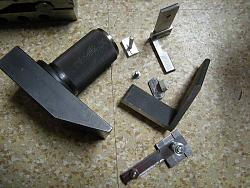
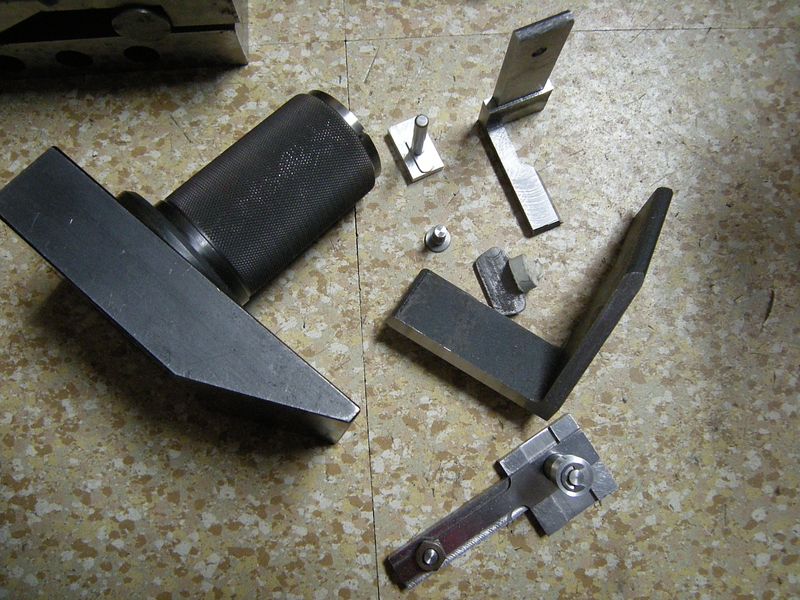
As this site is all about homemade tools, I guess I should show some photos of the progress being made on the Washburn retractable guide mount. I am living on coffee and nerves as this project is starting to feel like a pyrrhic victory.
Back to my tome.
So what can be considered a minimum size an end mill can be reground to (on its diameter) before it really can't be sharpened any further?
I am very fortunate to have a copy of the DoAll "End Milling Handbook" which includes a table showing this. For the sizes we normally encounter, they give the following: 1/8" (0.110"), 1/4" (0.210"), 3/8" (0.320"), 1/2"(0.425"), 5/8" (0.530"), 3/4" (0.635"), 1" (0.850") and for many other sizes as well. This is for a composite Type "A" cutting edge end mill tooth profile - all credit going to DoAll.
There are literally boxes full of used end mills here which will outlast me as one can make bulk purchases of used end mils at very reasonable prices (less than $1 per piece) if one is prepared to hunt on places like Kijiji, Craigslist, ebay, etc. and be patient until the right deal comes along. So now with the above information and a micrometer, one can easily check the useful life left in any particular endmill. In industry, since time is money, and since the advent of carbide and the more exotic coated inserts, no one these days is taking the time (or keeps the equipment) to re-sharpen a HSS end mill so local machine shops are good places to look and make a deal as well since used HSS end mills are just thrown away.
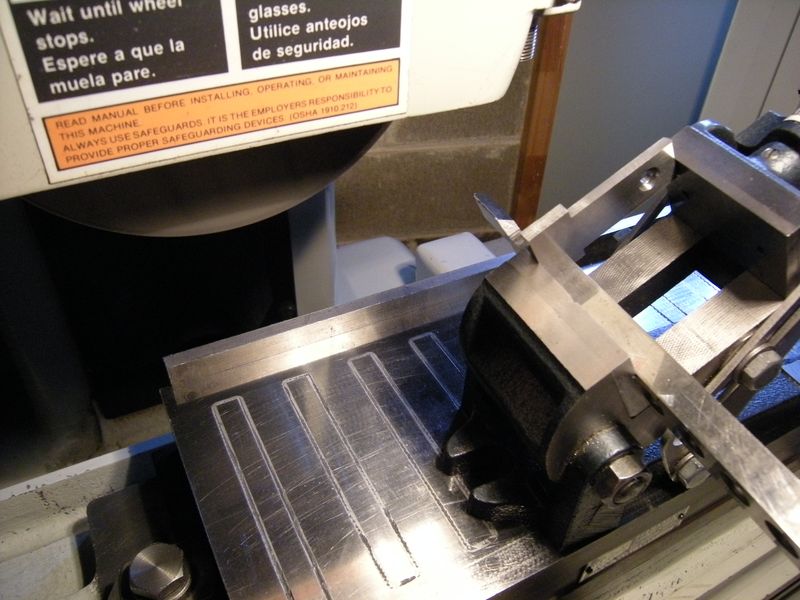
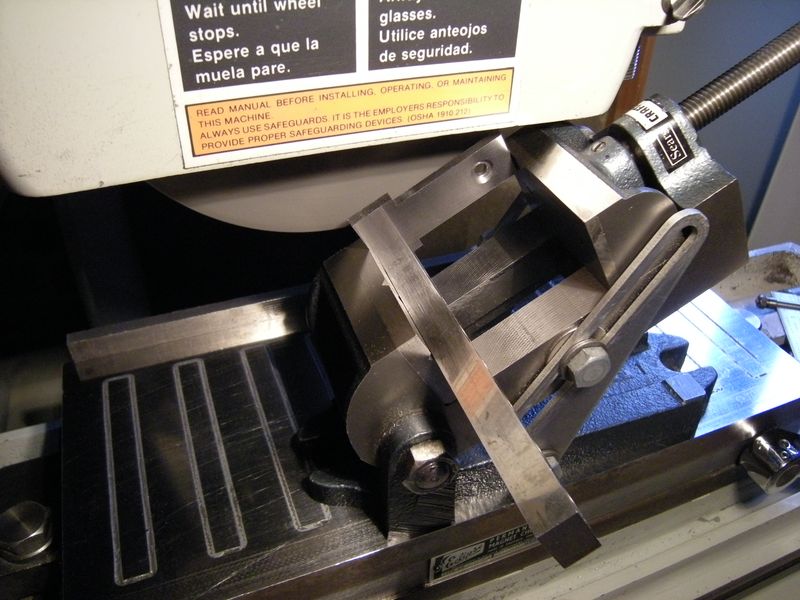
On my end mill grinding fixture, which is the well known American make, they quote the same relief angles as stated by Dale Derry for his offshore brand namely 5 degrees primary end relief, 30 degrees secondary end relief and 2 degrees center relief. I do have the instructions which come with this unit but they are very basic. They also make a fixture for 10 flute shell end mill cutters which is virtually identical to the one made for regular end mills.
As Dale states, the relief angles built into all of these fixtures are very generic and don't always represent the ideal clearance angles for the range of end mill sizes which we use (typically 1/8" to 3/4"). For example, the commercial T&C grinding shop where I used to take all of my cutters for sharpening before they closed down, said to use 15 degree secondary end relief for the general type of work I do instead of 30 degrees as it leaves more metal behind the cutting edge which makes it stronger and I never encountered a problem having end mills with this smaller secondary relief.
Having said that, the DoALL End Mill Handbook quotes vastly different relief angles (with the general rule being, the smaller the diameter of the cutting tool, the greater is the relief - it is exactly the same for drills, single point lathe tools cutting small diameter work, etc.). To quote some examples from the DoALL Handbook:
1/8" - 16 degree primary relief and 28 degree secondary relief
1/4" - 12 degree primary relief and 21 degree secondary relief
3/8" - 11 degree primary relief and 19 degree secondary relief
1/2" - 10 degree " " and 18 degree " "
3/4" - 9 " " " and 17 " " "
Many other sizes are also included in the table with all credit going to DoALL.
So as you can see from the above, these grinding fixtures give results which are not ideal at all but at the speeds and feeds which we run our cutters at vs industry, they will do the job.
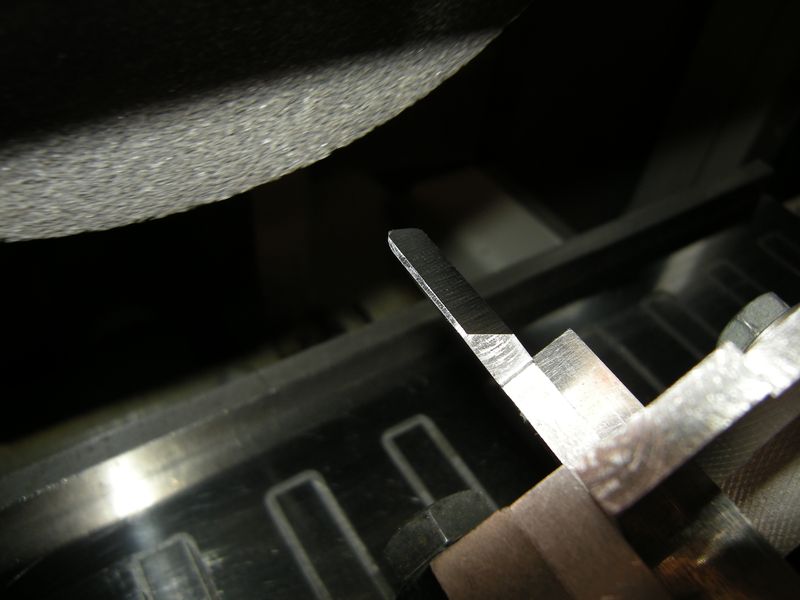
In addition, the cutting edge land width, when one grinds the primary relief angle is very important and is much narrower than one would think.
Again, from the DoALL Handbook:
1/8" - 0.005"-0.007" land width
1/4" - 0.007"-0.009" " "
3/8" - 0.009"-0.012" " "
1/2" - 0.012"-0.016" " "
3/4" - 0.016"-0.020" " "
Many other sizes are also given in the table with all credit going to DoALL.


 Reply With Quote

Bookmarks