Free 186 More Best Homemade Tools eBook:  
New: 300+ fresh build posts/day from 275 forums → BuildThreads.com

User Tag List

Results 1 to 10 of 20

Thread: Screw-on chuck mounting to bayonet.

Hybrid View

  1. #1
    Supporting Member Toolmaker51's Avatar
    Join Date
    Feb 2016
    Location
    Midwest USA
    Posts
    5,355
    Thanks
    7,074
    Thanked 3,569 Times in 2,209 Posts

    Toolmaker51's Tools
    Quote Originally Posted by tonyfoale View Post
    I think that it was European.......<snipped>
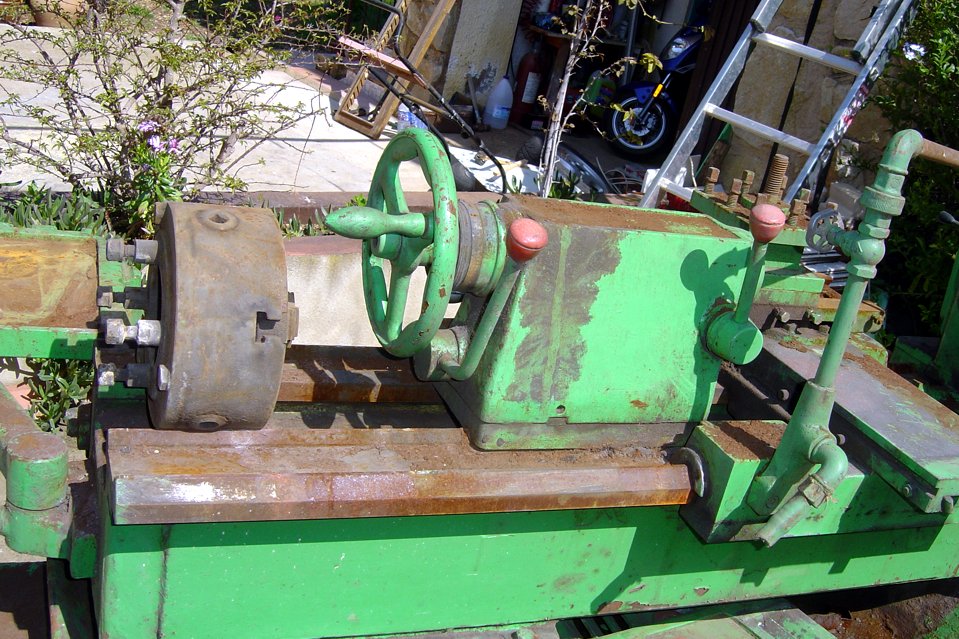
    It would have been a great lathe except for the wear, it was heavy and very rigid.

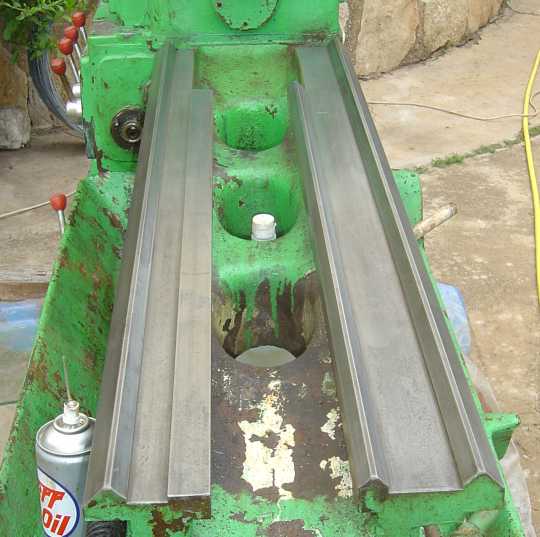
    Screw-on chuck mounting to bayonet.-aswas.jpg Screw-on chuck mounting to bayonet.-cleanways.jpg Click thumbnails for full size
    Get an eyeful of those ways, NO scrimping there!

    Later years then US heavy iron, Italy, Spain, Britain, areas around Poland, Czechoslovakia, likely Russia too, had no hesitation building heavy patterned machine castings. I'm sure the iron was of good specification like Meehanite, chilled, seasoned, induction hardened as measures of competition.
    At same time German and Swiss offerings had thinner sections but far more webbing. I'm thinking those were chasing foreign markets [shipping], the heavy stuff more domestic.
    Despite gargantuan appearance, those of Italian and central European makers operated in a very civil but positive manner. Had examined British, French and Spanish too, apparently not so many sold, never had one in front of me on a shop floor, save one HES lathe. That had wonderful collection of features, for certain.

    Sincerely,
    Toolmaker51
    ...we'll learn more by wandering than searching...

  2. #2
    Supporting Member tonyfoale's Avatar
    Join Date
    Nov 2016
    Location
    Spain
    Posts
    1,819
    Thanks
    834
    Thanked 3,235 Times in 909 Posts

    tonyfoale's Tools
    Quote Originally Posted by Toolmaker51 View Post
    Get an eyeful of those ways, NO scrimping there!

    Later years then US heavy iron, Italy, Spain, Britain, areas around Poland, Czechoslovakia, likely Russia too, had no hesitation building heavy patterned machine castings. I'm sure the iron was of good specification like Meehanite, chilled, seasoned, induction hardened as measures of competition...
    My old Spanish lathe did not have hardened ways hence the wear problem. There are times when I wish that I still had that machine for heavy work despite the wear. Did you notice the interesting feature of the ways? The tailstock had the normal - one flat/one pyramid - arrangement but the saddle had two pyramids.

    I kept a lot of things when I scrapped that lathe and many have been put to good use. Several featured in my past posts.
    The motor and gearbox were kept, of course. The motor was used to power my shock dyno; Shock dyno (or Shock absorber dynamometer)

    The face plate and chuck back plate are used in this chuck mounting post.

    Mounted on a square steel plate the chuck is used on the mill as a vice for round things.

    I kept the cross slide and compound rest which was used in my brake drum grinder; Grinding machine for drum brakes.

    The cylinder from the tailstock was the basis of my cylindrical square; Cylindrical square from a lathe tailstock.

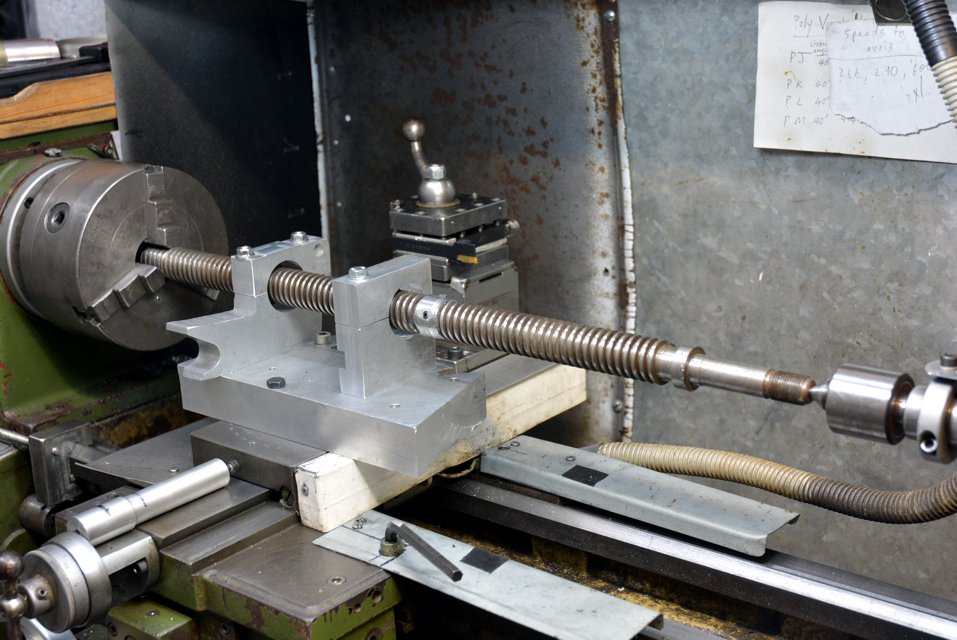
    The lead screw was used to make the boring bar for a line boring setup that I used to make front forks.

    Reusing madness.

  3. The Following User Says Thank You to tonyfoale For This Useful Post:

    Toolmaker51 (Feb 16, 2021)

  4. #3
    Supporting Member Saltfever's Avatar
    Join Date
    Apr 2012
    Location
    NorCal
    Posts
    473
    Thanks
    430
    Thanked 219 Times in 159 Posts

    Saltfever's Tools
    Quote Originally Posted by tonyfoale View Post
    (edit. . . much deleted) I kept the cross slide and compound rest which was used in my brake drum grinder; Grinding machine for drum brakes.
    The cylinder from the tailstock was the basis of my cylindrical square; Cylindrical square from a lathe tailstock.
    The lead screw was used to make the boring bar for a line boring setup that I used to make front forks.
    Some great links but an important one is missing! I'm very interested in seeing your line boring setup. A write up can be tedious and time consuming, so I am not making that request, but maybe a couple of pics for the curious!

    I have been thinking about the drive mechanism for such a machine but have made no progress. Visions of an Arduino/stepper/Mach III machine have languished as being too complicated for such a simple machine and flown off into the ether! I am now considering a Power Table feed accessory as a possible way to drive a lead screw. I would be interested in your thoughts.

  5. #4
    Supporting Member tonyfoale's Avatar
    Join Date
    Nov 2016
    Location
    Spain
    Posts
    1,819
    Thanks
    834
    Thanked 3,235 Times in 909 Posts

    tonyfoale's Tools
    Quote Originally Posted by Saltfever View Post
    Some great links but an important one is missing! I'm very interested in seeing your line boring setup. A write up can be tedious and time consuming, so I am not making that request, but maybe a couple of pics for the curious!
    OK, but just for the curious.

    Screw-on chuck mounting to bayonet.-boring-fixture21.jpg Screw-on chuck mounting to bayonet.-obviouslyitalian.jpg Click for full size.

    The end result was making some 1960/70s replica front forks.

    Quote Originally Posted by Saltfever View Post
    I have been thinking about the drive mechanism for such a machine but have made no progress. Visions of an Arduino/stepper/Mach III machine have languished as being too complicated for such a simple machine and flown off into the ether! I am now considering a Power Table feed accessory as a possible way to drive a lead screw. I would be interested in your thoughts.
    It depends on what you want to do with it. If you want uncoordinated axis moves then the unit that you mention would be fine. If you want to coordinate the moves on different axis then steppers would be the easiest solution.

  6. The Following 2 Users Say Thank You to tonyfoale For This Useful Post:

    DIYSwede (Feb 22, 2021), olderdan (Feb 22, 2021)

  7. #5
    Supporting Member tonyfoale's Avatar
    Join Date
    Nov 2016
    Location
    Spain
    Posts
    1,819
    Thanks
    834
    Thanked 3,235 Times in 909 Posts

    tonyfoale's Tools
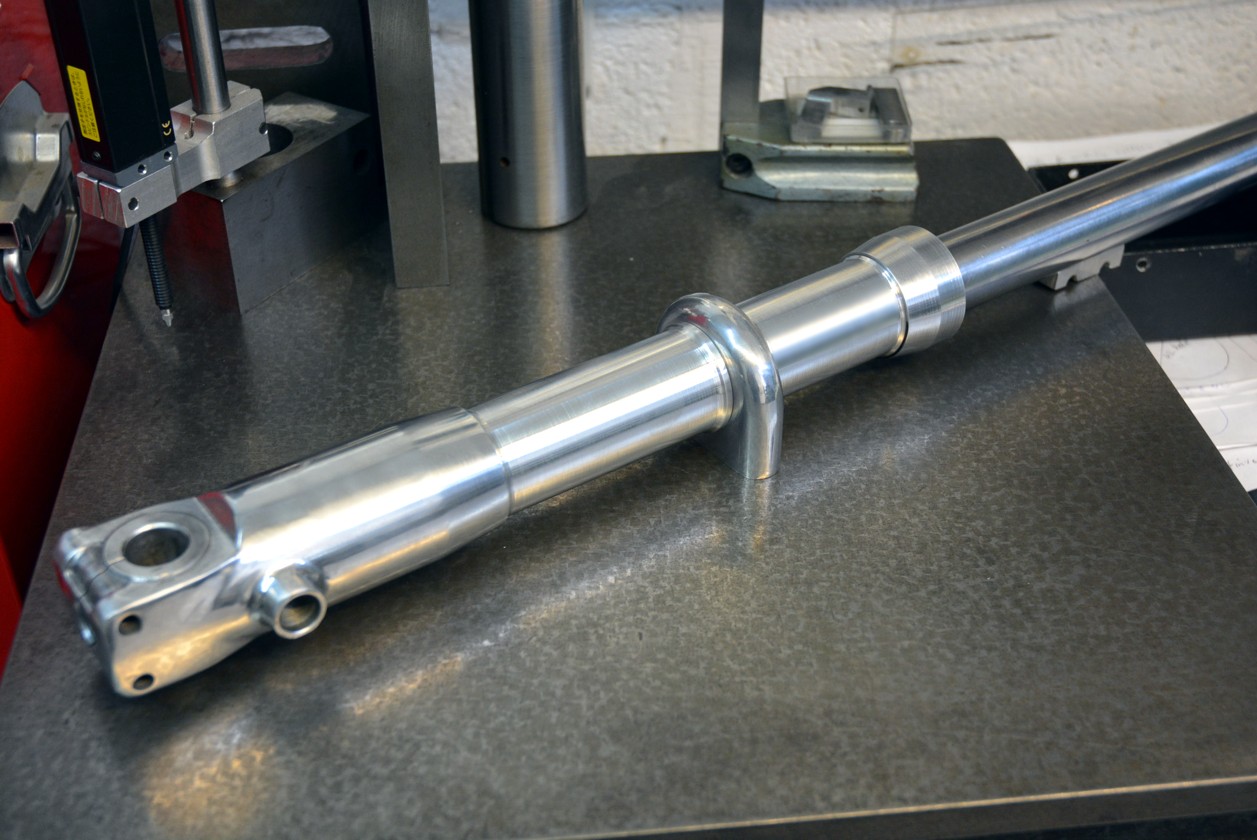
    I found another pic which shows what it was that I line bored.
    It was the tube in the middle of this photo.

    Screw-on chuck mounting to bayonet.-dsc_3219.jpg Click for full size.

  8. The Following User Says Thank You to tonyfoale For This Useful Post:

    olderdan (Feb 22, 2021)

  9. #6
    Supporting Member olderdan's Avatar
    Join Date
    Jun 2016
    Posts
    811
    Thanks
    1,479
    Thanked 1,785 Times in 520 Posts

    olderdan's Tools
    Tony,
    Beautiful work on those fork sliders, stronger than the originals no doubt and some special internals maybe? I understand the line boring fixture having done similar in the past on roadholders and good use of an old leadscrew. I would be very interested in your machining sequence to the bottom spindle mountings.
    Regards
    Alan

  10. #7
    Supporting Member tonyfoale's Avatar
    Join Date
    Nov 2016
    Location
    Spain
    Posts
    1,819
    Thanks
    834
    Thanked 3,235 Times in 909 Posts

    tonyfoale's Tools
    Quote Originally Posted by olderdan View Post
    Tony,
    I would be very interested in your machining sequence to the bottom spindle mountings.
    Regards
    Alan
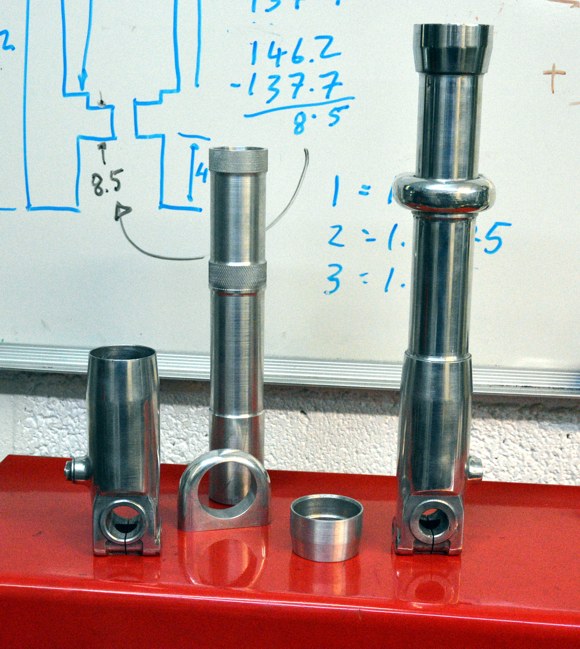
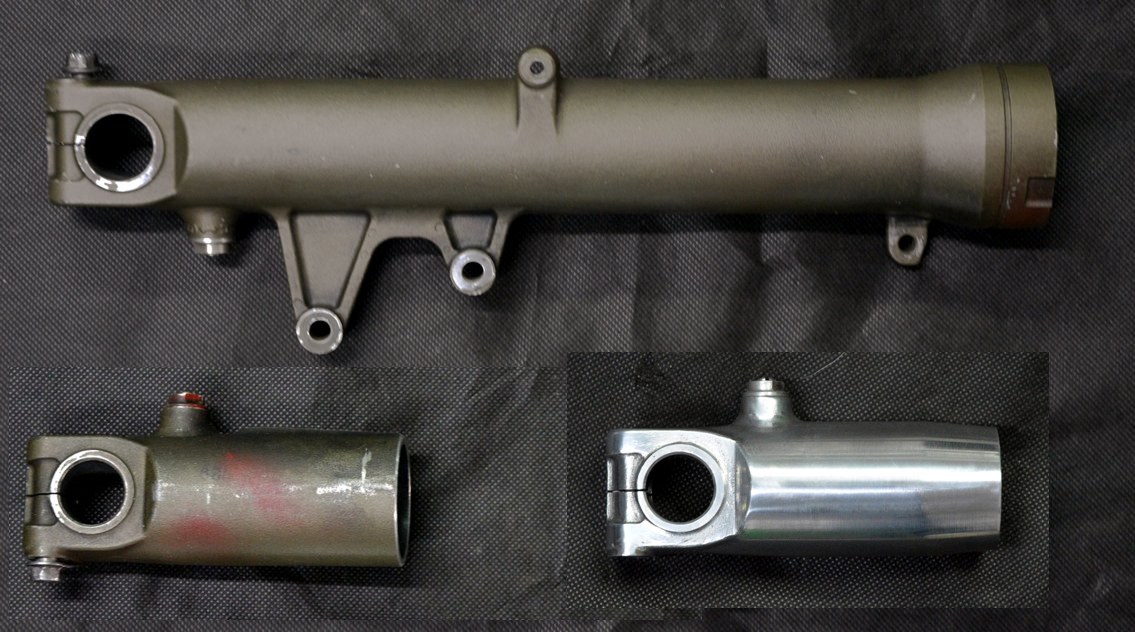
    Ha, I cheated. I bought some Honda forks from a wreakers because I wanted the so called cartridge inners. A bit of measuring showed that a bit of cutting and turning could transform the sliders into Ceriani look alike bottoms.
    I'll try to find the time to make this a full post but this should give you the idea.

    Screw-on chuck mounting to bayonet.-done-mirrors.jpg

  11. #8
    Supporting Member Saltfever's Avatar
    Join Date
    Apr 2012
    Location
    NorCal
    Posts
    473
    Thanks
    430
    Thanked 219 Times in 159 Posts

    Saltfever's Tools
    Quote Originally Posted by tonyfoale View Post
    OK, but just for the curious. (edit . . . ) If you want uncoordinated axis moves then the unit that you mention would be fine. If you want to coordinate the moves on different axis then steppers would be the easiest solution.
    Thanks for getting back to me, Tony. I just need just single axis travel for doing main bearing caps in a block. I will be replacing OEM cast iron caps with (yet to be designed) DIY 4140 caps. I would like to use carbide inserts but bar deflection, and high rpm may change those thoughts. Only collecting good ideas at this point . . . haven't had time to do anything else.


    Download plans for chucks.


Thread Information

Users Browsing this Thread

There are currently 1 users browsing this thread. (0 members and 1 guests)

Tags for this Thread

Bookmarks

Posting Permissions

  • You may not post new threads
  • You may not post replies
  • You may not post attachments
  • You may not edit your posts
  •