
 LinkBack URL
 About LinkBacks


Poor material choice: What you want to use is a steel with high temperature oxidation resistance, i.e. one that contains tons of chromium and aluminum, as only these elements form oxides that do not easily peel off. As per https://www.enpropipe.com/sucker-rod/, sucker rod is a high tensile, but otherwise plain carbon steel with just enough alloys added to allow it to be heat treated, with next to nothing in chromium or aluminum. Next time, try to get some stainless steel - it's going to eventually fail, but nowhere as quickly as the carbon steel you have chosen. At the temperatures your grate is going to experience, that heat treatment is going to be forgotten the first time you light a fire on it. After all, you'll want a smokeless, efficient fire, and that means temperatures of 800-1000 Celsius, not the paltry 400 Celsius or so up to which SAE 4130 and colleagues can maintain their heat treatment.Originally Posted by Frank S

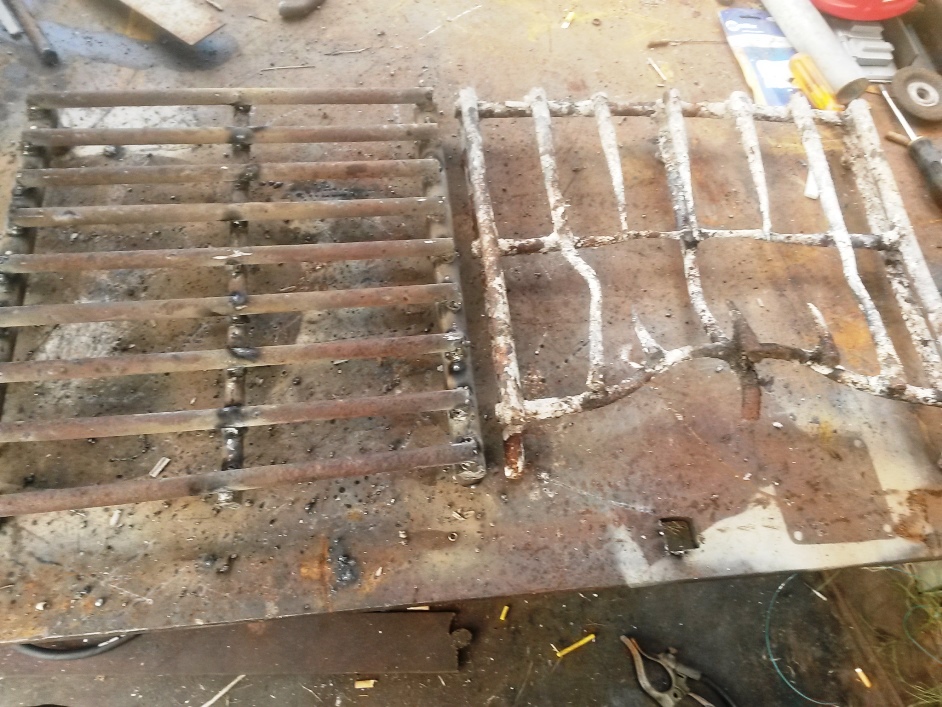
When heating to 1000 Celsius, steel bar changes its length by roughly 1%. Since this heating is not uniform, this thermal expansion produces high stresses inside the grate, which, it not balanced by generous use of stiffeners, will lead to serious deformation over time - as your old grate demonstrates. On the new grate, I would have added at least one more, better two, pieces of the 1" rod for stiffness, just to be on the safe side and keep far away from the regime where Euler buckling commences. As a rule of thumb, try to keep the openings in your grate as close to circles / squares as possible.


 Reply With Quote

Bookmarks