Free 186 More Best Homemade Tools eBook:  
New: 300+ fresh build posts/day from 275 forums → BuildThreads.com

User Tag List

Results 1 to 10 of 10

Thread: Wooden log splitter/ Hydraulic press/ Pipe bending--MULTIPURPOSE HYDRAULIC MACHINE

Hybrid View

  1. #1
    Supporting Member
    Join Date
    Oct 2021
    Posts
    8
    Thanks
    0
    Thanked 9 Times in 2 Posts

    Tech Paradise's Tools
    Quote Originally Posted by BuffaloJohn View Post
    I would also suggest that your hydraulic cylinder is far too extended, when I saw the first punch through the dry cocconut, the cylinder shaft was way out of line with the gland end, which will cause the gland seals to be bent and they will fail prematurely. You need to get the work much closer to the closed cylinder position. With the amount of wobble that thing has, I am surprised it has already not failed. Cylinders can push against moving parts for full extension, but the moving parts must not let the cylinder flex like you see in the video.

    I have to echo NortonDommi on your PPE (Personal Protection Equipment). But I have to add - Sunglasses are not effective as welding goggles. You will "sunburn" your eyes and you only have one pair of them. And - that also goes for using the angle grinder to cut metal as well, the sunglasses might be passible, but a proper UV shield should be used. Didn't see the sandals till part way in, just wow.

    Also, I noticed you kept trying to get the weld started and you reach over to another place to strike the arc. You should first clean your ground clamp attachment point so it is not so rusty. Second - you should clean your joints - both pieces - so that you have bare metal and not rust to weld through. The weld needs to penetrate both pieces being welded and rust makes it quite diffcullt to get a good joint.
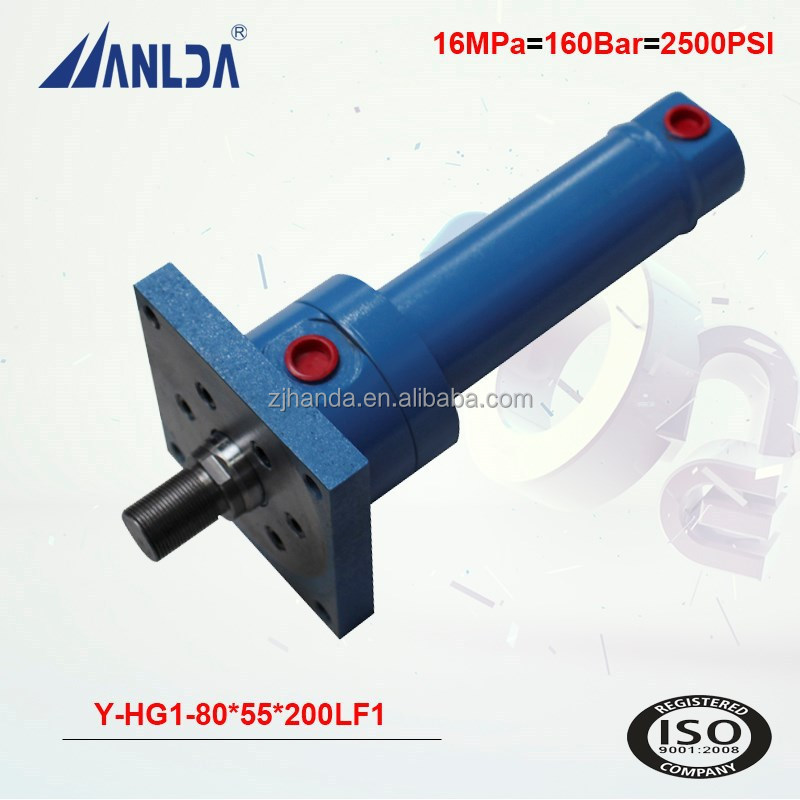
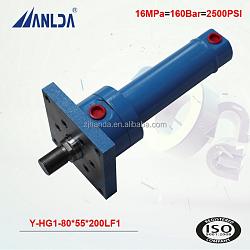
    Thanks for your comment. All your points are absolutely right and well taken. I understand that the hydraulic cylinder with a flange interface may be much better since that will support the cylinder closer to the rod . So effectively half the span will be reduced, which will in turn help in preventing buckling under load. I have shown in the picture below.
    Wooden log splitter/ Hydraulic press/ Pipe bending--MULTIPURPOSE HYDRAULIC MACHINE-htb1f1fahvxxxxcbxxxxq6xxfxxx1.jpg
    Also the glasses I am wearing are the ones that I got along with the welding machine. I was not knowing those were mere sun glasses. Since it was supplied by the welding machine manufacturer himself, I guessed it may be of good quality with UV protection too.
    I have just started welding work recently and hence I am not an expert by any standard. Will definitely take your suggestion of cleaning joints before welding.
    Thanks once again for your valuable feedback..

  2. #2
    Supporting Member BuffaloJohn's Avatar
    Join Date
    Aug 2019
    Location
    Oregon, USA
    Posts
    1,310
    Thanks
    502
    Thanked 783 Times in 464 Posts

    BuffaloJohn's Tools
    Quote Originally Posted by Tech Paradise View Post
    Thanks for your comment. All your points are absolutely right and well taken. I understand that the hydraulic cylinder with a flange interface may be much better since that will support the cylinder closer to the rod . So effectively half the span will be reduced, which will in turn help in preventing buckling under load. I have shown in the picture below.
    Click image for larger version. 

Name:	HTB1F1faHVXXXXcbXXXXq6xXFXXX1.jpg 
Views:	181 
Size:	88.4 KB 
ID:	40678
    Also the glasses I am wearing are the ones that I got along with the welding machine. I was not knowing those were mere sun glasses. Since it was supplied by the welding machine manufacturer himself, I guessed it may be of good quality with UV protection too.
    I have just started welding work recently and hence I am not an expert by any standard. Will definitely take your suggestion of cleaning joints before welding.
    Thanks once again for your valuable feedback..
    That cylinder might work, and certainly would give better support, but moving the work closer to the end is the most effective way to push. While the push end will have significantly better support, with a wobbly frame and wobbly tool frame, the rod would still have lateral movement. And, if I read correctly that the goal is to go from 2" to 4" diameter, remember that force is pi * radius^2 * pressure, your force increase is 2^2/1^2 = 4 times which would be a 16ton force...

    As for the glasses, if they came with the welder, they might be usable, but it would be interesting to learn what the actual shade is. The normal minimum for most welding is 10 but often for comfort, a shade of 11 or 12 and sometimes up to 14 is used.

    As for cleaning joints, you might not see a difference just looking at the weld, but there are some things you can do to get better. Cleaning up the joint is just a must do thing, be it rust or paint or mill scale or oil or grease or any other contamination.

    If you have some scraps, run tests. For one, take two pieces of rusty scrap and weld them together and then cut the joint perpendicular to the weld - looking at the penetration. You would be amazed how well rust welds hold for a while. But once rusted, it does not get better and can get worse. At some point, after repeated stress on the joint, eventually it will fail.

    Another thing to look for is heating of the joint. You want heating and the welding arc is your heat source. You can see heat by looking at the color of the metal before versus after welding - should see blue coloration, both front and back of the metal. You should experiment with dropping the current a little and slowing down the weld so that more heat gets into the metal (you can drop too far and you don't heat up enough). Welding is not a race - going a little slower can make a much better weld. Find a way to support yourself - that makes the position of the arc much more stable and gives you better control. When I weld, I try to not have too many joints that can move - those joints being my body - so I prop myself, lean against stable things, get one handfully supported (the non-welding hand), get on my knees to get closer to the weld, etc. Sometimes with a stick, as you are learning, you prop the stick arm against the other arm. You need freedom of motion of the stick hand, but you want to be as stable as possible. You need to try different things.

    Once you get more stable, practice, practice, practice. Then, start to do other things to improve the weld - pushing the arc, pulling the arc, sweeping the arc back and forth - all things to read about and then try.
    Last edited by BuffaloJohn; Oct 5, 2021 at 11:48 AM.

Thread Information

Users Browsing this Thread

There are currently 1 users browsing this thread. (0 members and 1 guests)

Tags for this Thread

Bookmarks

Posting Permissions

  • You may not post new threads
  • You may not post replies
  • You may not post attachments
  • You may not edit your posts
  •