
 LinkBack URL
 About LinkBacks


Mazay, Thank you for finding that video. I did note the gentleman touched on a couple of very important points if someone were to use this method of balancing a grinding wheel first simply a light tap to the side of the wheel to check for cracks the ringing of the wheel as he stated should be a clear ringing sound the same as a quality bell being struck. a dull short duration sound would obviously indicate a crack also it can indicate an inconsistent or poor mix of the aggregate and bonding agent used to make the wheel. Gone are the days of quarrying wheels out of naturally formed stone like the ancients used to sharpen their tools.Originally Posted by Mazay

Another thing he mentioned but did not go into great detail was when he drilled the holes were the size depth and spacing of these holes or a reason why a seemingly near perfectly cylindrical wheel could be out of balance in the first place after dressing the face. This is caused largely by the impossibility of achieving a perfect mix oc bonding agent and aggregate slurry mix. the size and shapes of the aggregate in the mix will always cause smaller and larger voids to be filled by the bonding agent.
One other thing he did not address is a wheel will change in balance as it is worn this is one of the reasons why companies who do nothing, but grinding will only use a wheel down to a certain diameter, another reason is efficiency once a wheel reaches a certain diameter it is no longer as efficient to use on that machine so "A" it may be relegated to a smaller machine or "B" sold to someone else, or "C" disposed of completely.
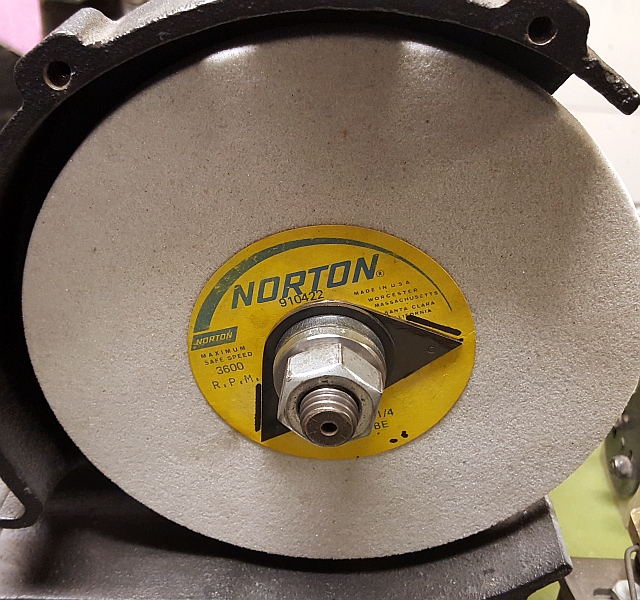
With a balancing hub similar to the one you have shown the wheel can be rebalanced once it is worn down. this would be particularly useful for a stand or bench type grinder since those wheels are often used until they are quite worn.
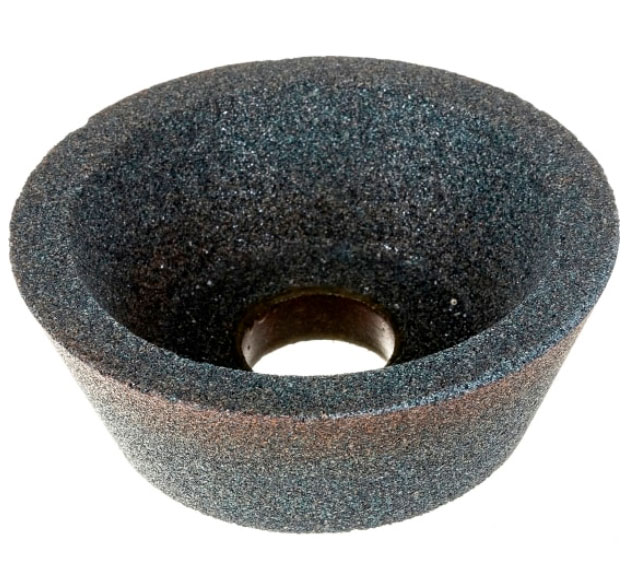
You posted a picture of a cup wheel I can relate to what could have been a disaster to something that happened with one of those on a grinder one time. A young apprentice I won't mention any names for reasons of self-incrimination, yes I will. I couldn't have been much more than 13 or 14 when I needed to sharpen a batch of drill bits at the blacksmith shop where I worked we had a huge belt driven arbor grinder, on 1 side is had a 3" wide 20" wheel on the other end of the shaft was a much smaller cupped wheel of about 12" in diameter with a 1-1/2" face. the face had a deep groove cut in it, very possibly caused by me. so instead to taking the time to dress it like I knew I should have I started grinding the bits on the tapered side of the cupped wheel, fortunately, I was stopped before I had done too much damage tot eh side of the wheel and it was explained to me what I could cause to happen. Guess what no more side wheel grinding from me to this day



 Reply With Quote


Bookmarks