Free 186 More Best Homemade Tools eBook:  
New: 300+ fresh build posts/day from 275 forums → BuildThreads.com

User Tag List

Results 1 to 7 of 7

Thread: Flywheel and ring gear installation measurement

  1. #1
    Supporting Member hemmjo's Avatar
    Join Date
    Feb 2017
    Posts
    3,298
    Thanks
    410
    Thanked 2,127 Times in 1,228 Posts

    hemmjo's Tools

    Flywheel and ring gear installation measurement

    I need to fit a new ring gear on a flywheel. I want to know
    the sizes of the ring gear and the flywheel to get an idea how
    hot to get the ring to slip it into the flywheel.

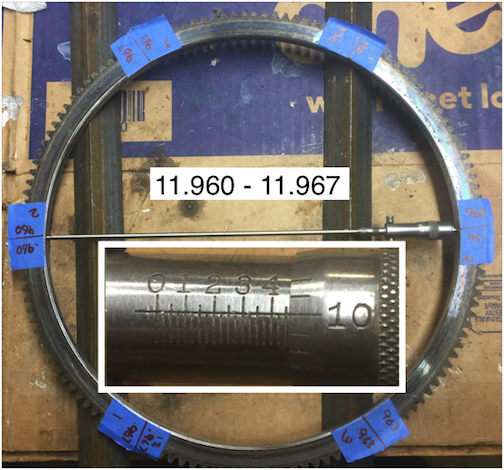
    I have my dad’s Starrett 0-12” inside micrometer set to measure the ID
    of the gear. Those measurements vary between 11.960 and 11.967.
    Twelve measurements at 6 positions averaged to 11.9615”.

    Flywheel and ring gear installation measurement-01-measure-ring.jpg


    I have nothing to accurately measure the OD of the12” flywheel.
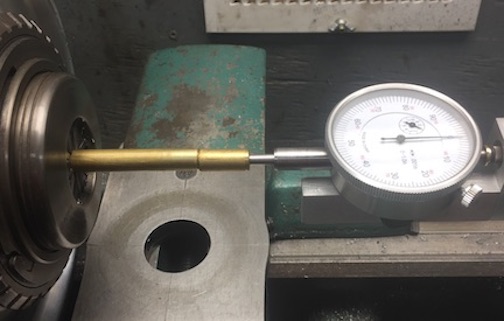
    After some thought, the lathe could used as a caliper. A brass rod
    was freshly faced in the chuck and a dial indicator mounted in the
    tailstock chuck. For my purposes the actual size is not as critical
    as the difference in size.

    Flywheel and ring gear installation measurement-02-lathe-caliper-.jpg

    DTI Tail Stock Chuck Adapter

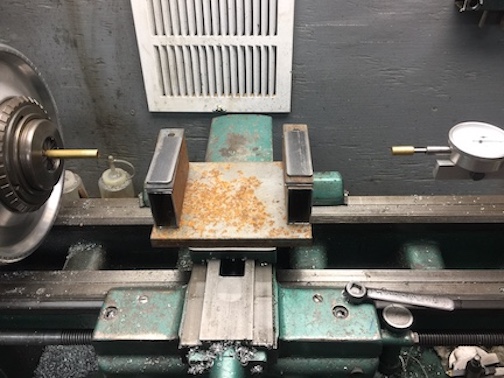
    By removing the compound slide and stacking shims on the
    cross slide, the flywheel can rest firmly at proper height to
    contact the rod and the indicator. The cross slide easily moves
    the flywheel to center with the indicator.

    Flywheel and ring gear installation measurement-03-shims.jpg


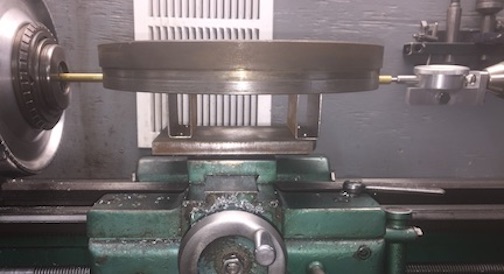
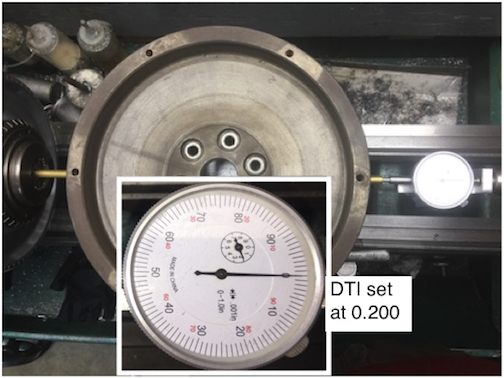
    With the flywheel in place, the tailstock quill was advanced and
    locked with the indicator reading 0.200”. Then back the cross
    slide out, rotate the flywheel 60˚ and slide it back into place.

    Flywheel and ring gear installation measurement-04-side-view.jpg

    The clutch bolt holes provided reference for rotating the wheel.
    Working all the way around, 6 measurements were within 0.001”
    off some unknown value.

    Flywheel and ring gear installation measurement-05-measure-flywheel.jpg


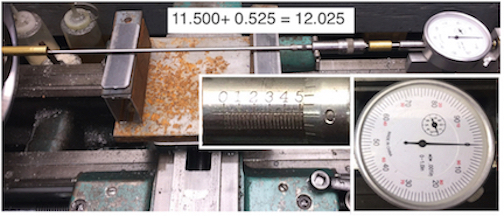
    Removed the flywheel and replaced with the inside micrometer.
    Then adjust the micrometer so the DTI reads 0.200”.
    The flywheel measures 12.025”

    Flywheel and ring gear installation measurement-06measuring.jpg


    12.025 - 11.960 = 0.065”
    According to an online calculator,
    https://goodcalculators.com/thermal-...on-calculator/

    the steel ring gear will expand about 0.0657”I.D. at ∆T of 750˚f.

    The service manual says to heat the gear to 400˚f, and to not
    exceed 450˚f. This makes sense to me as the gear is heat treated.

    This is WAY too hot to avoid ruining the temper in this gear.

    Finding these measurements made me to do more research. I have discovered several sources with a gear, same fitment description, with the advertised size of 11.994.

    12.025 - 11.994 = 0.031”

    ∆T of 425˚ is 0.037 should expand the gear to 12.031”.

    It should slip right on.

    Will let you know when the new gear arrives.

  2. The Following 4 Users Say Thank You to hemmjo For This Useful Post:

    ductape (Jan 16, 2026), Jon (Feb 5, 2026), metric_taper (Feb 7, 2026), nova_robotics (Jan 16, 2026)

  3. #2
    Supporting Member
    Join Date
    Dec 2022
    Location
    Midwest US
    Posts
    389
    Thanks
    261
    Thanked 287 Times in 170 Posts

    ductape's Tools
    Nice work!
    For those who may not know, many ring gears have a rounded or beveled ID edge on one side in order to make it easier to slip on the flywheel after heating. The fancy ones have the feature on both sides. Awareness of this may prevent some trouble and loud words.

  4. #3
    Supporting Member
    Join Date
    Sep 2018
    Posts
    2,919
    Thanks
    13,818
    Thanked 1,776 Times in 999 Posts

    nova_robotics's Tools
    That's awesome. If you dry ice the flywheel it'll give you an extra 15 thou. Dry ice is dirt cheap. It would be good insurance.

  5. #4
    Jon
    Jon is offline Jon has agreed the Seller's Terms of Service
    Administrator
    Supporting Member
    Jon's Avatar
    Join Date
    Jan 2012
    Location
    Colorado, USA
    Posts
    28,433
    Thanks
    8,489
    Thanked 44,287 Times in 13,044 Posts
    Congratulations hemmjo - your Lathe Caliper Measurement Method is the Tool Tip of the Month for January 2026!

    This is a clever use of a lathe to make an accurate measurement.

    Some more good tool tips from January:

    Collet Block Upright Accuracy Method by Mook
    Bandsaw Blade Candle Lubrication by Make Things
    Jig Gliding Tip by Make Things

    To enter your tool tip in our monthly contest, just post it here in the Tool Tips and Tricks subforum.

    hemmjo - you'll be receiving a $100 prize, in your choice of Amazon, PayPal, or bitcoin. Please PM me your current email address and prize choice and I'll get it sent over right away.

    Congrats again
    New: BuildThreads.com - 300+ build posts/day (with photos)

  6. The Following User Says Thank You to Jon For This Useful Post:

    emu roo (Feb 11, 2026)

  7. #5
    Supporting Member
    Join Date
    Mar 2017
    Posts
    1
    Thanks
    2
    Thanked 3 Times in 1 Post
    Nice but time consuming. Just heat it with a torch. Hold the ring gear with pliers if you want but I just run a torch around the ring gear it will drop on . Installed many ring gears this way

  8. The Following 3 Users Say Thank You to pharmmech For This Useful Post:

    emu roo (Feb 11, 2026), Frank S (Feb 7, 2026), IntheGroove (Feb 8, 2026)

  9. #6
    Supporting Member hemmjo's Avatar
    Join Date
    Feb 2017
    Posts
    3,298
    Thanks
    410
    Thanked 2,127 Times in 1,228 Posts

    hemmjo's Tools
    Quote Originally Posted by pharmmech View Post
    Nice but time consuming. Just heat it with a torch. Hold the ring gear with pliers if you want but I just run a torch around the ring gear it will drop on . Installed many ring gears this way
    Yes I realize a lot of people use a torch to heat and install ring gears. I also know that gears are heat treated and tempered.

    Heating a gear to 800˚f, or "over a 1000 if necessary" as one suggested on another forum, will ruin the gear. The damage will not be apparent. But the teeth will be softer. They WILL wear more quickly. It may not matter to you as it will work for long enough, the failure can be blamed on something else. No one will know that the gear was damaged during installation.

    The factory service manual says 400˚, not over 450˚. They did not just make that number up. A metallurgical engineer told them to put that in there to maintain integrity of the steel.

    As far as time consuming, it does not take as nearly as long to measure and do it right, as it does to split the tractor to install another. Especially if it fails when I NEED it.

  10. The Following 3 Users Say Thank You to hemmjo For This Useful Post:

    emu roo (Feb 11, 2026), nova_robotics (Feb 9, 2026), tonyfoale (Feb 10, 2026)

  11. #7
    Supporting Member
    Join Date
    Sep 2018
    Posts
    2,919
    Thanks
    13,818
    Thanked 1,776 Times in 999 Posts

    nova_robotics's Tools
    Quote Originally Posted by hemmjo View Post
    Yes I realize a lot of people use a torch to heat and install ring gears. I also know that gears are heat treated and tempered.

    Heating a gear to 800˚f, or "over a 1000 if necessary" as one suggested on another forum, will ruin the gear. The damage will not be apparent. But the teeth will be softer. They WILL wear more quickly. It may not matter to you as it will work for long enough, the failure can be blamed on something else. No one will know that the gear was damaged during installation.

    The factory service manual says 400˚, not over 450˚. They did not just make that number up. A metallurgical engineer told them to put that in there to maintain integrity of the steel.

    As far as time consuming, it does not take as nearly as long to measure and do it right, as it does to split the tractor to install another. Especially if it fails when I NEED it.

    This is absolutely correct. I think the manufacturer has built a safety factor in there, but I wouldn't go past light yellow or you'll begin getting into annealing territory. Those are hardened gear teeth. You don't want to be doing this job again in a year. There's a trick you can do to control the temperature. Use the boiling point of water to set an upper limit on the temperature. That way you know you're not messing with the heat treatment.


    Heat one side up and cool the other side down. Dry ice is readily available and dirt cheap. Even just throwing the flywheel in your freezer overnight will make a big difference.


    2,500+ Tool Plans

  12. The Following 4 Users Say Thank You to nova_robotics For This Useful Post:

    davesrepair (Feb 10, 2026), emu roo (Feb 11, 2026), hemmjo (Feb 10, 2026), Ram50V8 (Feb 10, 2026)

Thread Information

Users Browsing this Thread

There are currently 1 users browsing this thread. (0 members and 1 guests)

Bookmarks

Posting Permissions

  • You may not post new threads
  • You may not post replies
  • You may not post attachments
  • You may not edit your posts
  •