


New: BuildThreads.com - 300+ build posts/day (with photos)


That is amazing.
When I see things like this I ask myself how are we going to get anything done when all of the trucks have to be electric? Will the next brilliant idea be to make all of the construction equipment electric also?
There is a precedent for electric equipment. (Edited from wikipedia)
Big Muskie was the world’s largest electric shovel, used for strip mining coal in Ohio. It was the only machine of its kind and was so massive; it could remove 240 tons of coal in a single scoop. It was powered by electricity supplied at 13,800 volts via a trailing cable, which had its own transporter/coiling units to move it.[1] The electricity powered the main drives, eighteen 1,000 horsepower (750 kW) and ten 625 horsepower (466 kW) DC electric motors. Some systems in Big Muskie were electro-hydraulic, but the main drives were all electric.[3] While working, Big Muskie used the equivalent of the power for 27,500 homes, costing tens of thousands of dollars an hour just in power costs and necessitating special agreements with local Ohio power companies to accommodate the extra load. The machine had a crew of five, and worked around the clock, with special emphasis on night work since the per kilowatt-hour rate was much cheaper.
There is no way we have the generation capacity now or in the near future to power all of this stuff.
Sorry, I get side traced sometimes.

Big Muskie was the world#8217;s largest electric shovel, used for strip mining coal in Ohi "Pin It")
Don't apologize! Side tracks are like candy for those who like to learn new things.Originally Posted by hemmjo

Big Muskie was doing it's thing not too far from here and I had the opportunity to see it working before they shut it down. It sounded like Godzilla and had a crew of welders working to hold it together. The power cable was huge. Sadly, the only thing left of it it now is the bucket.


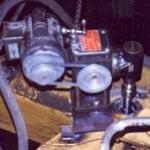
Over in the Middle East I saw 200-ton complete drill rigs moved across the hard pan of the desert on a few as 6 very large earth moving equipment tires and hardly even leave a trail where they traveled. In the mines where those 300 yon capacity dump trucks are used when it becomes time to mine the haul road the ground has to be broken up with a ripper before a D11 can even scrape away the over burden.
When President Eisenhour proposed the Interstate highway network they were originally supposed to be designed to carry heavy military equipment across the country. But I have seen gravel roads that would hold up to overloading better than many of the highways.
Never try to tell me it can't be done
When I have to paint I use KBS products

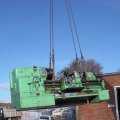
So...why? Is that transformer so riculously heavy that it couldn't be transported on a heavy-duty flatbed trailer? Is the green framework part of its final resting place, or is that just the way to move bigheavythings now? I mean, I can't imagine that box weighs much more than a D-10 dozer. I have so many questions!
Unlike the video link, Semi trucks transporting bulldozer, at the beginning of this thread, more often when BIG equipment is moved, it is disassembled. The specifications of a D-10 make it impossible to move on an heavy duty flat bed.
Notice the specifications are even stated as "Transport sizes".
Weight 64.1*t, Transport length 9.26*m 30.38 ft, Transport width 3.7*m. 12.1 ft, Transport height 4.34*m 14.29 ft, Track width 710*mm 2.33 ft , Front blade width 5.26*m 17.26 ft
The blade, rippers, track and carriage assemblies would be removed and shipped on separate trucks.
In addition, as big as a D-10 is there is a lot of AIR included within a dozer. There is space within that massive machine that contains nothing. It may seen insignificant, but when you put air where there would be iron, it makes a difference. Think about all of the empty space that weights nothing; operator space, cylinders, fuel and hydraulic tanks, oil pan and galleries inside the engine, coolant passages, many more empty spaces within the envelope of the dozer.
The electrical transformer on the other hand is solid, there is no empty space. It is solid iron and copper, with a bit of insulation on the windings. Many transformers are even wound with wire having a square cross section to allow higher magnetic density. There is some space for cooling oil, but not much at all.
Also consider that the extravagant "trailer" shown in the video is as much to protect the roadway as to carry the weight of the load. You could put all of those tires much closer together and haul the same load IF the road could handle it.
Maximum take of weight for a Boeing 777 is 775,000 lb. 385 Tons. That is carried on only 14 tires. BUT airport runways are built and maintained totally different than common roads.
I counted 88 tires on that transformer rig, including the tractors. That is all to save the roads
Toolmaker51 (Apr 13, 2023)
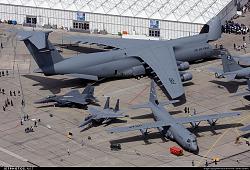
Our local Air National Guard, a tactical airlift wing, the runways appear at least 3 feet thick. There are several assigned C-130's, C-17's fly in regularly, dwarfing the 130's. Until a C-5 joins the runway.
C-5 takeoff max weight is 840,000 pounds; 270,000 pounds cargo + 332,500 pounds fuel; after being refueled in flight. C-5s have weighed 920,836 pounds, on twenty-eight wheels. Good deal, anticipating potential of 460 tons!
Runway, it seems well prepared, has survived two significant floods of Missouri River, western boundary between states Missouri and Kansas.
Last edited by Toolmaker51; Apr 13, 2023 at 01:14 PM.
Sincerely,
Toolmaker51
...we'll learn more by wandering than searching...

Thank you, hemmjo! That clears up a lot of questions. I had no idea about the contents of that big grey box. Square wire..who'da thunk it?

I would also add that the trailer configuration allows for sharper corners as long as the side of the road is not too high.

But is it Megatron or Optimus Prime? It's hard to tell from the video.
"The man who views the world at 50 the same as he did at 20 has wasted 30 years of his life."
- Muhammad Ali
There are currently 1 users browsing this thread. (0 members and 1 guests)
 Posting Permissions

 LinkBack URL
 About LinkBacks


 Reply With Quote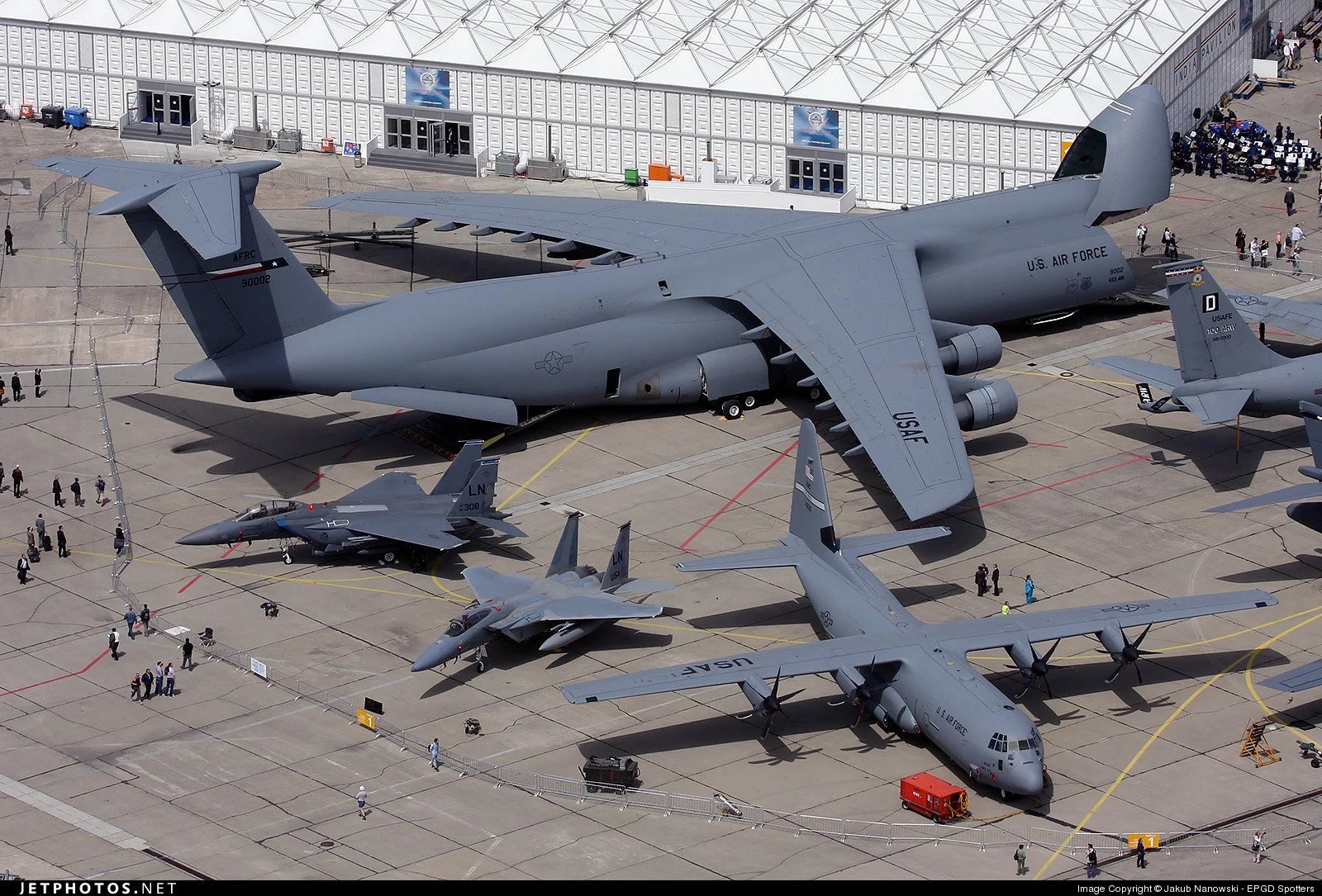
Bookmarks