60-ton steam shovel trenching for the Catskill Aqueduct. Ulster County, New York. 1909.
Fullsize image: https://diqn32j8nouaz.cloudfront.net...w_fullsize.jpg
https://diqn32j8nouaz.cloudfront.net..._work_crew.jpg

Printable View
60-ton steam shovel trenching for the Catskill Aqueduct. Ulster County, New York. 1909.
Fullsize image: https://diqn32j8nouaz.cloudfront.net...w_fullsize.jpg
https://diqn32j8nouaz.cloudfront.net..._work_crew.jpg
Brings to mind a saying my first real boss would use sometimes, "when ships were made of wood and men were made of iron". Looks like it may have taken two men and a boy to run.
Eric
Just noticed the pentacycles aren't identical in size. Tallest guy has the largest drive wheel. Smallest appearing man has proportionally smaller drive wheel. His inseam and offspring thank the bikes builder.
Another print suitable for framing And my wife couldn't understand why I bought the HP design-jet 500 now that I no longer need to print off shop drawings for the things I used to build.Quote:
Originally Posted by Jon
reckon I'd need all those trainer wheels on that cycle. Imagine trying to lean into a turn.
London policeman directs traffic in the fog, aided by a gas-fueled torchlight that can fold up and be stored in a box in the street.
Fullsize image: https://diqn32j8nouaz.cloudfront.net...w_fullsize.jpg
https://diqn32j8nouaz.cloudfront.net..._work_crew.jpg
Hooking into the gas line would have taken skill when traffic was about in the fog. I think those cobble stones are actually short sections of wood on end & some still exist today after 100's of years of inclement weather & traffic.
Ranald, I could be mistaken, but my bet is those endgrain timber cobbles were Australian Jarrah, 'cause the Poms used Jarrah for their railway sleepers. Yes they do last extremely well due to very high tanin content and extreme density and hardness. Don't have the link handy, but search ' wood database' for some very comprehensive info of woods of the world. Cheers
Jim in (not at all) Sunny South Coast NSW
I still can't quite figure what happens when the trolley comes along, do they wait while the Bobby exstingushes the flame and folds up the pipe? It is located right between the rails. And without a joint or pivot at ground level to lay it over.
Eric
yeah, jarrah and yellow stringy bark don't suffer from much of natures extremes. there is one other cost effective species used but cant remember. When I had my srtuctural landscape licence I used to use the same as the cow cockies=yellow stringybark for posts : the rails were generally treated 100 by 32 pine as they were light enough to easily manage & with 3 rails were extremely strong once pailings were attached. Some parts of SW tassie they use saffafras for firewood. Go figure! excuse pun.Quote:
Originally Posted by Beserkleyboy
Ironworkers with the chain links being forged for the anchor of the RMS Titanic. At the time, this was the largest anchor ever made. N. Hingley and Sons. 1910. Largest image size available.
Check out that double-handled sledge!
https://diqn32j8nouaz.cloudfront.net...anic_chain.jpg
It makes the chain hanging it from the ceiling look like a jewellery necklace
I was thinking the young boy on the left. Wonder what his life was like.
Ken
Knowing how ever large the record chain was, it needed an equally proportioned anchor. A little googling found a decent article by a lifelong Titanic researcher at https://www.encyclopedia-titanica.or...y-anchors.html
Includes accounts of epic undertaking to ship it from Hingley Works...
I have a very good friend Dick Barton, just happens to own the wreck. used to live 2 miles away from me and drink in my local boozer. (RMS Titanic Inc) He used to be partners with a secondhand car dealer, you know the story. Looks like its back in court again to decide its future and yet again Bob Ballard (the fraud) is sticking in his two cents. I'm also good friends with a chap called Fred Buigett who was a diver for IFREMER on the original expedition to find Titanic. Last week i had the pleasure of congratulating a friend and colleague Jim Calvarey for his new job position with woods hole. Its a damn small world we live in. Whilst working for a salvage crew out in the Mediterranean i had the pleasure of working under a salvage master called Lyle from South Africa, he has been involved in Bob Ballards expedition to find Bismarck. It was a pure fluke that Bismarck was found at all as the vessel was going off hire and was returning back to port having been unsuccessful. The Bismarck was found as a result of running over it on the way home - the sonar equipment had been left on and a keen eyed operator spotted it. This is kind of the story you don't hear. Bob Ballard is also know to express his view of ships engines exploding as they sink, total and utter pants and the reason i call him a fraud, prompted by Lyle no less. you need various conditions for an explosion, gas or high octane fuel, explosive of which engines have non. They do however implode if they are running and the casing happens to cool down rapidly as a result of water rushing in. dada. I've had quite an interesting life and career and met some very unsavoury characters. My first experience of meeting managers from IFREMER was in the med one morning on a salvage job whilst i was pissed as a fart - I went drinking with french chaps the night before, i should have realised i cant match divers pint for pint. Incidentally i've met Bob as well.
New York City street cleaner. 1906. Largest size available.
https://diqn32j8nouaz.cloudfront.net..._work_crew.jpg
My first thought was that a horse drawn street sweeper was an exercise in futility but I suppose that as long as the horses pull rather than push the device everything will work fine.
Street sweeping in the first decade of the century must have provided employment for lots of people.
Well, I suspect some horses wore bags to collect droppings; typical in parades, mounted city police, carriages etc.Quote:
Originally Posted by mklotz
And street sweeping took a lot of employees. Good position for those 'city jobs' from brother-in-law in public office. Especially if he didn't care for them so much.
When empty they would have been quite noisy (without the water) I imagine. Looks like other horse drawn carrages in background. If cleaning/shovering the droppings one would be sulky.
We had a local green grocer, named Bumstead, who we were warned of his approach (a mile or two away) bu barking dogs until he fitted pneumatic tyred rims to his horse drawn cart.
I don't remember his finishing his run sometime in early to mid 70's. Probably done out of a job by food chains having/selling such fruit & veg.
Yangtze River. Sichuan, China. 1946. Largest image size available.
https://diqn32j8nouaz.cloudfront.net..._work_crew.jpg
Jon
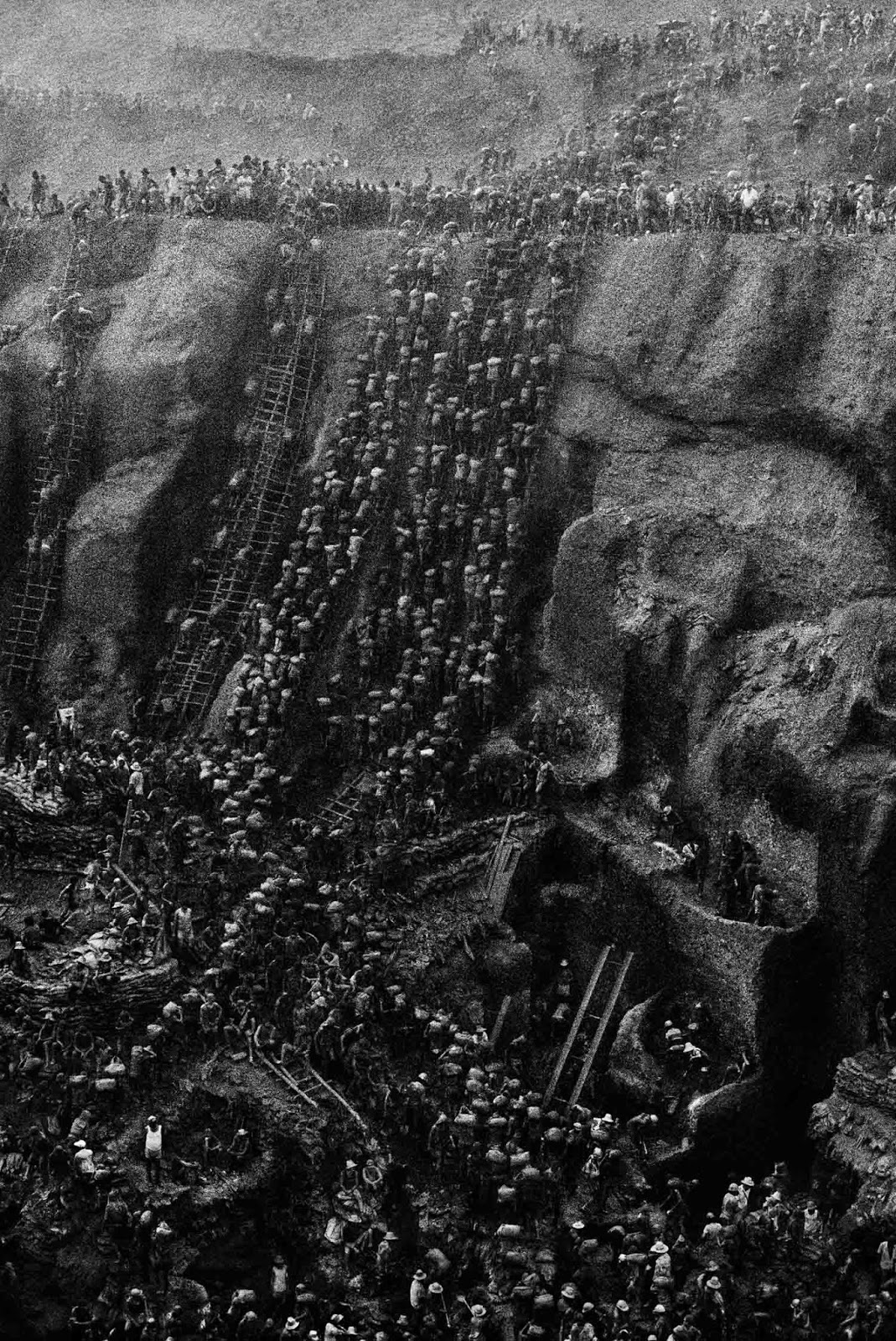
Here is one of many photos taken of the Serra Palada gold mines in Brazil. It looks 'historical', as in old...but this is 1980. I first found one of these pics on the covers of Jerry Harrison's Casual Gods LP in '88. Harrison was a founding member of the Modern Lovers with Jonathan Richman, local faves on Beserkeley Records in the 70's...and on to Talking Heads in the 80's. The story of the gold mine is fascinating, and a revealing look into the 3rd world, human greed and exploitation...Cheers
https://rarehistoricalphotos.com/hel...-pelada-1980s/Attachment 26163
Jim in sunny south coast NSW
Winchester barrel shop. 1912.
Fullsize image: https://diqn32j8nouaz.cloudfront.net...w_fullsize.jpg
https://diqn32j8nouaz.cloudfront.net..._work_crew.jpg
WOW! There's a lotta line shafts happening there! Great pics...I bought a 26" Crescent bandsaw in about 1995 for $200, and it had a lineshaft pulley on the bottom wheel. Sadly, I had to take it off and get a pulley to connect to 3hp induction motor..Great machine, that one, alas gone now...
Jim
At least 6 line shafts and who knows how many belts, really can't tell. Layout of floor appears some operators tend two lathes, notice the carriage handwheels. Seems like they are very close together, that seems odd. Look at center right of photo. Guy in a white shirt is peering through a barrel, likely a mere visual check, plenty of gauging later in the process. All that occurs before final straightening. In those days most barrels may have been straightened at least twice.
Straightening is an interesting process. The barrel man works a screw-driven press, the tube in vee-blocks, aimed at a window. In front of the glass, a thin wire suspends a weight, like a plumb-bob. Any discrepancy in straightness is visible where image of wire jogs, or looks broken. Drilling and turning interrupt integrity of the blank rod. Often the barrel is only curved, but other conditions occur. As barrel is rotated in the blocks, and high spot gets to 12 O'clock, then screw brought to bear on that position. The screw's wheel is styled like a ship's helm, with spokes radiating beyond rim, a little ways above operators head. The adjustments take little pressure to bend the tube about twice the deviation. Pressure relieved, change can be seen and re-applied need be.
Is it possible that those machines in the foreground are rifling machines and not boring lathes? They don't look like lathes to me.Quote:
Originally Posted by Toolmaker51
I think, judging by the larger overhead sheaves on the right, those are rifling or chambering. There'd be at least four operations; 1] turn, 2] drill-ream-crown, 3] rifling, 4] chamber.Quote:
Originally Posted by mklotz
Unsure if gun-drills [single straight flute, hole-riding body, pressurized cutting oil] had been developed yet. Of course the drill needs to be pushed. Good quality reaming is pulled, eliminating flex as an extended drill does. Those 'benches' could be similar.
I don't see sine-bar or spiral guided rifling machines in view. By 1912, Pratt & Whitney might have been producing riflers, made zillions over the years.
And rifling is another art, many techniques practiced by as many manufacturers.
In mass production, Colt could produce unbelievably fine barrels. A little more modern is Lothar Walther. In custom work, Harry Pope represents epitome in target barrels. And other fun discussions! People continue with handmade cut rifling heads, and custom shops sell broaching buttons on Ebay....
I believe those machines are drilling and reaming. I don't think any rifling is going on in the picture, as rifling machines took up more space and could not have been located that close to one another. Interestingly enough, Colt performed a lot of their rifling vertically. I believe Mr. Root of Colt invented that procedure. (IE- the Colt Root).
all very impressive. Imagine how these days, occupational health and safety would view all those exposed belts & cogs/gears.
Wonder if they did hex barrels like a winchester rifle I used to own?
The machine at the far right may be a riffling machine as it goes off screen and has different controls as well as the belt on the opposite end. The others or boring and reaming ops, imho. Perhaps the guy on the far left is doing the crown work.
Love this picture and the workers seem happy and content...I would be despite any Osha Hazzard we might impose today. Those guys seem smart enough to stay out of the way of belts and such...had to be.
One thing is for sure there was not a spare foot of unused floor space.
It does look as though there are 2 machines per man. that would mean 4 barrels at a time per man whether they are boring reaming or crowning or riffling it really makes no difference that is a highly stressful situation done hour in hour out every working day. Then think about having to do the same thing all of the time.
in the past I had often kept several of my machines running at the same time each with a different set up doing certain stages of what ever the run happened to be. and my wife almost always had 1 or 2 band saws going while running the radial drill-press but the differences there was we didn't have our machines almost stacked on top of each other and every run was different.
Doing what those guys were doing would have driven me over the edge in 1 day.
Collecting scrap metal for the WWII war effort.
Fullsize image: https://diqn32j8nouaz.cloudfront.net...w_fullsize.jpg
https://diqn32j8nouaz.cloudfront.net..._work_crew.jpg
Us kids used to sit and listen to one of my uncles he was too young for service but he had many more interesting stories than my dad or other uncles who had gone off to war since none of them would talk much about what they did.Quote:
Originally Posted by Jon
This 1 uncle though had many tales of how he worked in a gas station and would have to patch together peoples cars or trucks with what ever he could find then he and the other kids would scour the fields and dumps for any scrap of not only metal but glass as well to donate at the collection places sometimes the guy running the collection site would pay them something for the things they brought in.
Not everyone took part in the war effort as I am told but if you saw a kid wearing a boy scout uniform you could bet their every waking moment when otherwise not engaged in their regular boyhood chores they would be going door to door at times in hopes of collecting things for the war effort
Great Pic, Jon. Very Moving and shows the spirit of the times and young people doing the Right Things.
Team spirit & all wearing shoes/boots. Sometimes it takes a terrible incident to unite folk like those young ones.
As a veteran I'm certainly no dove; nor warmonger. But I can tell you this. I have all kinds of veteran family members and others old enough to relay accurate accounts of this period in time.Quote:
Originally Posted by Jon
During our War Between the States, General W.T. Sherman perfected campaign making civilians of the Confederacy not care to support the effort because it impacted them directly. He put this to work, "War is cruelty. There is no use trying to reform it. The crueler it is, the sooner it will be over." Everything; ransacked farms, railways, loss of possessions, material goods, funds or revenue with potential to bolster the South.
General Sherman was not entirely ruthless, such is the case with better part of Louisiana. And who became the first superintendent of the Louisiana State Seminary of Learning & Military Academy, later known as Louisiana State University?
In WWII, American war effort was a 'Community Project'; not so much negative propaganda about the Axis, but lots of Mom and apple pie. And likely the greatest advertising campaign of all time.
The group of boys pictured [even if staged] felt every bit instrumental as their Rosie Riveter mothers.
https://diqn32j8nouaz.cloudfront.net..._work_crew.jpg
No one can account how much any of these materials actually made it into aircraft or tanks. It didn't need too. Collections made home front engaged by contributing too; not altogether different than cheering your team on. Rationing too; you did without so those afield better managed to conduct the mission.
Ranald mentions they all have boots/ shoes; well fed, clean, haircuts too. Not the case in every Allied country, too be sure. We could only do so much...
Be so interesting, approximating what percentage of full manufacturing been achieved. Certainly very high, I'm betting it wasn't 100%.
I once read that this was largely a propaganda exercise to foster the idea that those on the home front were contributing to the war effort. Apparently in the UK, very little of it was actually used, and there are supposed to be mountains of it, buried for recovery in case they ever really need it. In London in the early 1960’s there were still many buildings and churches with the remnants of cut off steel fences that hadn’t been repaired. Being so vast, and having such good mineral resources etc, it is hard to imagine the USA ever being in a position where melting down someone’s donated aluminium cooking pot would make much of a difference.
I've read that too and had the same thought. There came a point in the war where we were building a Victory ship and dozens of war planes along with untold other armaments every day. That's easily thousands of tons of metals required on a daily basis. A couple of pounds of pots and pans and rusty fences would be the proverbial drop in the bucket.Quote:
Originally Posted by Moby Duck
Remember that at the start of the war there was a strong, and outspoken isolationist spirit in the USA. Pearl Harbor silenced those folks but didn't necessarily change their outlook, particularly so relative to the war in Europe. No doubt Roosevelt remembered how sneaky he had to be with the Lend-Lease program to aid the UK and that prompted him to decide that involving the populace in the effort was essential.
Washington may well have felt that convincing people to participate in the war effort was an essential element in sustaining a fight that was going to go on for a very long time. It's long been true that "The first casualty of war is truth." so a little (admittedly white) lie about collecting metal was not going to upset the government.
Yes gents, you are correct. The iron railings etc were taken by the instruction of the government to supply the iron and steel works for the manufacture of bombs etc. The rumour that the metal was substandard was also passed around. I cant imagine if they did need it that they wouldn't, they must have used some as making stuff would require it.
So What Really Happened to our Railings?
We were actually bringing iron parts in from the continent to support our war effort. I worked in marine salvage and we were often working on liberty ships like Autolycus and Namur (old white star line steamers). These ships had tea, tin, crane and train parts and sheets of natural rubber, not forgetting the bullion used to trade for materials. both wrecks had approximately 22 bars of silver and 11 bars of gold on board which we recovered.
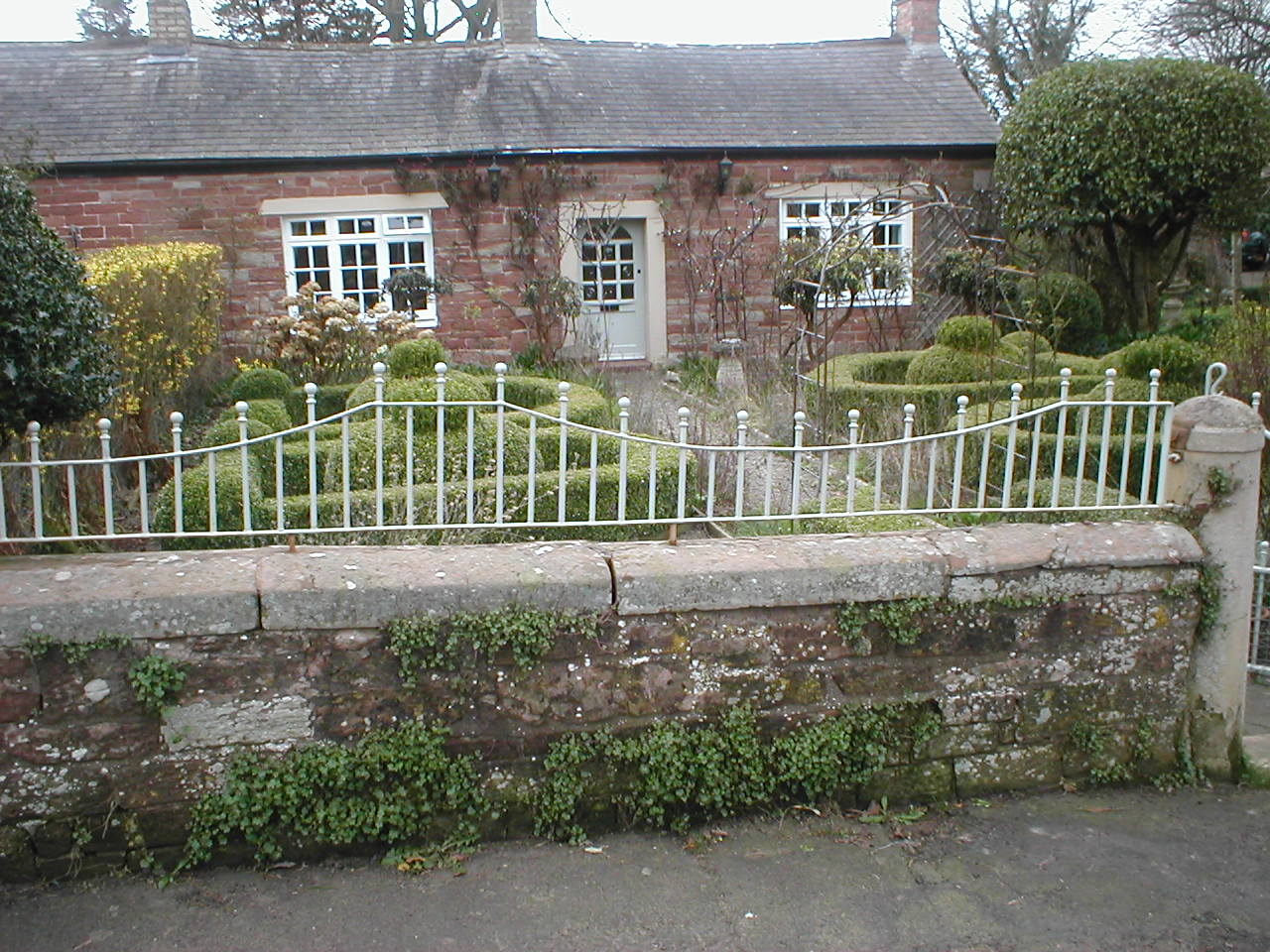
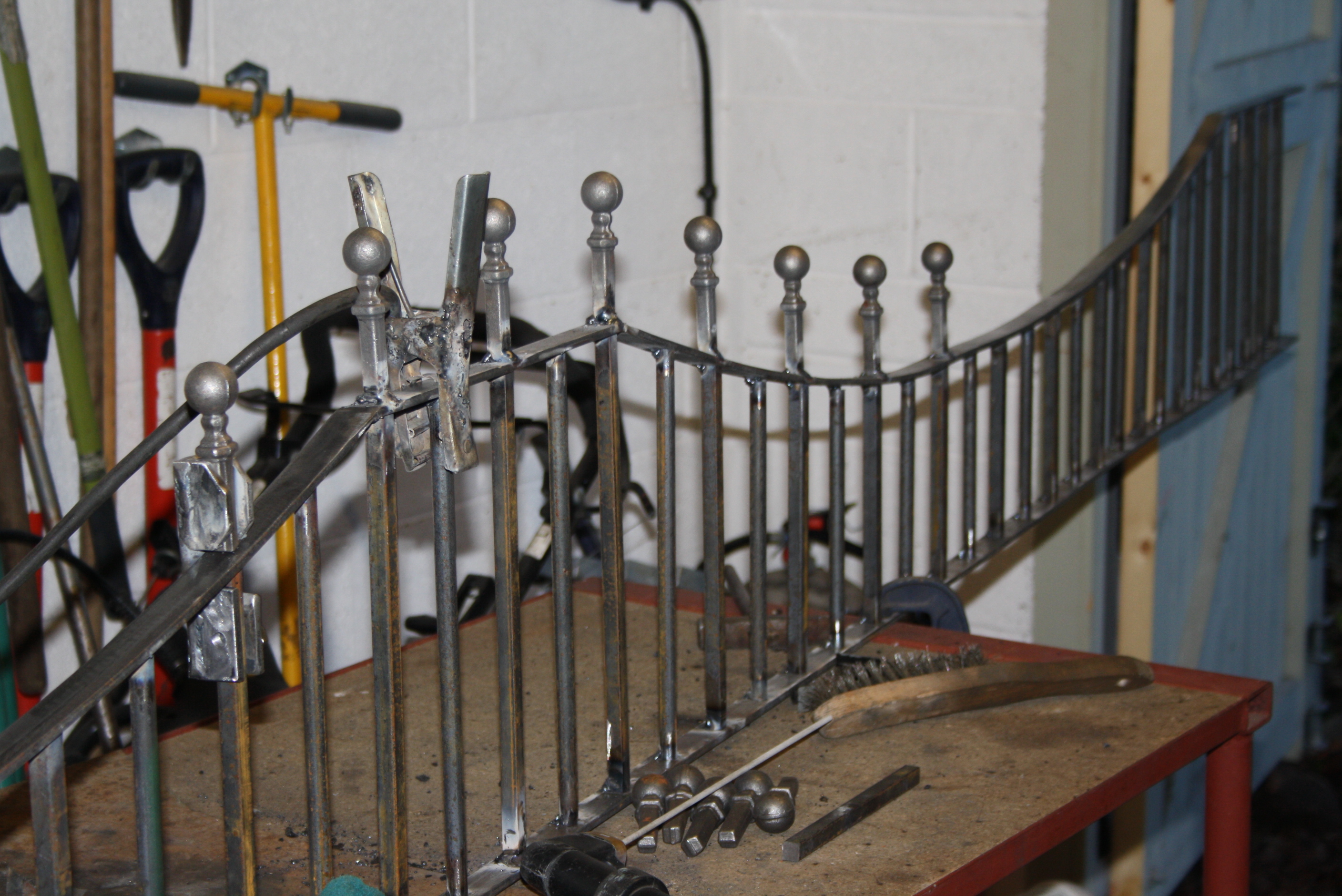
Our home and village had its railings and ornaments taken. As a mark of remembrance for the centenary 1914 ~2014 I replaced the railings on our garden wall, granted they are mild steel now and probably more use in the next war, wave goodbye again. Having relatives who served in both great wars i felt it was the least i could do to pay respect to their sacrifice and that of their comrades.
Attachment 26193Attachment 26194
There were more than a few "More than white lies" that happened during those times and in most times of war. The big 3 car makers and others came out smelling like roses with paybacks on both sides and off/from the people...and of course the banks for financing it and perhaps even starting it.
The thing about this picture, Rosie, war bond and newsreel campaigns to me, is the focused Energy on a United common goal, especially after Pearl Harbor. Not much different than Kennedy's speech about going to the moon, and doing it ahead of schedule. No doubt this was a staged pic with the boys wearing shoes and dressed well, but to me I can see in their faces that they are Getting to help out with their parents in a small and perhaps insignificant way...but I'm not sure it was. As for resources, sure we had/have them but to me again it's the Strategic focus/energy to be able organize that kind of production efficiencies in such short time.
To me its the collective "Juice/Energy" that forms powerful bond-forces, allowing creativity to bring something forward or to surpass obstacles or oppression...the key is knowing when you are being duped and whether or not you want to participate and at what level. The great terms, "We the People" may have been coined from the preamble to the constitution in the US but is applicable globally to all human beings to use this energy collectively...again the keys are based in discernment through the pitch fever of polarity, greed, power and such. Millennia of this is evident and grown to be AI and 100 years psychodynamics as a pseudo science in modern times. Whether or not we revert to insect culture or not will depend on We the People as individuals and finding/creating that collective Juice to do the Right Thing...what ever that is for each and all of us.
PJ
"How wonderful it is that nobody need wait a single moment before starting to improve the world."
Anne Frank
Relevant:Quote:
Originally Posted by mklotz
https://www.youtube.com/watch?v=KrhjmT4Zg5I