
 LinkBack URL
 About LinkBacks

Originally Posted by Floradawg

His 'spring' analogy is not optimal. I posted this as it is a good demonstration of Tony's post description of tracking.
This self centering belt requires that it have some compliance, so there is differential tension in the band.
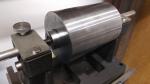
I have a 13" wide stationary belt sander (one of those cheap import machines sold 25 years ago by many import tool sellers, mine happens to be Woodtek). This never tracked right, as the fools that manufactured it, crowned the rubber driven shaft, so it caused a concave surface in the wood that was being fed through it. I fixed that, and then used duct tape to crown the idler pulley that was a spring loaded tension pulley as well. It would track for a while, then suddenly when the belt got hot, would take off one way or the other. So I removed the convex crown, and made a concave crown, and this has worked very well for years now. But these belts are very stiff, and made of some fiber cloth that does not stretch much.
I had to fix many other design and manufacturing defects in this machine as well, mainly to the power feed belt system that had the idler shaft at an angle to the main platen. So many issues with this that were clearly human errors of machine creation. But with a machine shop, I could fix all of them and happy with the surface finish it produces. The only improvement would be some mechanism that would dither the belt back and forth so it did not track the same groove making abrasive on the belt to the work. Really only a problem with medium to course grits.



 Reply With Quote


Bookmarks