
 LinkBack URL
 About LinkBacks


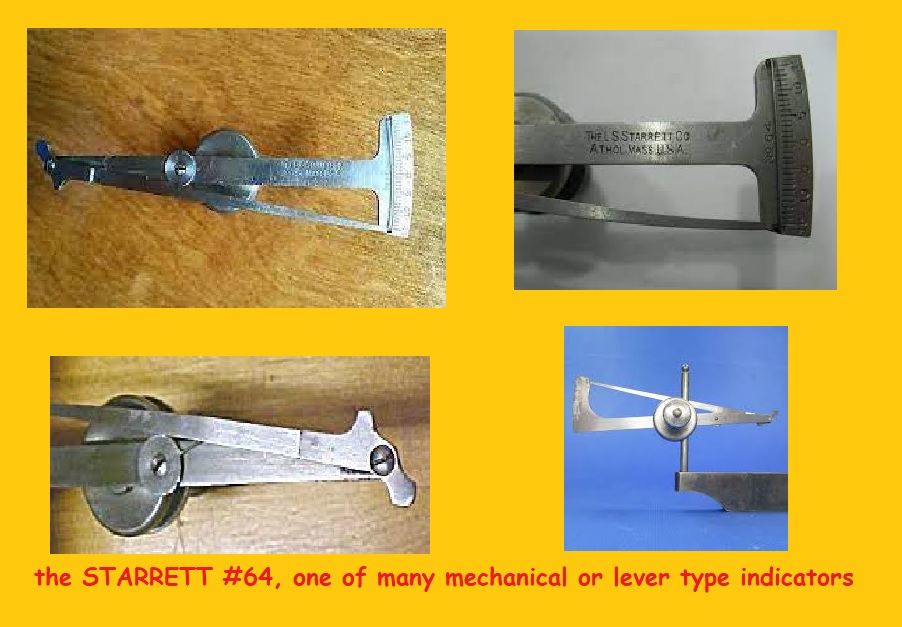
Few [none?] of us are old enough to have depended on the precursor of dial indicators. They were lever operated affairs, while graduated in .001, had limited travel.
With that limitation, indicating was done differently than today.
Now, machinists rely on long travel instruments, say clocking stock in a 4 jaw. Some cannot visualize the undertaking, and 'lose' sight of high side, ending up making many adjustments beyond that required to get zeroed in.
A lever indicator doesn't necessarily avoid it; but it does induce a visual aspect. They'd have spun the chuck, the tip only contacting intermittently. Compared to a wildly swinging needle, that makes clocking far easier.
It's how I started, and rely on. Even with a dial indicator, especially on rougher material. Attached on the cross slide, as readings stop, just dial in a few to reacquire contact.
Much faster than it sounds.
I could go on 'how it was', prodded sufficiently. Interestingly, there are occasions where the 'old way' remains the only way.


 Reply With Quote


Bookmarks