And man upper left is signaling thimble man, "more turns, anvil still not touching!"?Quote:
Originally Posted by Big Sexy

Printable View
And man upper left is signaling thimble man, "more turns, anvil still not touching!"?Quote:
Originally Posted by Big Sexy
Huh - a micrometer!
Well that makes perfect sense!
Bottom right hand corner of pic shows just how long we've been chucking our junk in the rivers, lakes and oceans! Looks like the youngest ship's Captain in the front on the left. Also, isn't that Buster Keaton in front of the big wagon???Quote:
Originally Posted by Jon
now thats quality control!!!.
With a frame like that I'm wondering if that just hydraulicly "squeezes" the rivets to form them?
Well, not in that era, but close.Quote:
Originally Posted by 12bolts
By the mid-60's, a process named "clinching" had been developed. Clinching joins sheet metal by drawing and forming the part materials into an interlock...eliminating welding and fasteners...no sparks, fumes or heat.
https://btmcomp.com/clinching
Workers baking bread at the Colonial Bread Factory. Springfield, Missouri. 1950.
Fullsize image: https://diqn32j8nouaz.cloudfront.net...s_fullsize.jpg
https://diqn32j8nouaz.cloudfront.net...ead_bakers.jpg
When I was a little kid (I think second or third grade) we went on a field trip to the local Rainbo bakery to see how it was made. I still remember how good the whole building smelled.
I suppose there is reason that the guy stacking the bread on the tray is not 20 feet closer to the guys unloading the bread from the oven, maybe it has to cool.
Ralph
Thanks for showing that side John. The 1970's - 1990's Was one of those government change periods that affected farming wall to wall. The government pushed "go big or go away" programs. It was also a period when the government was filled with lawyer, banker, and accountant types, who had never lived, or worked on a farm, who attempted to change farming into an industrial manufacturing business. They did not and DO NOT to this day, understand that farming is different. I had a bull struck by lightning last Christmas time. There is NO government program, or federal procedure for planning a lightning strike into your farm operation. And more specifically it was a bull that was struct not a cow. That of course changes the problem for the farmer in a way someone who never lived on a farm could figure out the difference this problem affects your income over the next 3 years.
I'm no farmer, but I do free what the electrocuted bull can't...
I think it was in 1959 or very early 1960 when my folks were invited on a tour through the brand new Tasty Bread factory. To this day I can still remember the aroma of the fresh baked bread and the taste of the slice of bread I was given, buttered with real butter the slice was so thick my little hands could hardly hold its thickness.
then twice since I have toured the MRS Baird's bread factory once in the 3rd grade and again 2 years later in the 7th grade yes I jumped grades a few times but neither time at the Baird's bread visits did the ambiance or the aroma even come close to matching that first visit.
Most likely the space is in case of accumulation. If the guy receiving the finished loaves has to go take a leak the conveyor fills up until he gets back... hopefully after thoroughly washing his hands for at least 20 seconds with soap and warm water. Sorry, reverted to my Food Safety / Safety Manager role!
Fullsize image: https://diqn32j8nouaz.cloudfront.net...l_fullsize.jpgQuote:
Stokers shoveling coal into the boilers of the battleship USS Massachusetts in 1897.
https://diqn32j8nouaz.cloudfront.net...eling_coal.jpg
Easy bet; when one of us sailors mentions the good old days, aren't thinking this far back.
And most certainly not this far back
Attachment 36937
number 1934
When viewing old stuff like this I usually think of the technology available at the time, and how great it was.
Then I found this and was saddened.
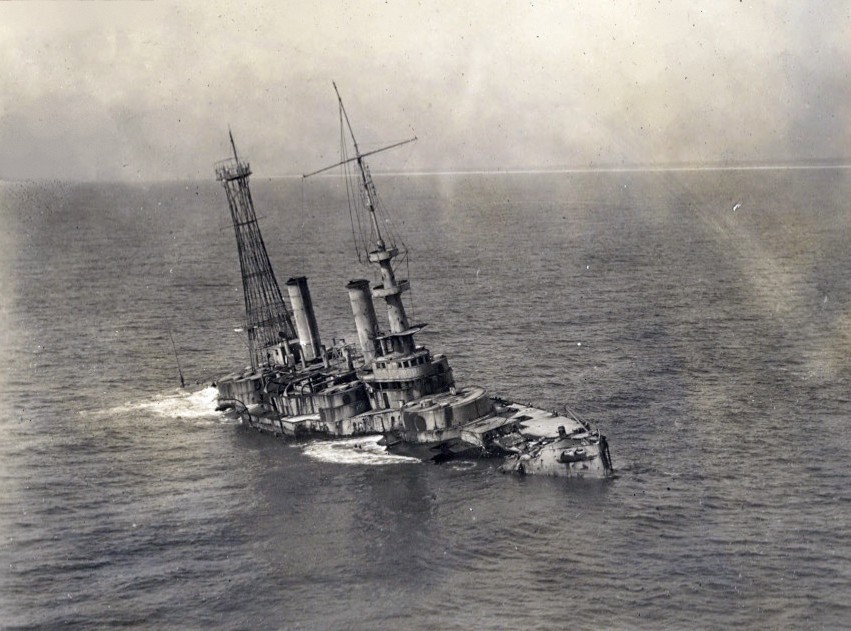
Massachusetts being scuttled off Pensacola, Florida
Attachment 36936
Now countless creatures call it home...
She's now a National Archeological site, artificial reef and a popular diving location. A much better fate than being sent to the breakers, I'd think.
yeah but look at all the Hyundai's and KIAs it could have madeQuote:
Originally Posted by bruce.desertrat
Hyundai's and KIAs are made from old beer cans...
Responding to USS Michigan post 1935 on; no not THAT far back. I've rowed, but never uphill.
They scuttled her yes, but NAVY smart enough to remove turrets and barrels from the larger armament along with who-knows other materiel.
Certainly no one disdains artificial reefs, the inhabitants and visitors opportunity.
And foreign autos, could have made many, except a 1900's NAVY vessel is a poor supply of plastic......
The most important job which was the lowest paid and worst job on the Titanic was men shoveling coal to fire the boilers.
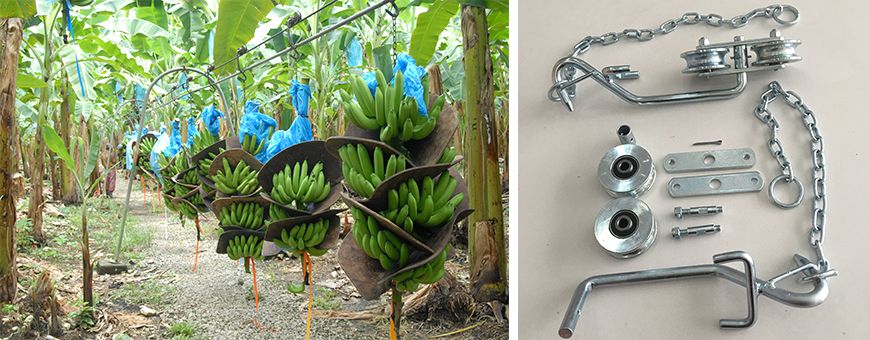
Unloading bananas. New Orleans, LA. Circa 1903.
Fullsize image: https://diqn32j8nouaz.cloudfront.net...s_fullsize.jpg
https://diqn32j8nouaz.cloudfront.net...ew_orleans.jpg
Ships and trains but no crates and cranes...
I wonder if loading bananas is still done by hand? I know the reason they were not done with crates and cranes was because the bruised so easily.
Ralph
I still load bananas by hand hear. one at a time...peal, eat, peal eat.peal eat.then repeat.no time for monkeying around with cranes.
lots of divers having fun in that ship again.as well as lots of fish.it's a few miles from me...off shore of coarse. I watched it go down.it went perfectly down as planed witch is kinda rare. I wish I could of got some machines off of it first...Quote:
Originally Posted by jimfols
Shipping bananas by the bunch has gone the way of shipping swinging beef (those are bunches being offloaded from the boat, composed of hands, which are what you see on the shelf). Everything is boxed now. Unitization makes for a more buildable pallet when it comes to getting the grub to the grocery stores from the warehouses. Grocers and shippers continue to negotiate their way to standardized containers.
6 foot, 7 foot, 8 foot...bunch!
They use trolleys on the plantations to get them to the washing & packing house where they get boxed & palletized.Quote:
Originally Posted by Ralphxyz
Attachment 36959
Ford Motor Company assembly line workers. 1913.
Fullsize image: https://diqn32j8nouaz.cloudfront.net...s_fullsize.jpg
https://diqn32j8nouaz.cloudfront.net...ne_workers.jpg
....and fire extinguishers for everyone! Wonder how long that realization took.
Model Ts or As ?
Model T with what looks like an electric starter...
hmmm, transmission looks like a Model A
the fenders hanging look to be T fenders. but Im not sure about the date of 1913....possiably not even ford....I dont see any blue ovals:rimshot:
Model As being assembled, the photo is dated wrong A was built 1928-1931 give or take a few months on each end.
defiantly not a Model T transmission and the bodies in the far end of the photo suggest later A's as well the roundness almost suggests the 32 Brookville bodies for the model B except the smaller more rectangle rear windows are more 29 or 30Quote:
Originally Posted by mechanic217
There is a radiator grille hanging upside down near the back that definitely looks like a 31.